.png)
AI compliance software is software that uses machine learning and, increasingly, large language models (LLMs) to automate parts of regulatory compliance work — monitoring for rule changes, reviewing documents against requirements, flagging gaps, and keeping audit evidence organized — rather than relying entirely on manual review and spreadsheets.
What AI Compliance Software Actually Does
Most AI compliance platforms combine a few core capabilities:
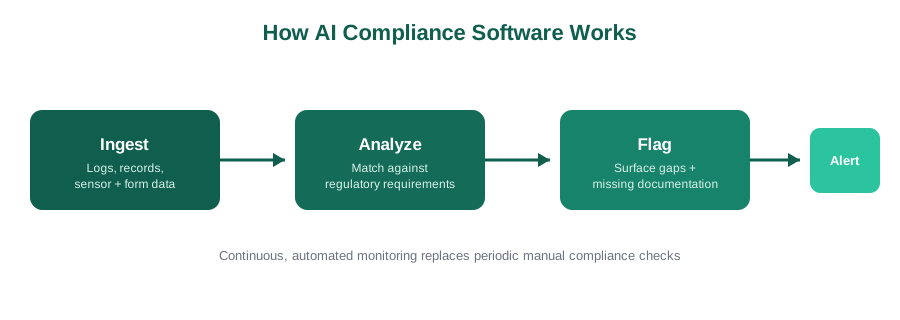
- Regulatory monitoring — tracking updates from agencies and standards bodies so teams aren't manually checking dozens of sources.
- Document analysis — reading supplier certificates, specifications, SOPs, or audit records and comparing them against requirements.
- Gap detection — flagging where a document, process, or record doesn't meet a specific requirement.
- Evidence organization — keeping the records an auditor will ask for connected and retrievable, instead of scattered across email, folders, and binders.
The "AI" part typically refers to natural-language processing that can read and interpret unstructured documents — a COA, an SOP, a regulatory bulletin — rather than requiring every field to be manually entered into a rigid form first.
How It Differs From Traditional Compliance Software
Traditional compliance software is largely a structured system of record: forms, checklists, and workflows that a person fills in manually. AI compliance software adds a layer on top — reading documents, drafting first-pass gap analyses, and surfacing what changed — while still keeping a human in the loop for judgment calls a regulator or auditor would expect a person to make. For a broader look at how this plays out across different tools, see IONI's roundup of top AI tools for compliance.
AI Compliance Software in Food Manufacturing
For food manufacturers specifically, AI compliance software is typically applied to:
- Building and maintaining HACCP plans and Preventive Control Plans from existing SOPs and hazard data.
- Validating supplier COAs and specifications against allergen, microbiological, and quality requirements.
- Tracking FDA, CFIA, and GFSI scheme updates and mapping them to the specific SOPs and records they affect.
- Keeping traceability, monitoring, and corrective-action records connected and retrievable for FSMA 204, SQF, or BRCGS audits.
See how food manufacturers put AI compliance automation into practice in this compliance automation case study.
What AI Compliance Software Doesn't Do
AI compliance software doesn't replace a facility's compliance judgment or its regulatory obligations. It doesn't independently certify that a facility is compliant with FSMA, SQF, BRCGS, or any other framework — that determination still depends on the specific products, processes, and evidence involved, generally reviewed by a qualified person or third-party auditor. What it changes is how much manual document-chasing and cross-referencing a compliance team has to do before that review happens.
How to Evaluate AI Compliance Software
A few questions are useful when comparing platforms:
- Does it work from documents you already have (SOPs, COAs, specs), or does it require rebuilding everything in a new format first?
- Can it connect regulatory updates to the specific internal documents they affect, not just deliver a general alert?
- Does it keep a clear record of what a human reviewed and approved, for audit purposes?
- Is it built for your industry's specific frameworks (FSMA, SQF, BRCGS, GFSI) or adapted from a generic compliance tool?
See IONI Food Safety Software for how this looks for food manufacturers specifically.
FAQ
Is AI compliance software the same as traditional GRC software?
No. Traditional governance, risk, and compliance (GRC) software is largely a structured system of record. AI compliance software adds document understanding and automated analysis on top, though many modern platforms blend both.
Can AI compliance software replace a compliance officer?
No. It reduces manual document review and cross-referencing, but judgment calls about whether a facility meets a specific regulatory requirement still rest with qualified people, and often a third-party auditor.
Does AI compliance software work for food manufacturers specifically?
Food-safety-focused AI compliance platforms are typically built around HACCP, FSMA, SQF, BRCGS, and GFSI-specific requirements — general-purpose compliance AI tools built for other industries may not map cleanly to those frameworks.
What should I look for when evaluating AI compliance software?
Whether it works from documents you already have, connects regulatory changes to the specific SOPs they affect, keeps a clear human-review trail, and is built around your industry's actual frameworks rather than adapted from a generic tool.