.png)
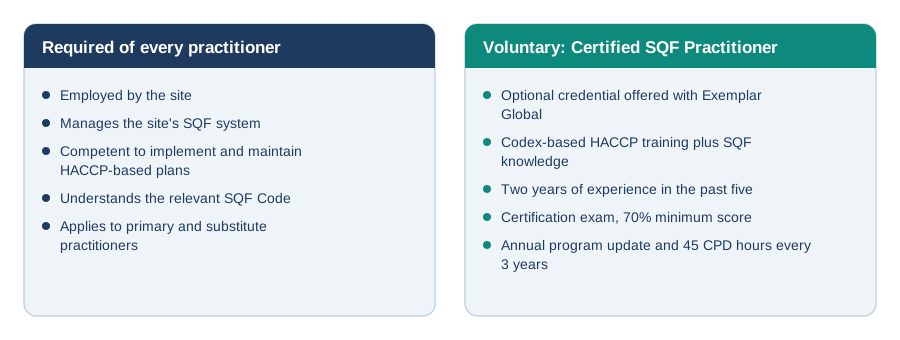
An SQF practitioner is the person a certified site designates to run its SQF food safety system. According to SQFI's practitioner page, the practitioner (and any substitute) must be employed by the site, hold a position managing the SQF system, be competent to implement and maintain HACCP-based food safety plans, and understand the relevant SQF Food Safety Code and how to implement it. SQFI sets these criteria in elements 2.1.1.4 and 2.1.1.5 of the SQF Code. There is no single exam that makes someone a practitioner, and the voluntary Certified SQF Practitioner credential is separate from the baseline requirement.
What Does an SQF Practitioner Do?
The SQF Code defines who can hold the role, but day to day the job is the same one every certified site needs filled: someone has to keep the food safety system alive between audits. In practice that usually means maintaining the documented system and food safety plan, coordinating internal audits and corrective actions, keeping training and supplier records current, preparing the site for certification audits, and being the point of contact when the auditor has questions. The exact split of duties varies by site size, so treat this as a typical profile rather than a checklist from the Code.
At a small manufacturer the practitioner is often also the QA manager, the PCQI, and the person who answers the auditor's questions on the floor. That is workable, but only if the records and procedures don't live in one person's head. Our SQF audit checklist for small food manufacturers shows what an auditor will ask that person to produce.
SQF Practitioner Requirements
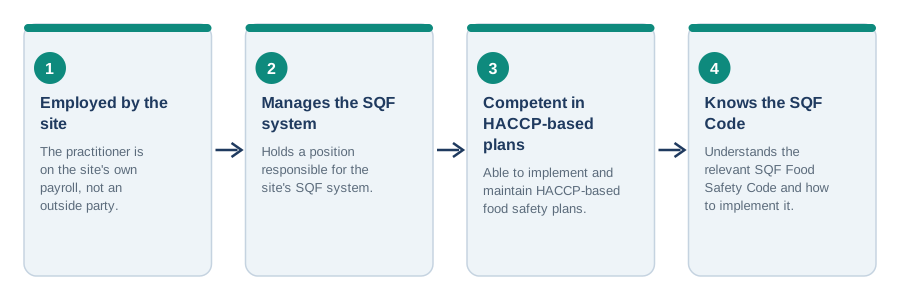
- Employed by the site. The practitioner is on the site's own staff. Because the criterion is employment by the site, an outside consultant generally cannot fill the role, though a consultant can support the practitioner.
- Manages the SQF system. The person holds a position with responsibility for the site's SQF system, not just a documentation role on the side.
- Competent in HACCP-based plans. The practitioner can implement and maintain HACCP-based food safety plans. SQFI's practitioner page lists completion of an HACCP training course among the requirements.
- Knows the SQF Code. The practitioner understands the relevant SQF Food Safety Code and what implementing it requires for the site's scope.
The same requirements apply to the substitute practitioner, who covers when the primary practitioner is absent. A site with no qualified backup has a gap the first time its practitioner takes a vacation during an audit window.
Training for SQF Practitioners
SQFI states that no single examination qualifies someone as an SQF practitioner. It does describe the Implementing SQF Systems course as strongly recommended for new practitioners, and lists additional training in food industry practices, good manufacturing practices, and internal auditing as useful. SQFI's practitioner training page lists the current course options.
Certified SQF Practitioner Credential
SQFI and Exemplar Global offer a separate, voluntary Certified SQF Practitioner credential. It is not what the SQF Code requires of a site, but some sites use it to show that their practitioner has been independently assessed. Under SQFI's published criteria (version 1.4, March 2026), applicants need recognized HACCP training based on Codex principles, demonstrated SQF knowledge, at least two years of relevant experience within the past five, and a passing score of at least 70% on the certification exam. Renewal includes an annual SQF program update and 45 hours of continuing professional development every three years.
SQF Practitioner vs. PCQI
These are different roles that often land on the same person. The SQF practitioner is an SQF certification role defined by the SQF Code. A PCQI is the person FDA's preventive controls rule requires to prepare or oversee a food safety plan for a facility subject to that rule. A site can need both, one, or neither depending on its products and certification scope. For the FDA side, see our guide to what a PCQI is and what the role requires.
Common Practitioner Pitfalls at Small Sites
- No qualified substitute. The backup has never opened the system, so absence becomes a nonconformance.
- System knowledge in one head. Procedures, schedules, and records exist only because one person remembers them.
- Training records that lag. The practitioner's own HACCP and SQF training is out of date or can't be produced quickly.
- Paper everywhere. Verification records, corrective actions, and internal audits are spread across binders, which makes audit prep a scramble. Our 90-day SQF certification plan lays out how to get organized before the audit.
A practitioner spends less time chasing paperwork when the system generates its own records. IONI’s FSMA, BRC and SQF compliance tools keep checklists, corrective actions, and audit-ready records in one place so the practitioner's time goes into running the system, not rebuilding evidence.
FAQ
Who can be an SQF practitioner?
Per SQFI, a person employed by the site who holds a position managing the SQF system, is competent to implement and maintain HACCP-based food safety plans, and understands the relevant SQF Food Safety Code.
Do I need the Certified SQF Practitioner credential?
No. The credential is voluntary and separate from the practitioner requirements in the SQF Code. It can help demonstrate competence, but the Code's baseline criteria are what a certified site must meet.
Is the Implementing SQF Systems course mandatory?
SQFI describes it as strongly recommended for new practitioners rather than mandatory, and states that no single exam qualifies someone to be an SQF practitioner.
Can a consultant be my SQF practitioner?
The criteria require the practitioner to be employed by the site, so an outside consultant generally cannot hold the role. A consultant can still help the practitioner build and maintain the system.
Is an SQF practitioner the same as a PCQI?
No. The SQF practitioner is a certification-scheme role under the SQF Code. A PCQI is an FDA role under the preventive controls rule. One person can hold both, but the roles have different sources and requirements.