.png)
FDA food facility registration is the requirement that any facility manufacturing, processing, packing, or holding food for consumption in the United States register with the Food and Drug Administration before it starts operating - and renew that registration every other year. The renewal window runs from October 1 to December 31 of each even-numbered year, which means 2026 is a renewal year: every registered facility needs to renew between October 1 and December 31, 2026, including a valid Unique Facility Identifier. Registration with FDA is free.
Where the Requirement Comes From
Food facility registration started with the Public Health Security and Bioterrorism Preparedness and Response Act of 2002, and the FDA regulations requiring it took effect on December 12, 2003. FSMA later amended section 415 of the Federal Food, Drug, and Cosmetic Act to require biennial renewal, an assurance that FDA may inspect the facility, and additional registration information. It also gave FDA authority to suspend a facility's registration when food from that facility has a reasonable probability of causing serious adverse health consequences or death. For background on the wider law, see our explainer on what FSMA is and what it requires.
Who Has to Register
Domestic and foreign facilities that manufacture/process, pack, or hold food for U.S. consumption generally must register. The regulation (21 CFR Part 1, Subpart H) exempts several categories, including farms, retail food establishments, restaurants, and facilities regulated exclusively by USDA - so a meat plant under exclusive USDA-FSIS jurisdiction is in a different situation from a bakery or a sauce manufacturer. Foreign facilities must also designate a U.S. agent.
Registration matters beyond the registration itself. Facilities that are required to register are generally the ones subject to FDA's Preventive Controls for Human Food rule, which means registration is effectively the entry point into needing a written food safety plan (unless the facility qualifies for modified requirements).
What the Registration Contains
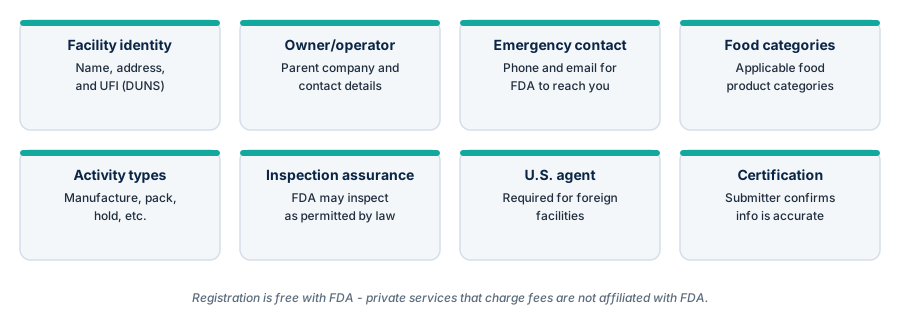
A registration captures the facility's name and address, its Unique Facility Identifier, owner/operator and parent company information, an emergency contact, the applicable food product categories, the types of activities performed at the facility, an assurance that FDA will be permitted to inspect, and - for foreign facilities - the U.S. agent. The person submitting must certify that the information is true and accurate.
The Unique Facility Identifier (UFI)
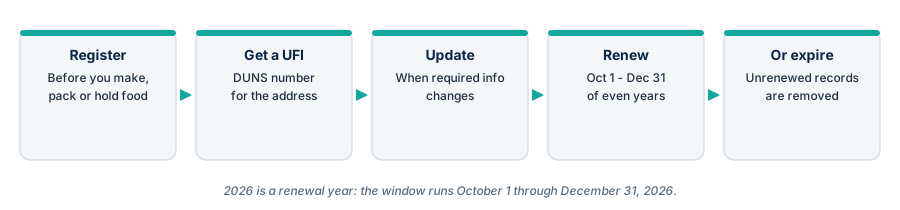
Since the 2020 renewal cycle, every registration has had to include a UFI recognized by FDA. Currently that means a Dun & Bradstreet D-U-N-S number tied to the facility's physical address, which FDA uses to verify the address on the registration. If your DUNS record lists a different address or an old business name, the mismatch can hold up a renewal - check it well before December.
How the Biennial Renewal Works
Under 21 CFR 1.230, each registration must be renewed every other year during the period from October 1 through December 31 of each even-numbered year. If nothing in the registration has changed since the last submission, the facility can use an abbreviated renewal that confirms the existing information. FDA's biennial renewal user guide walks through the steps in the FDA Industry Systems portal.
Updates between renewals
Renewal isn't the only time a registration needs attention. When required information changes - a new owner, a new product category, a new emergency contact - the registration must be updated within 60 days of the change. A facility that closes or changes ownership in a way that ends the registration should cancel it.
What happens if you miss the window
FDA treats registrations that are not renewed during the renewal period as expired. For a domestic facility, operating without a valid registration is a compliance problem in its own right; for a foreign facility, food offered for import from a facility that isn't properly registered can be held at the port of entry. The window is three months long, but DUNS corrections and account access issues can take weeks, so most facilities are better off renewing early in October rather than in the last week of December.
Watch Out for Fee-Charging Look-Alikes
FDA does not charge a fee to register or renew a food facility. The agency has published a notice about private businesses that charge registration fees or suggest an affiliation with FDA. Third-party registration services exist and some foreign facilities use them as U.S. agents, but none of them are FDA, and a paid "certificate of registration" is not an FDA document. The same goes for importers: registration is separate from the verification duties described in our guide to the Foreign Supplier Verification Program.
A Quick 2026 Renewal Checklist
- Confirm you can log in to your FDA Industry Systems account (and that the account owner still works for you).
- Check that your DUNS number's address and legal name match the registration exactly.
- Review product categories and activity types against what the facility actually does today.
- Update the emergency contact to someone who will answer the phone.
- For foreign facilities, confirm the U.S. agent is still engaged and responsive.
- Renew between October 1 and December 31, 2026, and save the confirmation with your food safety records.
FAQ
How often do you renew FDA food facility registration?
Every other year, between October 1 and December 31 of each even-numbered year. The current renewal period runs October 1 through December 31, 2026.
Does FDA charge a fee for food facility registration?
No. FDA does not charge a fee to register or renew. Private companies may charge for help or for acting as a U.S. agent, but they are not FDA.
What is a UFI for FDA registration?
A Unique Facility Identifier is an identifier FDA uses to verify a facility's address. FDA currently recognizes the Dun & Bradstreet D-U-N-S number as an acceptable UFI.
Do restaurants and farms need to register with FDA?
Generally no. Farms, restaurants, and retail food establishments are among the categories exempt from food facility registration, as are facilities regulated exclusively by USDA.
What happens if I don't renew my FDA food facility registration?
FDA treats unrenewed registrations as expired. Operating without a valid registration creates a compliance problem, and food from an unregistered foreign facility can be held at import.
Keep registration, food safety plan, and supplier records in one inspection-ready place. See how IONI helps food manufacturers stay ready for FSMA, SQF, and BRCGS.