.png)
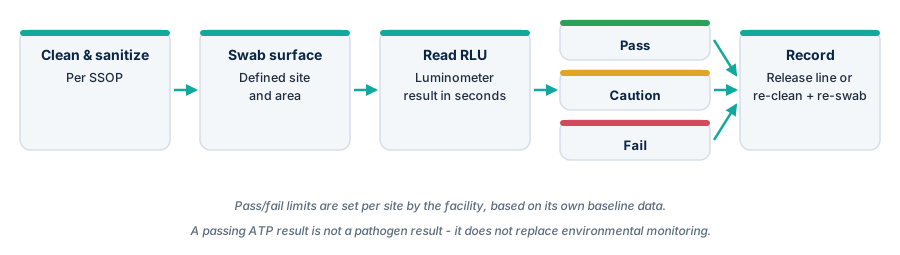
ATP testing is a rapid sanitation check that measures adenosine triphosphate - a molecule found in food residue and living cells - on a surface right after cleaning. A swab is read in a handheld luminometer, which reports a number in relative light units (RLU) within seconds: a low reading suggests the surface is clean, a high reading means organic residue is still there and the surface should be re-cleaned before production starts. ATP testing verifies that cleaning worked; it does not identify bacteria or replace pathogen testing.
How ATP Bioluminescence Works
The swab contains an enzyme (luciferase) that produces light when it reacts with ATP. The more ATP on the swabbed area, the more light, and the higher the RLU number. Because ATP comes from both food soil and microorganisms, the reading reflects overall organic contamination rather than any specific organism. Peer-reviewed work on food-contact surfaces has found ATP bioluminescence to be a useful real-time indicator of surface cleanliness that cannot substitute for traditional microbiological analysis - which is exactly how most food plants use it.
Validation, Verification, and Monitoring: Where ATP Fits
Sanitation programs mix up three different activities, and ATP only covers one of them:
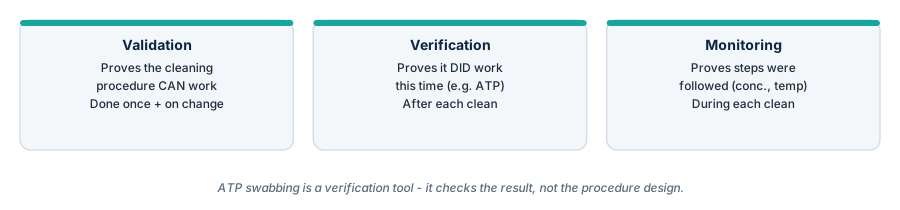
- Cleaning validation shows that a cleaning procedure is capable of removing soil, allergens, or microorganisms to an acceptable level. It's done when the procedure is designed and repeated when products, equipment, or chemicals change - often using microbiological or allergen-specific testing, not just ATP.
- Verification confirms the validated procedure actually worked on a given day. ATP swabs are the most common routine verification tool because they're fast enough to use before releasing a line.
- Monitoring checks that the procedure steps were followed - chemical concentration, water temperature, contact time - usually recorded in sanitation standard operating procedures (SSOP) logs.
Under FSMA's Preventive Controls rule, sanitation controls (21 CFR 117.135(c)(3)) include procedures for the cleanliness of food-contact surfaces where the hazard analysis calls for them. ATP records are one practical way facilities show those controls are working day to day.
Setting Up an ATP Program
Choose sites deliberately
Pick food-contact surfaces that are hard to clean and most likely to hold residue: slicer blades, filler nozzles, conveyor belt seams, mixer paddles, gaskets. Name each site specifically ("Line 2 filler nozzle, inner lip") so every swab is repeatable, and swab a consistent area size each time.
Set pass/caution/fail limits from your own data
RLU scales vary by instrument and swab brand, so there is no universal "clean" number. The usual approach is to start with the manufacturer's suggested limits, then swab each site repeatedly after good cleans to build a baseline and set site-specific pass and fail limits. A caution band between them flags surfaces that passed but are trending the wrong way.
Define what happens on a fail
A failed swab should trigger a documented response: re-clean, re-swab, and only release the line when the site passes. Repeated fails at the same site are a signal to look at the procedure, the equipment design, or training - not just to clean harder.
Mind the chemistry
Some sanitizer and detergent residues can affect ATP readings. Follow the swab manufacturer's instructions on when to swab relative to rinsing and sanitizing, and keep that timing consistent so results are comparable over time. For where this check sits between products, see our guide to line changeover and line clearance.
ATP Testing vs. Environmental Monitoring
ATP and pathogen swabbing answer different questions. ATP asks "is this surface clean right now?" and gives an answer in seconds. An environmental monitoring program asks "is Listeria or Salmonella (or an indicator organism) living in this plant?" and takes lab time to answer. A surface can pass ATP and still harbor a pathogen in a niche the swab didn't reach, so ATP is a complement to environmental monitoring, never a replacement for it.
Making ATP Data Useful
The value of ATP testing comes from the trend, not the single reading. Paper logs make it hard to see that one site has drifted from 80 RLU to 400 RLU over six weeks, or that fails cluster on a particular shift. Recording results digitally, tied to the site, line, shift, and corrective action, turns a daily pass/fail check into evidence an auditor can follow and a signal your team can act on.
FAQ
What does ATP testing detect?
ATP testing detects adenosine triphosphate, which is present in food residue and living cells. It measures overall organic contamination on a surface, not specific bacteria or pathogens.
What is a good RLU reading for ATP swabs?
There is no universal number. RLU scales differ between instruments, so facilities start with the manufacturer's guidance and set site-specific limits from their own baseline data.
Is ATP testing required by FDA?
FDA does not require ATP testing specifically. Facilities choose verification methods appropriate to their sanitation controls, and ATP swabbing is a common, practical choice.
Can ATP testing replace environmental monitoring?
No. ATP shows whether a surface is clean; it cannot tell you whether Listeria or another pathogen is present. Ready-to-eat facilities still need pathogen or indicator-organism environmental monitoring where it is warranted.
Turn daily swab results into trend data your team and your auditor can use. See how IONI's food safety software digitizes sanitation checks and corrective actions.