.png)
SSOP stands for Sanitation Standard Operating Procedure: a written document that states exactly how, when and by whom a food plant cleans and sanitizes before and during production to prevent direct contamination of food or food-contact surfaces. SSOPs are a specific requirement for USDA-inspected meat and poultry plants under 9 CFR Part 416, and FDA facilities meet the same need through sanitation controls under 21 CFR 117.
Sanitation crews need documented training on each SSOP they perform; our guide to GMP training for food plant employees covers training records and a role-by-topic training matrix.
To keep procedures current and capture records as they're performed, see our guide to digital SOPs and work instructions for food plants.
What an SSOP must cover
Under 9 CFR 416, each official meat or poultry establishment must develop, implement, and maintain written SSOPs describing all procedures conducted daily, before and during operations, sufficient to prevent direct contamination or adulteration of product. For FDA-regulated facilities, 21 CFR Part 117 requires sanitation procedures that address the same underlying conditions: safety of water contacting food or food-contact surfaces, condition and cleanliness of food-contact surfaces, and prevention of cross-contamination from unsanitary objects and practices. In both frameworks, an SSOP must be signed and dated by the establishment's responsible individual, and daily records must document implementation, monitoring, and any corrective action taken.
The SSOP sanitation cycle
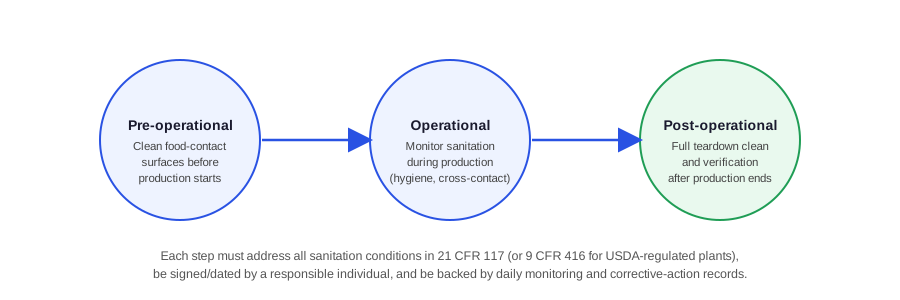
SSOPs typically split into three phases: pre-operational procedures (cleaning food-contact surfaces and equipment before production starts), operational procedures (monitoring sanitary conditions during the shift, including employee hygiene and cross-contact prevention), and post-operational procedures (full teardown cleaning and verification once production ends). Each phase needs its own documented steps, responsible personnel, and monitoring records.
SSOPs vs. GMPs vs. HACCP
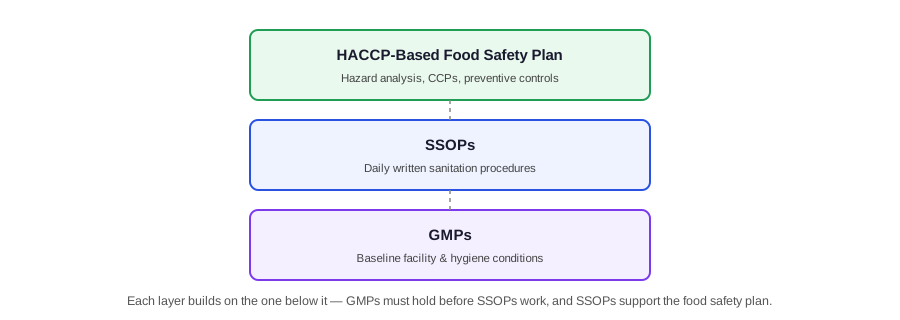
These three programs work together but aren't interchangeable. Good Manufacturing Practices (GMPs) set the baseline facility and hygiene conditions across the whole plant. SSOPs are the specific, written sanitation procedures that implement those conditions on a daily cleaning schedule. A HACCP-based food safety plan sits on top of both: sanitation is generally treated as a prerequisite program that supports the plan, though a facility can designate a specific sanitation step as a Critical Control Point if hazard analysis shows that's where the risk is best controlled.
How to write an SSOP
- List every food-contact surface and piece of equipment that needs cleaning, and the schedule for each (pre-op, mid-shift, post-op).
- Document the exact procedure: cleaning agent, concentration, dwell time, water temperature, and verification method (e.g., ATP swab, visual inspection).
- Assign a named, responsible individual to sign and date each SSOP and each day's monitoring record.
- Build in a corrective-action procedure for when monitoring shows a sanitation step failed — including product disposition, restoring sanitary conditions, and preventing recurrence.
- Keep monitoring and corrective-action records retrievable for the retention period your regulatory framework requires.
For how to verify that a cleaning step actually worked, see our guide to ATP testing and cleaning verification in food plants.
See how IONI keeps SSOP monitoring records, corrective actions, and verification connected in one audit-ready system: Food Safety Software.
Frequently asked questions
Is an SSOP the same as a cleaning schedule?
Not quite. A cleaning schedule says what gets cleaned and when. An SSOP goes further — it documents the exact procedure, responsible individual, monitoring method, and corrective-action process, and for regulated facilities it must be signed, dated, and backed by daily records.
Are SSOPs required for all food facilities?
SSOPs are an explicit named requirement for USDA-regulated meat and poultry establishments under 9 CFR 416. FDA-regulated facilities must meet equivalent sanitation-control requirements under 21 CFR Part 117, even where the term "SSOP" itself isn't used in the regulation.
Who has to sign an SSOP?
The establishment's most responsible individual on-site must sign and date the SSOP, confirming it accurately reflects the facility's sanitation procedures.
What happens if an SSOP fails?
When monitoring shows a sanitation procedure wasn't followed or failed to prevent contamination, the facility must take corrective action: appropriately dispose of or rework affected product, restore sanitary conditions, and document steps to prevent the failure from recurring.