.png)
Supplier onboarding software is a system that structures and documents how a food manufacturer qualifies, verifies, and approves new ingredient or packaging suppliers, replacing manual document chasing (spreadsheets, email attachments, shared drives) with a repeatable workflow that ties directly to the FDA's supply-chain verification requirements. For manufacturers bringing on new suppliers regularly, it's the difference between an approved supplier list that's actually current and one that's a stale PDF nobody trusts during an audit.
What supplier onboarding software actually does
At its core, the software centralizes three things auditors and buyers ask for: current supplier documentation (certificates, food safety plan summaries, insurance, specifications), a record of how each supplier was risk-tiered and verified, and a re-approval schedule so approvals don't silently expire. Rather than a QA manager tracking expiration dates across dozens of supplier folders, the system flags what's missing or coming due.
The 5-step onboarding workflow
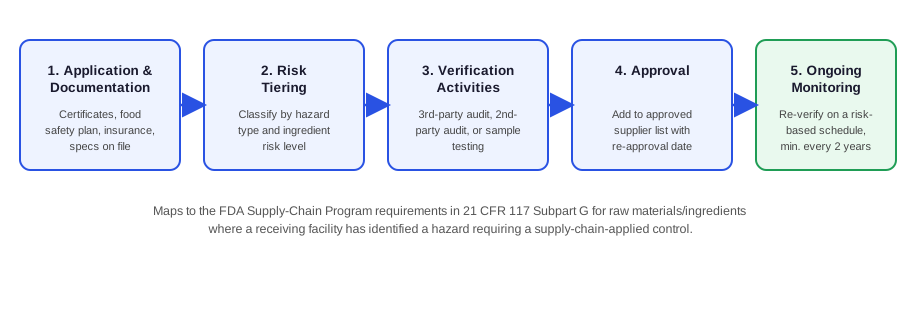
- Application and documentation — collect certificates, the supplier's food safety plan or HACCP summary, insurance, and product specifications.
- Risk tiering — classify the supplier by hazard type and ingredient risk, since verification intensity should scale with risk.
- Verification activities — depending on risk tier, this can mean reviewing a 3rd-party audit, conducting a 2nd-party audit, requesting food safety records, or sample testing.
- Approval — add the supplier to the approved supplier list with a documented re-approval date.
- Ongoing monitoring — re-verify on a risk-based schedule.
The FDA requirement this maps to
For raw materials or ingredients where a receiving facility has identified a hazard requiring a supply-chain-applied control, 21 CFR Part 117 Subpart G (the Supply-Chain Program) requires the facility to approve suppliers, determine appropriate verification activities based on the supplier's procedures and other risk factors, and conduct those verification activities before or during receipt. FDA guidance also calls for written assurance, renewed periodically, that a supplier is complying with applicable food safety regulations. Supplier onboarding software is, in practice, the system of record that makes this specific requirement auditable instead of something reconstructed from email threads after the fact.
What to look for before buying
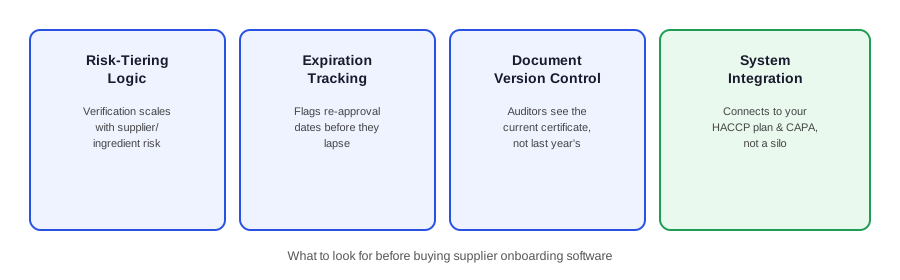
- Risk-tiering logic that actually changes what verification is required, not a flat checklist for every supplier.
- Expiration tracking that surfaces upcoming re-approval dates before they lapse, not just after.
- Document version control so an auditor sees the current certificate, not last year's.
- Integration with your broader compliance system — supplier data that's siloed from your HACCP plan and CAPA process just creates a second system to maintain.
For the ingredient and COA side of supplier verification specifically, see our ingredient compliance checklist, and for a full comparison of supplier quality platforms, see our supplier quality management software guide. See how IONI automates supplier document collection and COA validation: Ingredients Intelligence.
Frequently asked questions
Is supplier onboarding software required by FDA?
No specific software is required. What's required, for ingredients needing a supply-chain-applied control, is a documented supply-chain program under 21 CFR 117 Subpart G. Software is a practical way to make that program consistent and auditable, not a regulatory mandate itself.
How often do suppliers need to be re-verified?
FDA guidance calls for written assurance of a supplier's compliance renewed at least every 2 years for many supply-chain-applied controls, though higher-risk suppliers or specific hazards may warrant more frequent verification based on your own risk assessment.
What's the difference between supplier onboarding and supplier quality management?
Onboarding is the initial qualification and approval process for a new supplier. Supplier quality management is the broader, ongoing discipline that includes onboarding plus continuous monitoring, scorecards, and corrective action across the full supplier base.