.png)
A receiving inspection checklist for food manufacturers should confirm, on every incoming shipment, that the vehicle and seal are intact, the product temperature is within its safe range, the paperwork (PO, packing slip, and COA) matches what actually arrived, and the lot or batch number is logged before the material moves onto the floor. Skipping any one of these is how a compromised or mislabeled ingredient ends up in production before anyone catches it.
For what to monitor beyond the dock, including cold storage, production and shipping, see our guide to cold chain monitoring for food manufacturers.
Once stock is released, see how lots are stored, picked and counted in our guide to food inventory management software.
The four checks every receiving log needs
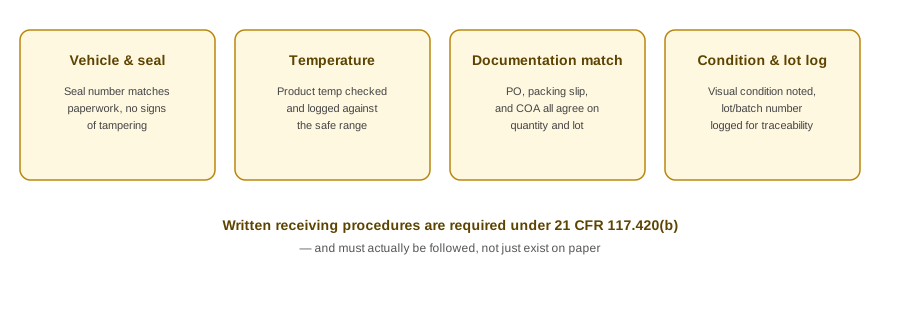
- Vehicle and seal. Confirm the seal number matches the paperwork and shows no sign of tampering before the truck is even unloaded.
- Temperature. For any temperature-controlled ingredient, check and log the product temperature against its safe range at receiving — not after it's already been moved into storage.
- Documentation match. The purchase order, packing slip, and certificate of analysis should all agree on quantity, product, and lot number. A mismatch here is the single most common receiving error.
- Condition and lot log. Note the visual condition of the shipment (damage, contamination, pest signs) and log the lot or batch number so the ingredient is traceable from this point forward. Capturing the expiration date at the same time is what makes FEFO stock rotation possible later.
This isn't just good practice — it's a regulatory requirement
Under 21 CFR 117.420(b), a receiving facility must establish written procedures for receiving raw materials and other ingredients, follow them, and document that they were followed — and those procedures must ensure raw materials are received only from approved suppliers (or unapproved suppliers subject to extra verification before use). A checklist that exists but isn't consistently used doesn't satisfy this requirement; the documentation has to show the procedure was actually followed on that shipment.
What to do when a shipment fails inspection
A receiving checklist is only useful if there's a clear next step when something doesn't check out. At minimum, a failed check should trigger: physically segregating the shipment (hold, not accept), notifying whoever manages supplier approval, and documenting the deviation and its resolution — reject and return, use with a documented exception, or destroy, depending on the issue and your own supplier agreement terms.
From paper checklist to a system of record
A paper receiving log works until someone needs to find a specific inspection record fast — during a recall investigation, an audit, or a customer complaint. At that point, a paper checklist that isn't linked to the lot it covers becomes a search through binders. Our guide to quality inspection software for food manufacturers covers what a digital version of this same checklist should actually do — spec matching, COA validation, and lot-linked records — once a manual checklist stops scaling. See also our ingredient compliance checklist for outsourced manufacturing for the parallel version of this problem when a co-manufacturer is doing your receiving for you.
Where IONI fits
IONI turns this same four-part checklist into a digital receiving log that's automatically linked to the lot, the supplier's COA, and your FSMA supply-chain documentation. See how IONI's Ingredients Intelligence handles receiving and incoming inspection.
Frequently asked questions
Is a receiving inspection checklist legally required?
Written receiving procedures are required under 21 CFR 117.420(b) for facilities subject to FSMA's supply-chain program rule, and use of those procedures must be documented — a checklist is the practical way most facilities satisfy this.
What should happen if a shipment fails a receiving check?
Segregate it (hold, don't accept into inventory), notify whoever manages supplier approval, and document the deviation and how it was resolved.
Does every ingredient need a temperature check at receiving?
Only ingredients that require temperature control need this check, but for those, it should happen at receiving — not after the product has already moved into storage.
How is a receiving checklist different from a full supplier verification program?
A receiving checklist covers what happens at the dock on each shipment. Supplier verification (onsite audits, periodic testing, document review) is a broader, less frequent program under 21 CFR Part 117 Subpart G that a receiving checklist supports but doesn't replace.