.png)
An electronic batch record (EBR) is the digital version of the batch sheet that travels with a production run: it records which ingredient lots and quantities were used, the process steps and readings taken, the food safety checks performed, any deviations, who signed off, and the finished lot that came out. EBR software captures that information at the line as the batch is made - instead of on paper that gets filed and re-typed later - so every batch has a complete, searchable record that links straight into lot traceability and audit evidence.
If you're not ready for full batch records, start with the basics in our guide to production tracking for food manufacturers.
Master Record vs. Batch Record
Two documents are easy to confuse. The master record (sometimes called a master batch record or master production record) is the approved template for a product: the formula, the steps, the limits, and the checks required. A batch record is the filled-in copy for one specific production run - the evidence of what actually happened that day.
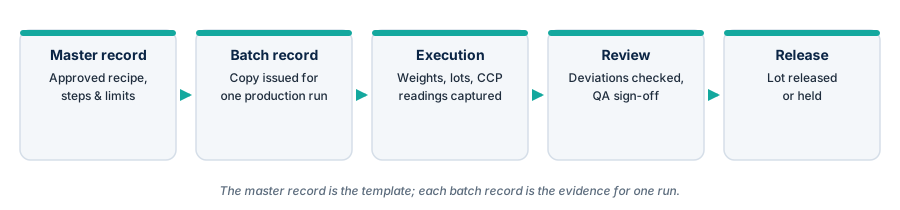
Keeping the two separate matters. When a formula changes, you update the master once and every future batch record reflects it. When something goes wrong, the batch record shows whether the problem was in the plan or in how a particular run was executed.
Are Batch Records Required for Food?
It depends on what you make. Some food categories have explicit batch or production record rules: dietary supplement manufacturers must keep batch production records under 21 CFR Part 111, and low-acid canned food processors keep processing and production records under 21 CFR Part 113. For most other food manufacturers, the batch record is how you satisfy broader requirements - monitoring and corrective action records under FSMA's Preventive Controls rule, lot traceability for recalls, and the documentation SQF and BRCGS auditors ask to see. Our guide to food safety documentation and recordkeeping covers those requirements in more detail.
On the electronic side, one common worry is 21 CFR Part 11, FDA's electronic records rule. Part 117 states that records kept to satisfy the Preventive Controls rule are exempt from Part 11, though records also required under other regulations remain subject to it. If you make dietary supplements or other products covered by separate record rules, confirm which requirements apply to those records specifically.
What a Food Batch Record Should Capture
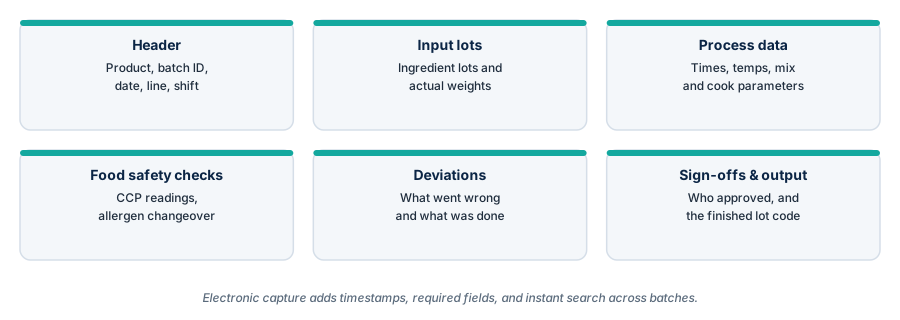
- Header: product, batch ID, date, line, shift, and the master record version used.
- Input lots: every ingredient and packaging lot consumed, with the actual quantity used, not just the planned amount.
- Process data: mix times, cook and cool temperatures, pH or other parameters your process depends on.
- Food safety checks: CCP and preventive control readings, allergen changeover verification, metal detector checks.
- Deviations: what went out of spec and what was done about it, including product holds.
- Sign-offs and output: who performed and reviewed each step, and the finished lot code with yield.
Why Paper Batch Sheets Break Down
Paper works until volume and scrutiny rise. Sheets are filled in at the end of a shift from memory, lot numbers get transcribed wrong, a missing initial isn't noticed until the auditor finds it, and answering "which batches used supplier X's lot 4471?" means pulling binders. None of that is a people problem; it's a format problem.
Electronic capture fixes the format. Required fields can't be skipped, out-of-spec readings trigger an alert while the batch is still on the line, timestamps and user IDs are automatic, and every input lot is linked to the output lot - which is what makes batch and lot tracking fast instead of forensic.
What to Look For in EBR Software
- Master record control: versioned templates so each batch uses the current approved formula and checks.
- Lot capture at the point of use: scanning or selecting actual lots as they're added, with FEFO suggestions.
- Built-in limits: critical limits and specs on each step, with automatic flags and deviation workflows.
- Review by exception: QA reviews what went wrong instead of re-reading every field on every batch.
- Traceability output: forward and backward trace from any lot in minutes.
- Fits your size: pharma-grade MES platforms exist, but a food plant usually needs something operators can use on a tablet without months of validation work. For many small manufacturers, batch records belong in a production and traceability layer that runs alongside QuickBooks rather than in a full ERP - see our guide to food ERP software for how to decide.
FAQ
What is an electronic batch record?
An electronic batch record is a digital record of a single production run that captures ingredient lots and quantities, process data, food safety checks, deviations, sign-offs, and the finished lot, recorded at the line as the batch is made.
What is the difference between a master batch record and a batch record?
A master batch record is the approved template for making a product. A batch record is the completed copy for one specific run, showing what actually happened.
Do food manufacturers need to comply with 21 CFR Part 11?
Records kept to satisfy FDA's Preventive Controls for Human Food rule are exempt from Part 11 under 21 CFR 117.305, but records also required by other regulations remain subject to it. Check which rules apply to each record type.
Is EBR software the same as an MES?
They overlap. A manufacturing execution system typically covers broader shop-floor control, while EBR focuses on the batch record itself. Many food plants need batch records, lot traceability, and checks without a full MES.
Replace paper batch sheets with records that link every lot, check, and sign-off. Explore IONI's production and traceability software.