.png)
FIFO (first in, first out) means using or shipping the oldest received stock first. FEFO (first expired, first out) means using or shipping the stock with the earliest expiration date first, regardless of when it arrived. In most warehouses the two give the same answer, but in food manufacturing they often don't - suppliers ship lots with different remaining shelf life, and a lot received later can expire sooner. That's why food plants usually rotate raw materials and finished goods by FEFO, which only works if the expiration date is captured for every lot at receiving and follows that lot through production.
For the wider picture of lot-level stock control, including barcode scanning, cycle counts and reconciliation, see our guide to food inventory management software.
FIFO vs. FEFO: A Simple Example
Say you receive three lots of the same ingredient over two weeks. Lot A arrives first but has the most shelf life left; Lot B arrives a week later but expires three weeks before Lot A.
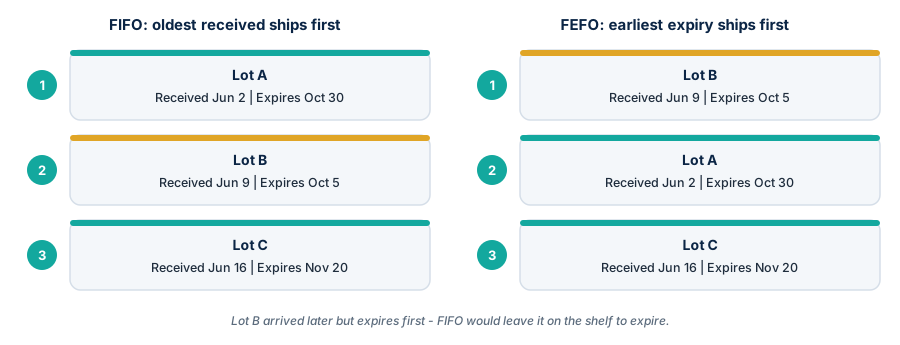
Under FIFO, production pulls Lot A first because it arrived first - and Lot B may expire on the shelf before it's used. Under FEFO, production pulls Lot B first, then A, then C. Same inventory, less waste, and fewer out-of-date ingredients anywhere near a production line.
When to Use FIFO and When to Use FEFO
- FEFO fits anything with a meaningful expiration or best-before date: perishable raw materials, dairy, meat, produce, cultures, many packaged ingredients, and finished goods going to customers with minimum shelf-life requirements.
- FIFO is fine for items where age matters but there's no lot-specific expiry - many packaging materials, some dry goods, spare parts.
- Exceptions still happen. A lot on QA hold, a lot reserved for a specific customer, or a lot with a spec that suits one product better can all override the default order. The point is that exceptions are deliberate and recorded, not accidental.
FIFO Costing Is Not FIFO Rotation
This trips up a lot of small manufacturers. Accounting systems use FIFO as an inventory valuation method - QuickBooks Desktop Enterprise, for example, lets you switch from average cost to FIFO costing, which assumes the first items received are the first sold when calculating cost. That's a cost-flow assumption on the books. It doesn't tell an operator which pallet to pull, and it doesn't know about expiration dates. Physical rotation - FIFO or FEFO - has to happen on the floor, driven by lot and expiry data. We cover the accounting/floor split further in our guide to manufacturing software that works with QuickBooks.
Where FEFO Has to Happen in a Food Plant
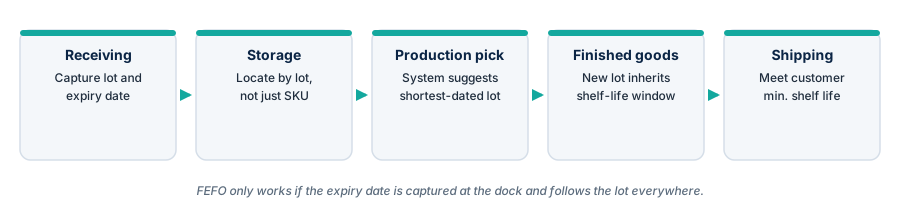
- Receiving. Record the supplier lot and its expiration or best-before date for every delivery. If the date isn't captured here, nothing downstream can use it - which is why expiry belongs on your receiving inspection checklist.
- Storage. Know where each lot is, not just how much of a SKU you have.
- Production picks. Point operators to the shortest-dated usable lot and record which lot was actually used.
- Finished goods. Give the finished lot its own shelf-life date, based on the product and, where relevant, the shortest-dated input.
- Shipping. Ship the oldest-dated finished lots first while still meeting each customer's minimum remaining shelf life.
Why FEFO and Traceability Go Together
The data FEFO needs - lot codes, expiration dates, and which lot went into which batch - is the same data a recall needs. A plant that records the actual lot used at each pick has already built most of its batch and lot traceability. A plant that relies on "we always grab from the front of the rack" has neither reliable rotation nor a reliable trace.
Signs Your Rotation Isn't Working
- Expired or near-expired ingredients show up during cycle counts or audits.
- Write-offs for expired stock are a recurring line, not a rare event.
- Operators can't tell which lot they used without walking back to the rack.
- Customers reject shipments for not meeting minimum shelf life.
- The only record of rotation is a sign on the wall that says "FIFO."
FAQ
What is the difference between FIFO and FEFO?
FIFO uses the oldest received stock first. FEFO uses the stock with the earliest expiration date first. They differ whenever a later delivery has a shorter remaining shelf life than earlier stock.
Is FEFO better than FIFO for food?
For perishable ingredients and finished goods with expiration dates, FEFO usually reduces waste and the risk of using expired material. FIFO remains fine for items without lot-specific expiry.
What does FEFO stand for?
FEFO stands for first expired, first out - an inventory rotation method based on expiration date rather than receipt date.
Does FIFO costing in QuickBooks mean my warehouse uses FIFO?
No. FIFO costing is an accounting method for valuing inventory. Physical rotation on the floor has to be managed separately using lot and expiration data.
Capture expiry at the dock and pick the right lot every time. Explore IONI's lot tracking and production software for food manufacturers.