.png)
Introduction: Why ROI Matters in Food Manufacturing
In the food manufacturing sector, every dollar and every hour counts. Margins are often slim, so investments must pay off in tangible ways.
This is why Return on Investment (ROI) has become a paramount metric for decision-making. In fact, food safety and quality initiatives, once seen as mere compliance costs, are now recognized as strategic investments that can improve profits. Leading companies increasingly realize that the food industry’s return on investment in modern safety and automation technologies can determine their competitive survival.
Simply put, food safety is no longer just about avoiding fines or audits; it’s about protecting the bottom line and staying in business.
Why the heightened focus on ROI now? Recent pressures have underscored the stakes. Product recalls and safety incidents have skyrocketed in cost and frequency, exposing how expensive “getting it wrong” can be. The average direct cost of a single food recall is around $10 million, and that’s just the immediate expenses.
There are also devastating hidden costs: nearly 68% of consumers say they would stop buying from a brand after a major food safety incident.
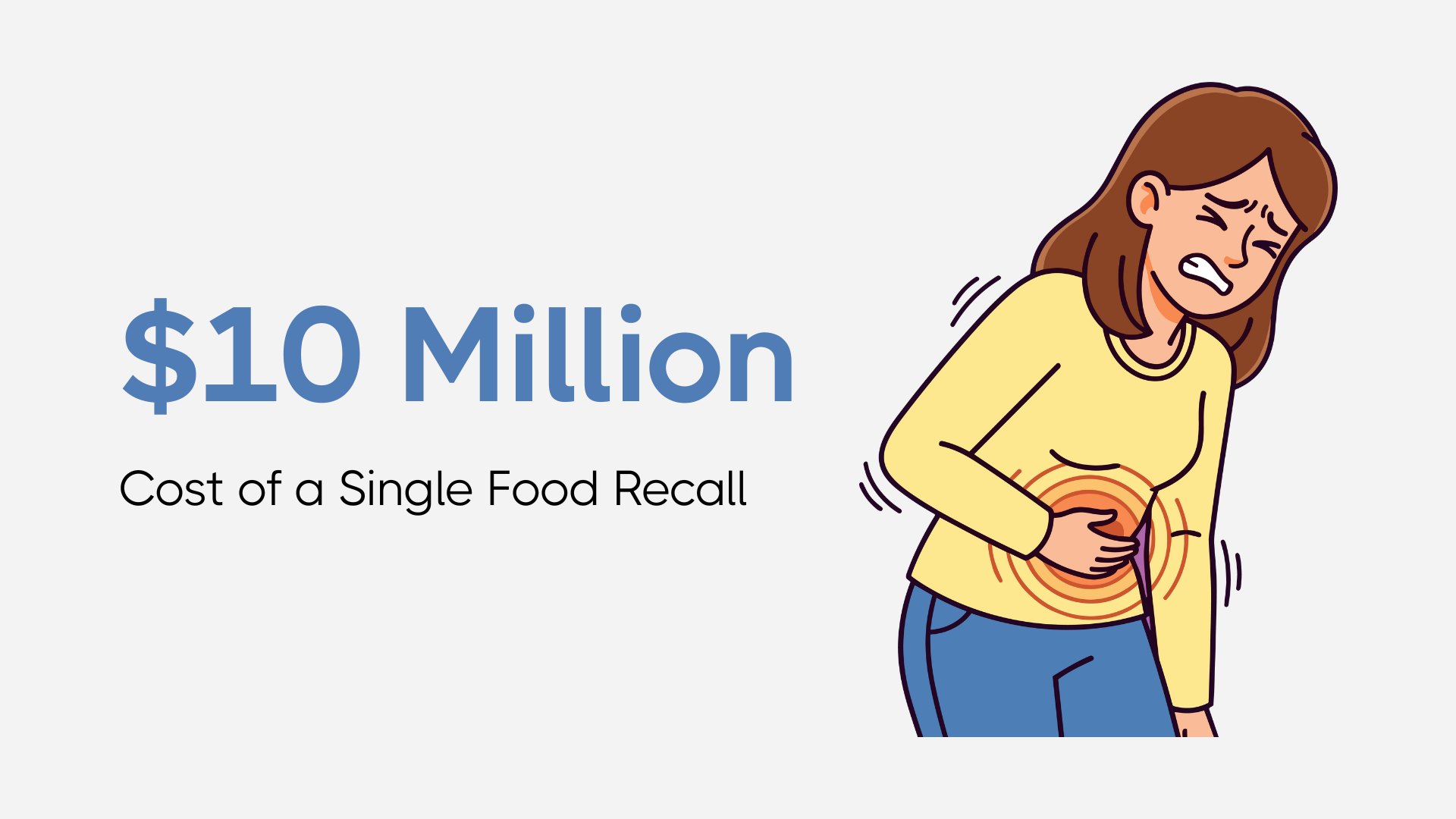
In severe cases, it can take years for sales and trust to rebound, for example, after a 2009 contamination event, peanut product sales took 1 to 4 years to recover, with nearly $1 billion in losses. In an industry where one mistake can wipe out years of profit, focusing on ROI isn’t optional – it’s mission-critical.
Moreover, the food manufacturing world is evolving rapidly with new technologies. Companies that invest wisely in automation and AI are pulling ahead, while laggards risk being left behind. As one industry expert put it, “compliance used to be a box-checking exercise… Now executives see it as an enterprise-level risk and opportunity.”
In other words, Food Manufacturing ROI now hinges on leveraging smart tools that turn compliance and quality into competitive advantages. Throughout this article, we’ll explore how modern manufacturers are capturing ROI through AI, the key ROI streams available, and how IONI’s AI-powered solutions are finally delivering reliable ROI in food manufacturing.
What Modern Food Manufacturers Are Seeing from AI Today
Food and beverage manufacturers worldwide are embracing artificial intelligence not as a futuristic experiment, but as a practical way to boost efficiency, quality, and profits.
A few years ago, AI in factories was mostly pilot projects; today it’s driving real results on the production floor. In fact, as of 2025, over 60% of AI adoption in food manufacturing focuses on real-time quality inspection and contamination detection. This reflects a major shift from periodic, manual checks to continuous monitoring, which catches problems faster. The momentum is huge: the global market for AI in food safety and quality, valued at $2.7 billion in 2024, is projected to grow nearly fivefold by 2030 as a clear sign that companies see value in these investments.
Early adopters are already reporting measurable ROI. In one industry survey, 50% of food companies planned AI investments in 2025, citing top drivers like improving production efficiency (51%), enabling data-driven decisions (47%), and cost savings (45%). Crucially, this isn’t just optimism – it’s backed by results.
Over 23% of manufacturers said AI delivered the biggest ROI for their operations in the past 12 months.
Where is this ROI coming from? Proven applications such as predictive maintenance and automated quality control are leading the pack. According to McKinsey, AI-driven predictive maintenance can decrease machine downtime by 30–50% and increase equipment lifespan by 20 to 40%, while also improving safety and uptime. One food & beverage plant that adopted AI maintenance saw a 20% improvement in machine uptime across their production line as a gain that directly translates to higher throughput and revenue.
Quality and safety functions are also seeing immediate payback. For example, AI-based vision inspection systems are catching defective or mislabeled products that human eyes miss, preventing costly rework and recalls. In a real-world case, implementing real-time risk scoring and AI monitoring led to an 82% reduction in customer complaints for one manufacturer.
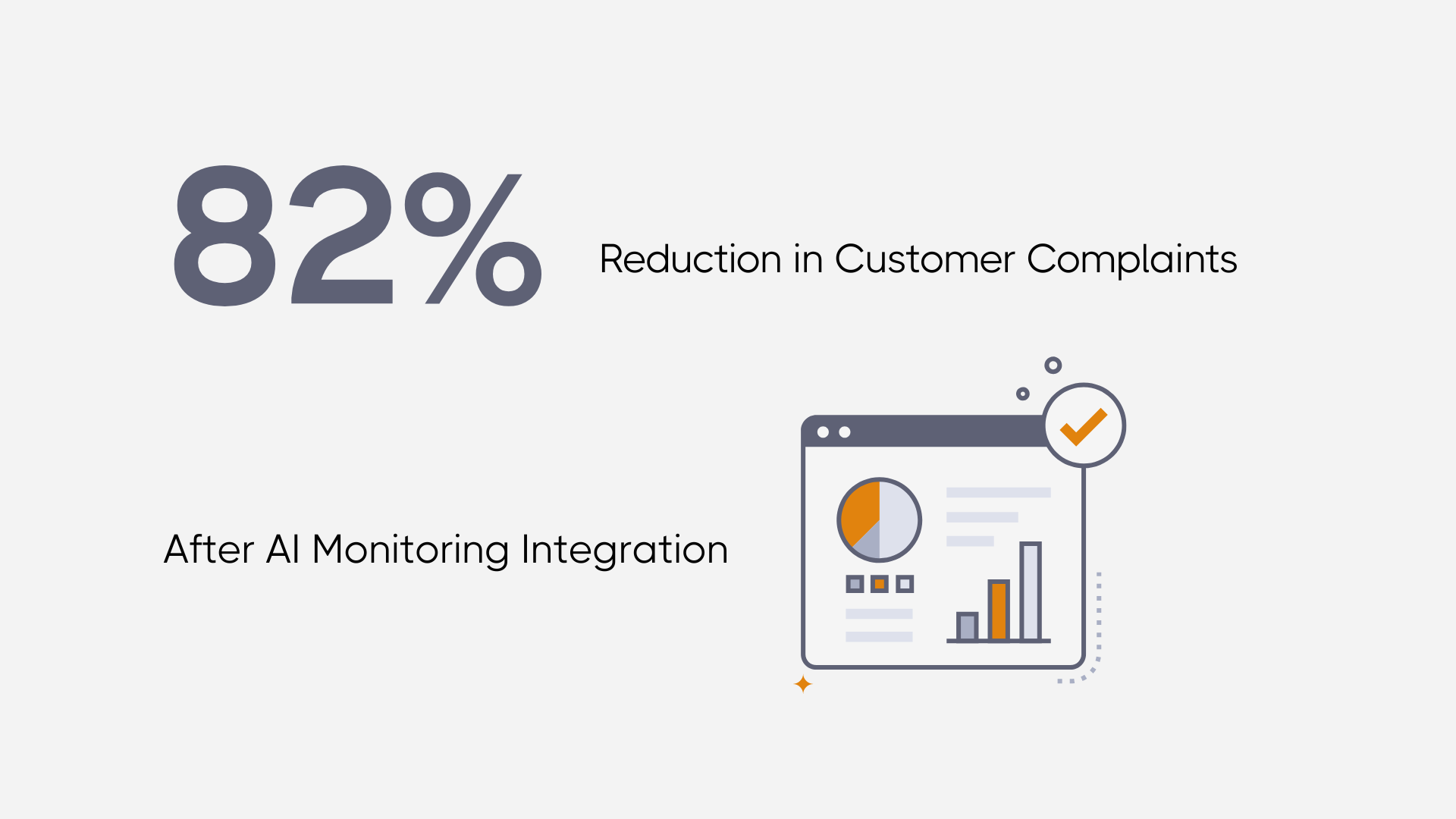
Fewer complaints mean issues are being caught (and fixed) early, saving the company money and protecting its brand reputation. These kinds of quick wins explain why 83% of food and beverage companies plan to increase their AI investments. The technology has matured to the point that it’s delivering tangible ROI, not just hype.
It’s also worth noting how attitudes have changed on the factory floor. Initially, there were fears that AI would be too complex or wouldn’t “stick” in daily operations. But success stories are easing those fears.
Executives like Tyler Marshall of Advantive observe that manufacturers, faced with labor shortages and economic pressures, “now have to modernize quickly, and AI plays a key role in this transformation”. Instead of drowning in data and manual paperwork, plant teams using AI report having more time to focus on improvements.
Digital systems give everyone – from QA managers to operators – a shared, real-time view of production, so “teams can act faster, spot deviations earlier, and make better decisions at every level”. In short, modern food manufacturers are seeing that AI is not an experimental gadget – it’s a practical tool to boost Food Manufacturing ROI day-to-day.
The 4 ROI Streams Food Manufacturers Can Capture
When we talk about return on investment in food manufacturing, it isn’t one monolithic thing ROI comes from multiple streams of value.
Based on industry analysis and real implementations, food and beverage companies are capturing ROI in four key areas:
Reducing Waste and Losses
AI and automation help minimize waste – whether it’s wasted ingredients, product shrink, or time. By catching quality issues early and optimizing processes, companies throw away less product and avoid costly rework. For instance, measuring a “right-first-time” production metric (batches that require no rework or hold) is directly tied to cost savings.
Improvements here mean less scrap, less labor fixing mistakes, and lower disposal costs. Rather than viewing these as unavoidable losses, manufacturers are using technology to systematically drive waste out of the system. The result is immediate savings that improve margins (and often sustainability too). For a closer look at how tracking true batch-level costs exposes exactly where those margins leak, see IONI's guide to recipe and food costing software for food manufacturers.
Improving Yield and Throughput
Yield is the flip side of waste – it’s about getting more good products out for the same input. Even a small uptick in yield (or a small reduction in downtime) can translate to huge financial gains over time. AI helps by fine tuning processes (e.g. adjusting fill levels to reduce overfilling, optimizing cooking times, or minimizing changeover downtime).
In practice, this means more sellable units per batch and higher line efficiency. Some “AI high performers” in manufacturing have been able to attribute over 5% of their EBIT (profit) directly to AI-driven improvements like yield optimization and throughput gains. In short, smarter operations = more output = higher ROI.
Minimizing Recalls and Compliance Costs
One of the most dramatic ROI streams is risk prevention – avoiding the massive costs of food safety failures. As noted, a single recall can cost $10 million (or far more) and shatter customer trust.
By using AI for vigilant monitoring, traceability, and rapid incident response, companies can prevent many issues or contain them before they escalate. For example, improved digital traceability can cut recall costs by up to 80%, potentially saving tens of millions of dollars in averted losses. Preventive controls, automated allergen checks, and real-time alerts all ensure that problems are caught before products leave the plant.
The ROI here is calculated in crises not happening as a difficult number to pin down, but incredibly significant. As food safety professionals often say: prevention is far cheaper than reaction. A company might invest $50k to $200k in better controls or software, and thereby avoid a mistake that would have cost $5 million so that’s an ROI any CFO would celebrate.
Building Consumer Trust and Brand Value
The fourth stream is less about immediate savings and more about top-line growth and brand protection. Food companies that consistently deliver safe, quality products build a reputation that consumers (and retail buyers) trust. In an age of social media and heightened awareness, brand loyalty is deeply tied to food safety practices. Conversely, a single high-profile failure can permanently damage a brand.
Companies leading in food safety are improving margins, protecting brand equity, and even reducing insurance premiums by demonstrating strong programs. In other words, investing in quality and transparency pays off through customer loyalty, new business opportunities, and even negotiating power (retailers and partners prefer suppliers with a proven track record). This stream of ROI is about revenue preservation and growth – it’s the long-term payoff of being known as a trusted, reliable food manufacturer.
These four ROI streams: waste reduction, yield improvement, risk mitigation, and brand trust encompass the full spectrum of value that modern food manufacturers can capture. Rather than seeing compliance and operational excellence as a cost center, companies are now seeing them deliver ROI through less waste, higher output, fewer costly incidents, and stronger customer confidence.
Next, we’ll look at how AI specifically drives each of these areas, turbocharging the food industry’s return on investment.
AI’s Role in Driving These ROI Streams
How exactly does artificial intelligence enable these ROI gains in practice? Let’s connect the dots between the streams above and the capabilities of modern AI and digital tools:
Reducing Waste
AI helps cut waste in multiple ways. For example, computer vision systems on the line can automatically reject defective or contaminated products early, so you don’t waste resources processing them further. AI algorithms also analyze production data to pinpoint inefficiencies – maybe a particular production line experiences yield loss during certain hours or a specific ingredient tends to be overused.
By identifying these patterns, AI gives manufacturers insight to tighten up processes and prevent waste before it happens. One common “quick win” is using AI to optimize fill levels or mixing times so that every gram of ingredient yields maximum product (minimizing giveaway).
In fact, industry analyses show the most immediate ROI of AI often comes from unlocking this kind of process data and automating routine analysis. Instead of managers spending days sifting through logs to find why 2% of product was lost last month, an AI system can crunch years of records overnight and flag the root causes. The bottom line: AI turns data into actions that eliminate sources of waste and loss, directly saving money.
Improving Yield & Efficiency
AI is like a coach for your factory – continually nudging it to perform at its peak. Consider predictive analytics that adjust machine settings in real time based on environmental data (e.g. humidity or temperature) to maintain consistent output.
Or AI-driven scheduling that sequences production orders optimally to reduce downtime between runs. These lead to higher effective yield and throughput. Another huge factor is predictive maintenance: AI models forecast when equipment is likely to fail or degrade, so you can service it just in time.
This prevents unexpected breakdowns that would halt production (improving overall equipment effectiveness) and also extends the life of machines. As noted earlier, predictive maintenance alone can slash downtime by nearly half, which for a high-volume plant translates to a significant jump in output and ROI.
AI also aids efficiency by guiding labor: for instance, dynamic work instructions delivered via tablets can help workers complete tasks faster and with fewer errors (especially helpful in high-turnover environments).
In short, AI contributes to Food Manufacturing ROI by ensuring every resource: machines, materials, people are utilized as efficiently as possible. Many manufacturers start with one or two such AI use-cases (like yield optimization or maintenance) because they are easy to measure and close to the operational “heart” of the business, delivering quick, clear returns.
Minimizing Recalls & Risk
This is perhaps where AI’s impact can be most dramatic. Modern AI systems act as sentinels, watching over critical control points and quality data 24/7 in a way no human team realistically could.
For example, AI can monitor sensor readings (temperatures, pH, etc.) in real time and detect anomalies that hint at contamination risk – enabling you to intervene before a batch goes bad. AI-based analytics can also correlate subtle patterns (like a slight equipment vibration plus a humidity spike) that historically preceded a quality incident, giving a predictive early warning. Another area is traceability: AI and digital platforms greatly speed up tracking and tracing of ingredients and products. If a problem is discovered, an AI-driven traceability tool can almost instantly pull up all affected lots, ingredients, and where they were distributed.
This precision means that if you ever do have to execute a recall, you can narrowly target it and avoid the “blanket” recalls that destroy unnecessary products and cost millions. When it comes to food safety compliance, AI also keeps you continually audit-ready. Instead of periodic checks, AI can constantly verify that records and readings meet FDA or GFSI standards, and immediately alert you to any deviation.
This reduces the chance of non-compliance fines or surprise audit findings – essentially preventing costly incidents before they snowball. There’s a real-world example that highlights this ROI: A global bakery installed an AI-powered label verification system (for about $85,000) and shortly after, it caught a labeling error that could have led to a Class I allergen recall.
By automatically flagging the mistake in minutes, they contained the issue to a few products. Without it, mislabeled packages would have shipped, potentially causing illness or death and triggering a massive recall. That one AI system likely saved the company millions of dollars (and untold reputation damage) in one catch. Stories like this illustrate how AI is fundamentally changing risk management from reactive to proactive – a huge ROI booster.
Building Trust through Data & Transparency
AI and digital platforms also play a subtler role in strengthening customer and partner trust – which, as we discussed, has real financial value. Today’s consumers and business customers are increasingly interested in transparency: where was this food sourced, how was it made, is the company socially responsible?
AI can help provide those answers. For instance, blockchain or AI-supported traceability can allow end-to-end visibility of the supply chain, which not only improves safety but can be shared with consumers for reassurance. Some brands now let shoppers scan a QR code to see the “journey” of their product.
This kind of openness builds confidence. Internally, the use of AI and automation itself sends a message that a manufacturer is committed to state-of-the-art quality control. It’s no coincidence that companies known for excellence in food safety (often leveraging advanced tech) tend to be the ones with strong brand loyalty – even when crises strike industry-wide. Moreover, AI tools can ensure consistency across all facilities and batches, which means customers get the same high-quality experience every time.
Over time, that consistency and reliability translate into brand equity that is hard to quantify but clearly reflected in sales. Analysts have noted that companies with robust, tech-driven food safety programs often enjoy lower insurance premiums and fewer legal issues – essentially an “ROI dividend” of trustworthiness. AI’s role here is to make excellence routine and visible: when your operations are transparent and tightly controlled, you can confidently market your quality and safety as selling points. In the end, this drives repeat business and brand differentiation, adding to ROI in the long run.
To sum up, AI acts as a force multiplier for each ROI stream. Technologies that improve productivity, reduce waste, and strengthen compliance tend to deliver the fastest returns, and that’s exactly where AI excels in food manufacturing. Rather than relying solely on humans to manage an increasingly complex production environment, AI provides tireless monitoring, instant analysis, and predictive insights.
The result is that manufacturers can achieve levels of efficiency, safety, and consistency previously unattainable – and that translates directly into dollars saved and earned. As we’ll see next, IONI’s platform is a prime example of integrating AI across these areas to deliver reliable ROI.
How IONI Integrates AI to Deliver Reliable ROI
Having discussed the what and why, let’s turn to the how. IONI is a next-generation food manufacturing software platform that brings all these AI benefits together.
Designed specifically for food safety, quality, and production efficiency, IONI addresses the pain points that traditionally drain resources and provides a faster path to ROI. Here’s a breakdown of how IONI’s features align with the four ROI streams we identified:
AI-Driven HACCP Planning and Fast Onboarding
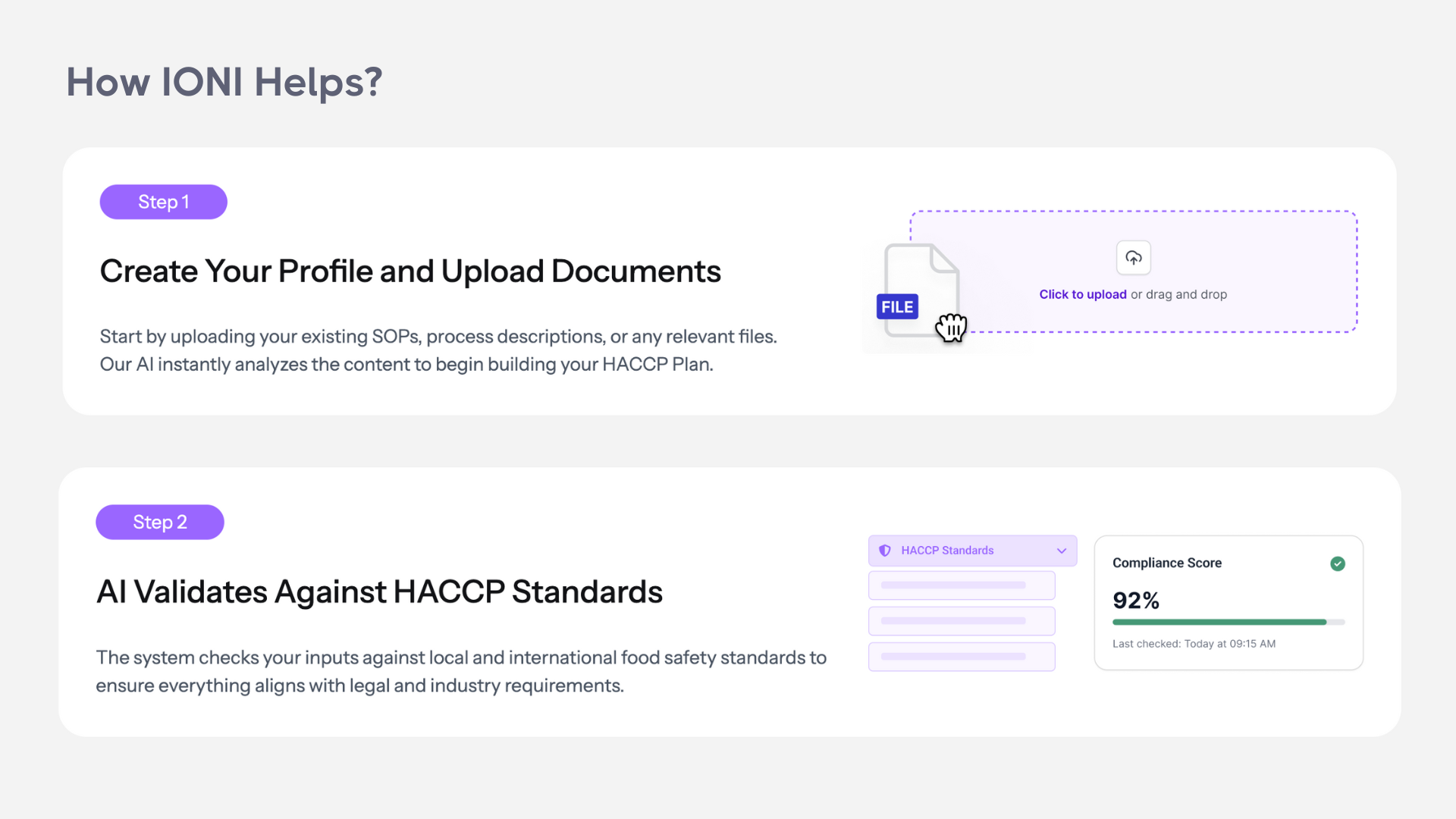
One of the most time-consuming tasks for food manufacturers is building and updating HACCP plans and food safety programs. IONI tackles this head on with an AI-powered HACCP Plan Builder. Instead of spending weeks writing plans or hiring expensive consultants, you can simply upload your existing documents and let IONI do the heavy lifting.
The platform’s AI parses your SOPs, recipes, and hazard analyses, then automatically generates a complete digital HACCP plan – including identified hazards, critical control points (CCPs), flow diagrams, and even suggested SOPs – in under an hour. This not only saves enormous labor (think of the dozens of hours a quality manager might spend on a manual HACCP write-up), but it also ensures nothing is missed. IONI’s AI cross-checks against global standards (Codex, FDA, GFSI, etc.) so that your plan is compliant by design.
The ROI here is immediate: you “stop wasting hours on paperwork”, and can redeploy that time to production or training. Companies have reported being able to digitize and modernize their entire food safety management system in days with IONI, versus months with traditional methods. Rapid onboarding means faster time-to-value – you start getting returns from day one.
By simplifying HACCP creation and updates, IONI ensures that your preventive controls are always up to date with minimal effort, which directly ties into waste reduction (through better hazard controls) and risk mitigation.
Continuous Compliance Monitoring and CAPA Automation
Remember those frantic pre-audit scrambles and the tedious daily record-keeping we discussed? IONI essentially eliminates those. The platform continuously monitors all your food safety and quality records in real time. It’s constantly checking your logs, readings, and activities against regulatory requirements (FSMA, SQF/BRCGS, etc.) and your own standards.
The moment it detects a gap or a deviation, it sends an alert. In other words, IONI provides an “instant readiness score” before any inspection. Instead of spending 30+ hours gathering documents for an audit (the unfortunate norm in many plants), your audit evidence is always up-to-date and one click away. This not only saves those labor hours (improving ROI through efficiency), but also avoids the costs of non-compliance. If something is trending wrong, e.g. say a CCP log is missing entries - IONI flags it so you can fix it before it becomes a reportable issue. Another huge feature is AI-driven CAPA (Corrective and Preventive Action) management.
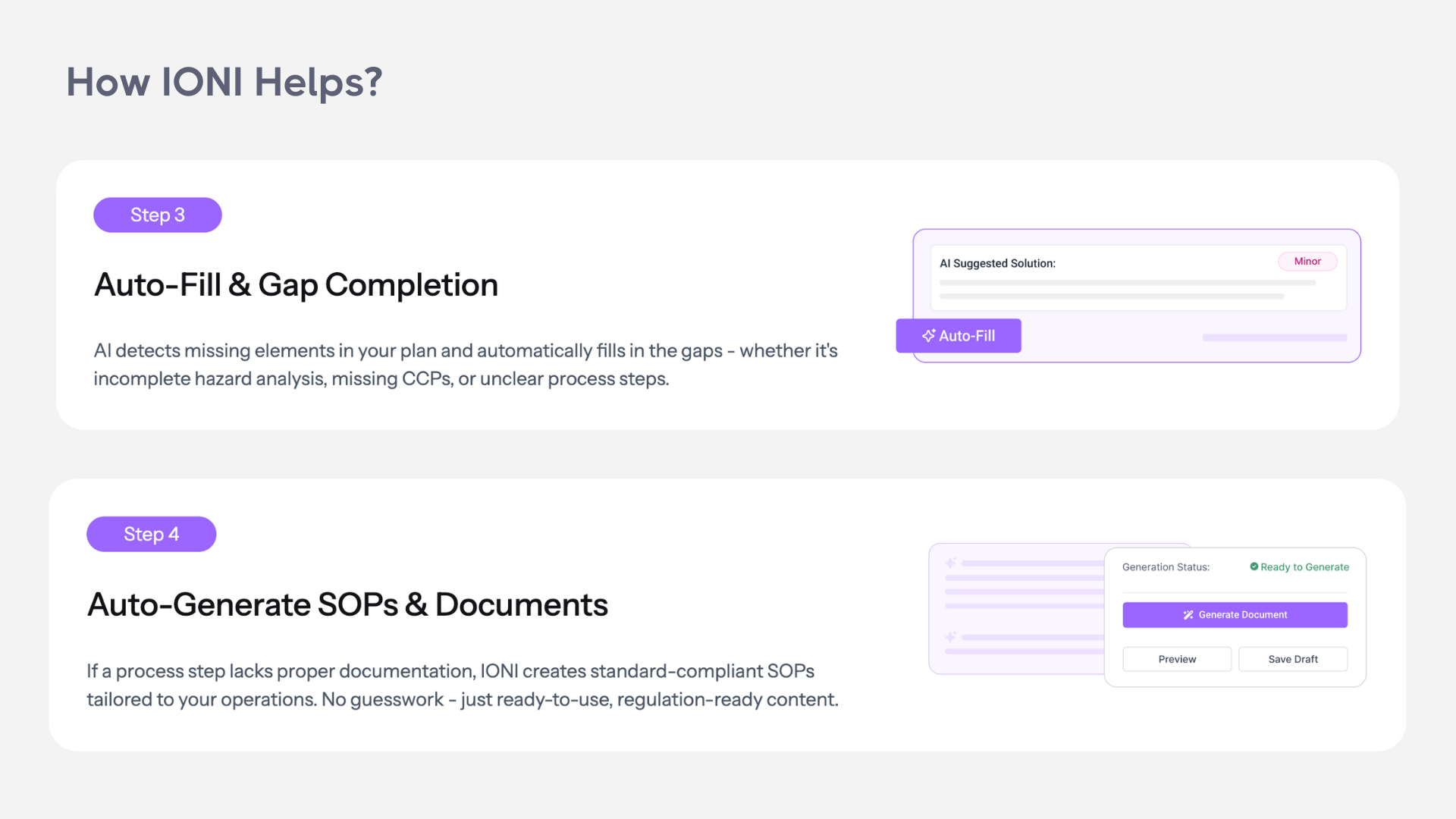
Writing CAPA reports and doing root-cause analysis can eat up countless hours, and if done poorly, issues repeat and cost you money. IONI’s AI addresses this by auto-generating CAPA drafts whenever a deviation occurs. It analyzes the data to suggest likely root causes and even recommends corrective actions.
All you do is review and approve. The system then tracks if the CAPA was effective (using your ongoing data) to prevent recurrence. This closes the loop fast and in fact, IONI users can close findings roughly 3× faster than before, and crucially, they prevent repeat non-conformances by learning from each incident. The ROI impact is multifold: labor savings (your QA team isn’t buried in paperwork), avoidance of compliance slips (which could lead to recalls or fines), and a stronger continuous improvement cycle that drives down costs over time.
Essentially, IONI acts like a constant audit assistant and quality control analyst, ensuring you are always inspection-ready and that problems are promptly corrected – with minimal manual effort on your part.
Intelligent Traceability and Recall Readiness
IONI includes a powerful food manufacturing traceability module that brings AI intelligence to tracking products and ingredients. In practice, this means every batch, lot, and ingredient in your facility gets a digital identity, and the system links them through every step of production.
If you need to trace a finished product back to all its raw ingredients (or vice versa), it’s available at the click of a button. The AI automatically logs all the key data points (receiving, processing, packaging, etc.) and can compile a full product history instantly. This level of traceability is priceless when an issue arises. If, for instance, a supplier sends an ingredient that is later found contaminated, IONI can quickly identify which of your batches used that ingredient and where those products went.
That speed can literally make the difference between a minor withdrawal and a major recall. By isolating the scope quickly, you avoid unnecessarily throwing out perfectly good product “just in case.” (As noted earlier, companies with precise traceability have been able to cut recall costs by 80% in some cases.) IONI’s traceability also helps you comply with new regulations like FSMA 204, which requires fast retrieval of trace data for high-risk foods. Instead of a panicked scramble through paper logs, you’ll be able to demonstrate full traceback within minutes as a huge stress reducer and a safeguard against regulatory penalties.
In short, IONI ensures that if something goes wrong, you can contain it with surgical precision. The ROI here is the avoidance of those massive recall costs and brand damage we discussed. It’s like an insurance policy that actually prevents the disaster rather than just paying for it. Many IONI customers also find that having such robust traceability opens up business opportunities: big clients (e.g., major retailers or global food brands) are more willing to partner when you can prove you have end-to-end control. That can lead to growth, which is yet another return on the investment.
Digital Workflows and Frontline Productivity Gains
The last piece of the ROI puzzle is how IONI improves everyday productivity on the factory floor. A lot of money is lost in inefficient manual workflows: paper checklists, duplicated data entry, training new staff the hard way, and so on.
IONI transforms the shop-floor operations by providing intuitive digital workflows and AI-assisted guidance for frontline teams. What does that mean? For one, all your safety and quality checks can be done on tablets or phones with IONI’s digital checklists, which are easier and faster for workers to complete than paper logs (and no risk of lost paperwork).
The system can prompt operators if they miss a step, ensuring tasks aren’t skipped. It also centralizes all that data, so supervisors get real-time visibility into what’s happening. If a check fails, management knows immediately. Secondly, IONI has a knowledge base that makes SOPs and training materials easily searchable on the floor. New employees can scan a QR code or ask an AI chatbot in the app, “How do I sanitize this equipment?” and get instant answers drawn from your company’s procedures.
This gets newcomers up to speed faster and ensures consistency, even in high-turnover environments. Faster training and fewer errors translate into labor efficiency – your team can accomplish more with the same hours. Another benefit: IONI integrates with IoT sensors and production systems, automatically collecting data (e.g., temperatures, weights) that operators might otherwise have to record by hand. This not only frees up their time, but also improves accuracy.
By eliminating paperwork and automating data capture, IONI helps avoid the “multiple data entry” syndrome where someone writes a temperature on paper, later types it into a spreadsheet, and then emails a report – all of which is non-value-added labor. One food company leader described this kind of digital transformation as turning “static records into dynamic dashboards” for their team, enabling proactive adjustments rather than reactive fixes.
And because IONI is cloud-based and accessible across devices, collaboration between departments (QA, production, maintenance) becomes much easier – everyone’s looking at the same live data rather than waiting for end-of-shift reports. From an ROI standpoint, these productivity gains mean you can either handle more volume with the same staff or reduce overtime and firefighting that used to be spent chasing paperwork and issues.
IONI’s design also emphasizes quick implementation: you can onboard your team in days, not months (no coding or complex IT project required). This is important because it means the payback on the software starts almost immediately, without a long, drawn-out installation period. The faster you go live, the faster you start saving time and money. Companies that have implemented IONI report a transformation in their work culture and instead of operating in “emergency mode” (always reacting to the latest issue), teams can operate in a steady, controlled manner with continuous improvement, which is far more cost-effective and less stressful.
In summary, IONI integrates AI into every critical aspect of food manufacturing operations – from planning to monitoring to traceability to daily workflows. By doing so, it delivers reliable ROI across the board: fewer hours wasted on compliance admin, fewer quality issues and recalls, more efficient production, and stronger confidence from customers and auditors. Each feature of IONI was designed with an eye toward solving real industry pain points (audit prep, manual data entry, slow recalls, etc.) that drain resources.
By solving those, IONI turns compliance and food safety from a cost center into a value generator. It’s not magic; it’s about working smarter. And as the next section will show, the numbers behind these improvements truly add up.
Get started with IONI today to digitize your floor, automate QA tasks, and ensure audit readiness. AI-powered onboarding gets your small facility up and running in days.
Putting Numbers Behind It: Calculators & Examples
It’s clear conceptually that AI and IONI can drive major improvements, but what do the actual numbers look like?
Let’s walk through a few simplified ROI scenarios to illustrate the impact in dollars and cents:
Time Savings Example
Consider a mid-sized food manufacturer that undergoes two major audits per year (one customer audit, one certification audit). Traditionally, the QA team might spend about 30 hours preparing documentation and records for each audit – that’s 60 hours a year of work dedicated just to audit prep.
If we value a QA manager’s time at, say, $50/hour (fully burdened rate), that’s $3,000 per year spent on audit prep labor. Now, with IONI’s continuous compliance and readiness scoring, that prep time is virtually eliminated so the records are ready to go at any time. Those 60 hours can be redirected to other productive tasks (or potentially, the company could avoid hiring extra temporary staff during audit season).
So that’s a direct $3k savings in labor. It might seem small, but consider also the opportunity cost: those 60 hours could be used to, for example, conduct additional employee training or optimize a process, which have their own ROI.
Scale this up: some larger companies spend hundreds of hours on compliance paperwork annually, and you can see tens of thousands of dollars in potential labor savings by using AI automation. When comparing the cost of a platform like IONI to the labor it saves, the ROI can often be calculated in months, not years.
Error/Recall Prevention Example
Financially, avoiding one major recall is the ultimate ROI jackpot. We saw earlier the industry averages ( ~$10 million per recall, not including lost sales). Let’s use a specific illustration drawn from a real scenario: that bakery with the allergen labeling near-miss.
They invested approximately $85,000 in an AI-powered vision system for label verification. Within a short time, it prevented a Class I recall by catching a labeling error early. Had that error gone out to market, the recall would have likely cost the company millions (between customer notifications, product retrieval and destruction, possible lawsuits, not to mention brand damage).
For argument’s sake, say it could have been a $5 million event. By spending $85k, they potentially saved $5M – that’s an ROI of ≈5800% on that investment, a virtually unheard-of return in any other business context. Even if you consider probabilities (maybe such a recall might only occur once every 5–10 years), the expected value of prevention is still easily in the seven figures.
Another example: IONI’s traceability might help you avoid throwing away borderline products. If improved tracking and data mean that during a contamination scare you only recall 10 batches instead of 100 (because you can prove the other 90 are unaffected), that could be a savings of, say, $1 million in spared product write-off.
These scenarios show how the food industry’s return on investment in prevention is extremely high: a small upfront spend on AI-driven controls can avert huge losses. Many companies now even use ROI calculators specifically for food safety investments, which factor in the probability and cost of incidents. Because the cost of failure (a major outbreak or recall) is so catastrophic, even a modest reduction in risk has a big monetary value when multiplied out.
Productivity and Yield Example
Let’s crunch a simple number on throughput. Suppose a production line produces $10,000 worth of goods per hour when running. If AI-based predictive maintenance and process optimization can increase line uptime by just 2% (by reducing unplanned stops and speeding up changeovers), over a year that might equate to hundreds of extra production hours.
For a single 8,000-hour-per-year line, 2% more uptime is 160 extra hours of running. At $10k per hour, that’s $1.6 million in additional product made (and sold) annually from the same fixed assets and labor. Even if that figure seems high, scale it down: let’s say more conservatively you gain 40 extra hours of output – that’s still $400k in revenue. These back-of-the-envelope numbers illustrate why manufacturers are excited about AI.
Even a 1–2% improvement in efficiency or yield can save or earn hundreds of thousands of dollars at scale. When evaluating ROI, companies often start with these “easy math” cases: “If this system helps us pack an extra 500 cases a week, what is that worth? If it cuts waste by 1%, how much do we save in raw materials?”
The answers usually justify the investment. In fact, certain automation projects in packaging and logistics have well-documented payback periods of 12–24 months in food manufacturing. Those are quick returns in an industry that traditionally has been very cost-sensitive.
Quality Improvement Example
It’s harder to quantify improvements in quality or consistency until you tie them to metrics like complaints or customer returns. But let’s try: earlier, we cited a case of 82% fewer complaints after implementing AI analytics.
If a company was dealing with, say, 100 complaints per quarter and each complaint (investigation, product replacement, possible lost customer) cost $200 on average, that’s $20,000/quarter in complaint handling. An 82% reduction would save about $16k per quarter, or $64k per year so again, directly contributing to ROI. Moreover, fewer complaints often correlate with fewer product holds and internal non-conformance issues, which themselves have costs.
The ripple effect of better quality can be significant: less rework on the line, less discounted product, and stronger customer retention. If those complaint reductions also mean you avoided one lost client or kept a major retailer happy, the revenue preserved could be far larger.
Employee Efficiency Example
Let’s look at something as simple as digitizing paperwork. If line operators spend 15 minutes at the end of each shift compiling paper logs and cleaning up forms, that’s 0.25 hours per shift. In a 24/7 operation with 3 shifts/day, that’s 0.75 hours per day, ~5.25 hours per week, or ~273 hours per year of non-value added time.
At a labor rate of $30/hour (including benefits), that’s about $8,200 per year spent on clerical work that could be saved if the process were automated. IONI’s digital checklists and auto-data capture do exactly that – they give back those hours to the employees or eliminate them entirely. Multiply this by multiple processes and several employees, and we could easily see tens of thousands of dollars in efficiency gains annually for a single facility.
All the above examples feed into a bigger picture: by using AI and tools like IONI, food manufacturers turn incremental improvements into substantial financial gains. When building a business case, it often involves adding up multiple factors – some savings here, some extra output there, reduced risk over here. Individually, each might justify the project; collectively, they make it a slam dunk.
It’s also important to consider ROI in terms of time: How quickly do you start seeing benefits? Many traditional IT projects in manufacturing took a long time to implement and even longer to pay off, which made executives hesitant. But modern cloud-based AI solutions are proving their value within months.
For example, IONI’s fast onboarding means you could be fully operational in a couple of weeks. If in week 3 you catch a deviation that prevents a minor recall or you save 10 hours on your first audit prep, you’re already seeing returns.
Get started with IONI today to digitize your floor, automate QA tasks, and ensure audit readiness. AI-powered onboarding gets your small facility up and running in days.
By the 6-month mark, you’ll have a trove of improvements and prevented problems that can be quantified. Some companies literally create ROI dashboards or calculators to track the before-and-after metrics (like downtime hours per month, waste percentage, customer complaints, audit findings, etc.). This helps attribute dollar values to the AI initiative. In our experience working with food industry clients, it’s not uncommon to see positive ROI (100% payback of the investment) within the first year of deploying an AI-driven solution, especially when you count the “soft” savings of risk reduction.
In closing this section, remember that ROI in food manufacturing isn’t just about cost cutting – it’s also about value creation. The examples above show cost savings and extra output, but there’s also the value of agility and reputation. An ROI “calculator” might not easily put a number on the fact that your team now spends less time firefighting and more time innovating, or that your brand is trusted and therefore wins more contracts. Yet those are very real contributors to long-term profitability.
The good news is that whether it’s through hard numbers or strategic advantages, the food manufacturing ROI from AI and digitization is demonstrably positive. The companies that have embraced these tools are seeing it, and those still on the fence have a growing number of case studies and data points to give them confidence. Now, with the numbers and examples in mind, let’s wrap up with what all this means for the future of food manufacturing and why capturing ROI through AI is the way forward.
Conclusion
ROI matters in food manufacturing today more than ever before – and fortunately, it’s more achievable than ever as well. We’ve seen that the Food Industry’s Return on Investment in AI and advanced software isn’t just a theoretical promise; it’s being realized in real plants, by real teams, with real dollars. From cutting waste and boosting yields to preventing recalls and strengthening brands, the gains are tangible and significant. This marks a turning point in the industry’s mindset: food safety and operational excellence aren’t just compliance checkboxes or cost centers, they are strategic investments that deliver competitive advantage.
The emergence of AI platforms like IONI is a big reason why reliable ROI is finally within reach. Earlier generations of tech were often clunky, costly, and slow to implement. Many manufacturers had justifiable skepticism after seeing “paperless” systems or generic ERPs fail to live up to the hype on the plant floor.
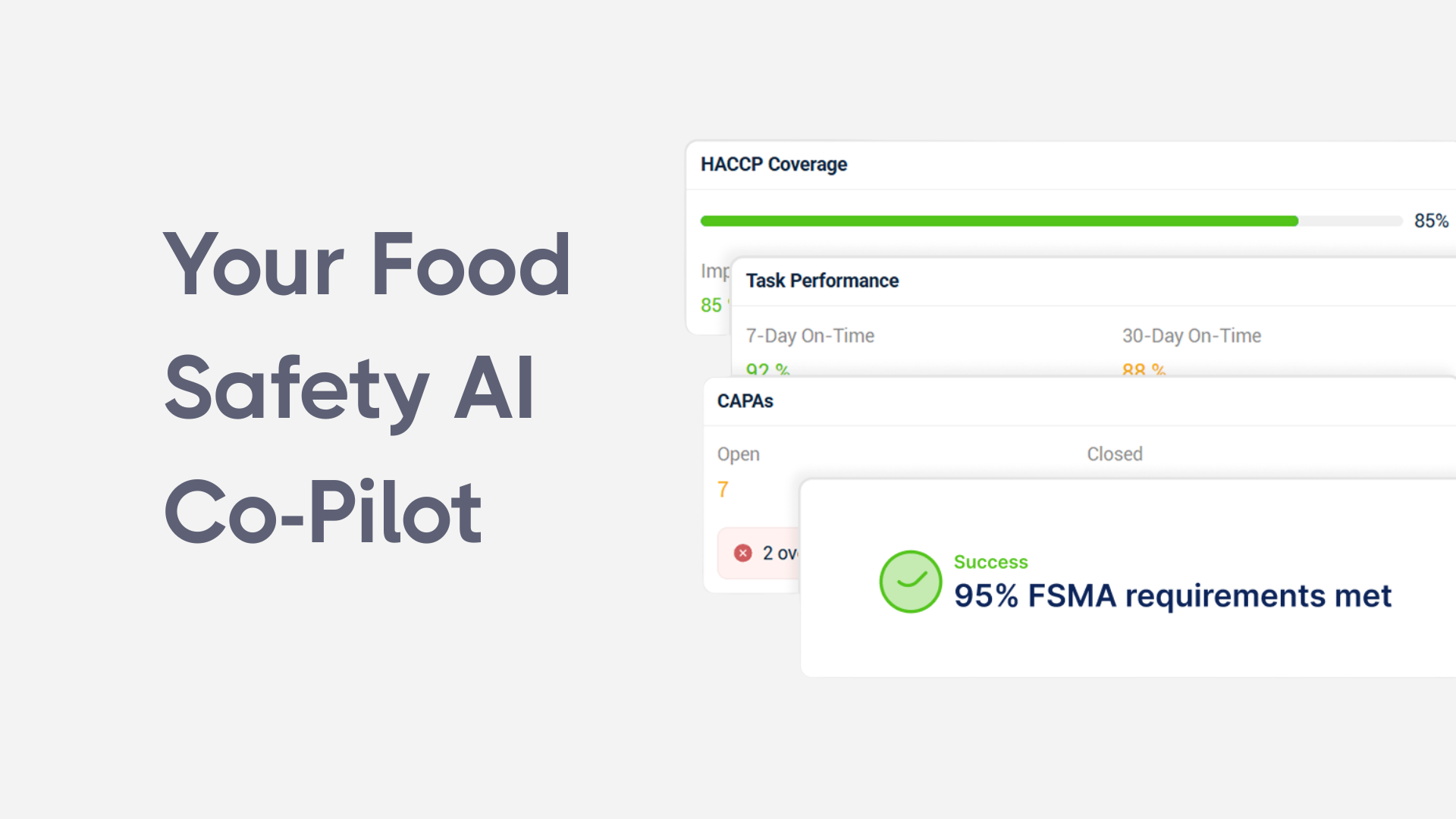
But today’s AI solutions are different: they are smarter, faster, and tailored to industry needs. IONI, for instance, was built by food safety experts who understood the daily pains of QA managers, plant managers, and workers. It shows in the design: it’s intuitive, requires minimal setup, and addresses core issues like HACCP, traceability, and audit readiness head-on. The result is that companies adopting these tools see benefits almost immediately, and those benefits compound over time.
For food and beverage companies evaluating such investments, the key is to start with clear goals and metrics. Identify where your biggest pain points or opportunities lie and is it too much time spent on paperwork? Frequent small quality escapes? Lots of product waste? High audit prep stress?
As we demonstrated in the calculator section, even conservative estimates often show the investment paying for itself in a short span. And beyond the numbers, there’s an aspect of future-proofing: by building a digital, AI-enhanced foundation now, you’re setting your organization up to handle growth, regulatory changes, and market shocks far more gracefully. The food manufacturing ROI of AI isn’t only in the immediate improvements, but in the agility and resilience it provides for the long run.
It’s also worth noting the competitive landscape: as one expert warned, “If, in three or four years’ time, you’re only just popping your head out of the hole, you’re going to be so far behind that it could be detrimental to your business.” In other words, companies that move now on digital transformation will set the benchmarks in efficiency and trust, and late adopters may struggle to catch up.
On the flip side, getting ahead on the ROI curve means you can reinvest those savings and earnings into further innovations (creating a positive feedback loop of improvement). We are already seeing a gap widen between food manufacturers who leverage AI and those who don’t – in audit performance, in customer satisfaction, in agility during crises, you name it.
In conclusion, ROI matters in food manufacturing because it separates the leaders from the laggards in a challenging industry. What’s exciting is that, with modern AI solutions like IONI, achieving a strong ROI is no longer a gamble or a grueling multi-year saga. It’s a realistic, attainable outcome that is being delivered here and now.
Food companies can finally have their cake and eat it too: world-class safety, quality, compliance and efficiency, profitability, and growth. The technology has matured, the case studies are abundant, and the calculators have spoken – the returns are real. The question is not “if” but “when” and “how” you will capture them for your organization. As an expert in this field, my advice is simple: start small if you must, but start somewhere.
Pick a high-impact area, leverage AI to generate value, and scale up from there. Your team will thank you, your customers will thank you, and your balance sheet will definitely thank you. Why ROI matters is self-evident. It’s the lifeblood of a sustainable business. Now we know how to get that ROI in food manufacturing, and the companies that act on this knowledge will lead the industry into its next chapter of success.