.png)
Intro. Why AI Is Reshaping Food Safety and Quality
We need to accept that Food Manufacturing companies today face unprecedented complexity in ensuring products are safe and high-quality.
Globalized supply chains, stricter regulations, and heightened consumer scrutiny mean that traditional methods of Food Safety and Quality Assurance (FSQA) are under strain. It’s no surprise that artificial intelligence (AI) has emerged as a game-changer for the industry.
AI-powered solutions are helping organizations shift from simply checking boxes for compliance to achieving operational excellence, fundamentally rethinking how we manage food safety and quality. The momentum behind AI in food safety is immense.
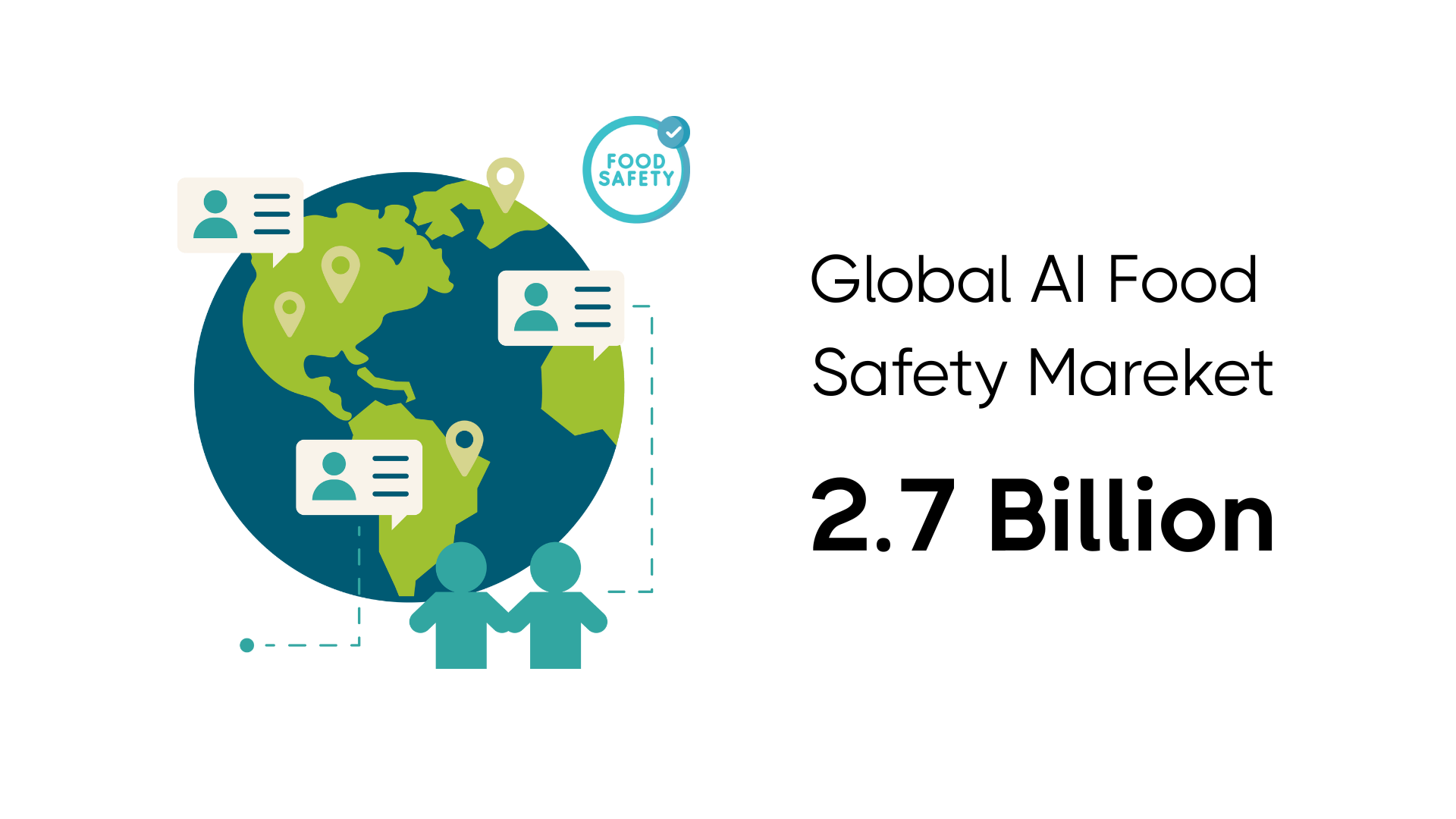
In fact, as of 2025, over 60% of AI adoption in food manufacturing focuses on real-time quality inspection and contamination detection, signaling a major shift from periodic testing toward continuous monitoring. The global market for AI in food safety and quality was valued at $2.7 billion in 2024 and is projected to grow nearly fivefold by 2030.
What’s driving this trend?
Rising foodborne illness outbreaks, complex supply chains, and consumer demand for transparency have created urgency for smarter, faster solutions. Regulatory bodies are also encouraging innovation.
For example, the FDA’s food safety experts have voiced excitement about AI’s potential and are partnering with industry on data-sharing initiatives. All these factors make now the perfect time for FSQA teams to embrace technology.
Crucially, AI isn’t just about fancy tech – it’s about solving real business problems. Early adopters are seeing tangible benefits like faster contamination response, fewer recalls, and stronger compliance records.
As one industry expert put it, “compliance used to be a box-checking exercise… Now executives see it as an enterprise-level risk and opportunity.”
In other words, food safety is now a boardroom priority, and AI is the catalyst turning compliance data into performance improvements. This introduction sets the stage for how AI-driven FSQA management software is revolutionizing the field – helping companies not only meet regulations, but truly excel in delivering safe, quality food.
Understanding FSQA
To appreciate the impact of AI, we first need to understand FSQA itself.
Food Safety and Quality Assurance (FSQA) is the combined discipline of ensuring that every food product is safe to consume and meets quality expectations. Food safety focuses on preventing hazards like contamination or foodborne illness, while quality assurance ensures consistency, correct labeling, and that products meet both regulatory standards and customer expectations.
Together, these functions guard public health, protect brand reputation, and build consumer trust. An effective FSQA program encompasses everything from sanitation procedures and ingredient controls to final product inspections and customer feedback management.
In short, FSQA isn’t just about avoiding trouble; it’s about doing the right thing for consumers and maintaining the confidence that underpins your brand.
FSQA responsibilities span a broad range of activities. Teams must implement preventive controls (like HACCP plans or Hazard Analysis and Critical Control Points), manage GMPs (Good Manufacturing Practices) on the plant floor, conduct regular testing (microbiological, allergen, etc.), and ensure full traceability of ingredients and products.
They prepare for audits by regulatory agencies (FDA, USDA, or in Europe, EFSA and local authorities) and maintain certifications under schemes like SQF or BRCGS. Traditionally, much of this work has involved mountains of paperwork, spreadsheets, and manual checklists. FSQA managers often joke that they spend more time chasing documents than analyzing data.
Therein lies a key challenge with so many data points from production logs and lab results to supplier certificates. How do you turn all this information into actionable insight?
This is where modern food safety and quality management software comes in. Over the past decade, many companies have begun adopting digital tools to streamline FSQA. However, simply digitizing forms is not enough. The real breakthrough is coming from AI-driven FSQA management software that can analyze data, spot trends, and automate routine tasks in a way humans simply can’t match at scale.
Before we dive into those transformations, let’s look at how digital FSQA has evolved to set the foundation for AI.
The Evolution of Digital FSQA Software
Not long ago, most food companies managed safety and quality through manual systems. Paper logs, binders of protocols, and Excel spreadsheets were the norm on the FSQA frontline.
A food safety manager might have used one spreadsheet for tracking sanitation checks, another for recording temperatures, and a filing cabinet full of past audit reports. This patchwork was labor-intensive and prone to errors, yet for years it was accepted as “just how we do things.”
The first wave of change came with basic food quality management software systems that digitized documentation. These early systems (often modules within an ERP or generic quality management platforms) helped centralize data and reduce paperwork. Still, they often functioned as electronic record-keepers rather than intelligent assistants, and many companies stuck with familiar manual processes.
Over the last decade, however, the food industry has seen a significant digital transformation in FSQA. Cloud-based FSQA management software solutions emerged, offering more integrated and accessible ways to handle compliance.
The goal was to break down data silos and give teams real-time visibility. For instance, a plant QA supervisor could enter a deviation on a tablet and immediately alert corporate quality managers – rather than sending emails days later. This shift from paper to digital brought immediate benefits: less time spent on clerical work and faster response to issues.
As one industry expert noted in 2025, “Digitization gives QA, operations, and leadership the same real-time picture… teams can act faster, spot deviations earlier, and make better decisions at every level”. Simply put, moving to food safety quality management software turned static records into dynamic dashboards.
Digital FSQA has also been driven by new regulatory demands. In the U.S., the FDA’s Food Safety Modernization Act (FSMA) has pushed companies to enhance traceability and be “audit-ready” at all times. Notably, FSMA Section 204 imposes a 24-hour requirement for providing trace-back data on certain high-risk food, and this is a game-changer that practically necessitates an electronic system.
In response, many North American companies adopted advanced traceability modules or food safety and quality management software that can generate compliance reports at the click of a button. Similarly, in Europe, retailers and regulators are insisting on faster recall capabilities and end-to-end transparency in the supply chain. This has further nudged the industry toward modern FSQA software that can integrate supplier data, certifications, and even blockchain or IoT inputs for tracking.
As digital systems took hold, forward-thinking organizations realized that going digital is not just a tech project, but a culture shift. Plants that once saw compliance as a chore began to see it as a source of actionable data.
For example, quality leaders at leading food companies report that compliance metrics (like incidents, audit scores, supplier defects) are now being tied directly to business performance. Waste, yield, and productivity are all connected to how well processes are controlled – and digital FSQA systems made those connections visible.
It’s no longer “we have to do this for the inspector” but rather “doing this will reduce downtime and protect our customers.” As a SafetyChain software representative observed, companies are moving “from paper to digital and from reactive to proactive” in their approach.
Global giants like Nestlé exemplify this evolution. In 2025, Nestlé undertook a massive project to unify and digitize over 3,000 HACCP plans across 300 factories worldwide, replacing hundreds of spreadsheets with a single integrated platform. The goal was to transform HACCP from a fragmented, manual compliance activity into a connected, dynamic system that adds value to operations.
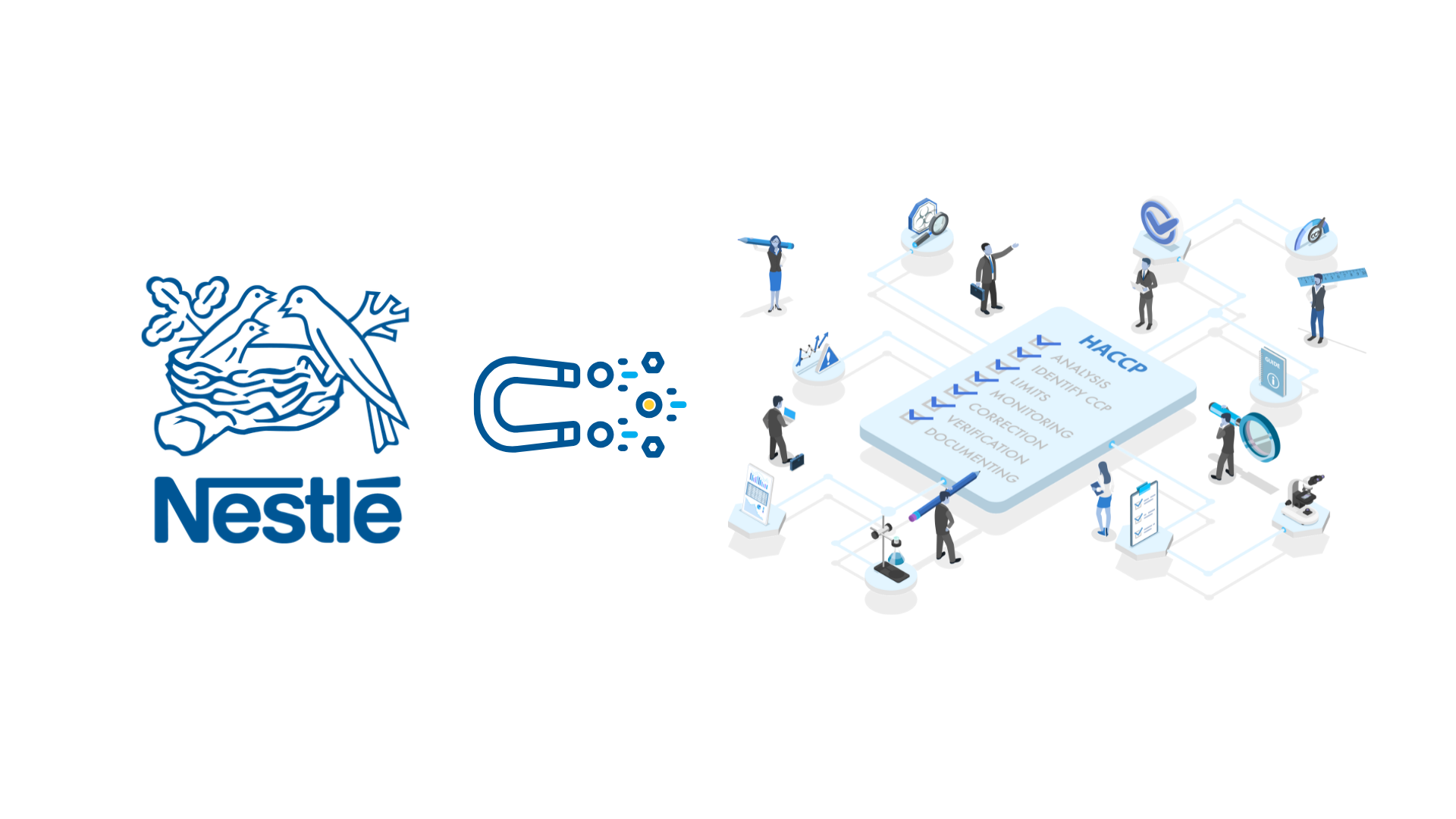
By harmonizing data and automating workflows, Nestlé aimed to achieve global consistency, speed up updates for new risks, and pave the way for future AI use of their data. This kind of digital foundation is critical: it’s hard to leverage AI if your data is stuck on paper or scattered in silos.
Now, with core processes digitized, the stage is set for the next leap: infusing AI into FSQA software. The latest generation of FSQA software platforms is AI-driven, meaning they don’t just store information: they actively analyze it, learn from it, and even make decisions or recommendations.
Let’s explore exactly how AI is transforming food safety and quality management beyond what traditional software could do.
How AI Transforms Food Safety and Quality Management
Now, we are moving to the most important question: what role does AI play here?
Artificial intelligence is transforming FSQA from end to end, turning reactive routines into proactive strategies. Unlike static databases or pre-programmed tools, AI-powered systems can interpret complex data patterns, adapt to new information, and automate decision-making in ways that dramatically improve both compliance and operational efficiency.
Here are several key dimensions of this transformation:
a) From Data Overload to Insights.
Food companies generate an enormous amount of safety and quality data (“digital paperwork” from checks, sensors, lab tests, etc.). Historically, much of this remained dark data – collected but never deeply analyzed. AI changes that.
Modern food safety quality management software uses machine learning to crunch through years of records to find trends and root causes that humans might miss. For example, an AI might correlate subtle temperature fluctuations with sporadic contamination incidents, suggesting a need for equipment calibration.
In fact, industry analyses show the most immediate ROI of AI comes from unlocking such dark data and automating compliance analysis, rather than sci-fi predictions. Instead of QA managers spending days preparing audit spreadsheets, AI-driven systems can instantly compile and audit your data against standards, flagging any gaps. The result is not only time saved, but richer insight: compliance data becomes actionable intelligence.
b) Predictive Analytics for Risk Prevention.
Perhaps the biggest shift is moving from reactive to predictive. Traditional FSQA caught problems after the fact (a pathogen found in a finished product, an allergen missed on a label, etc.). AI tools are helping predict and prevent such issues. How? By analyzing historical data and real-time inputs, AI can identify patterns that precede a failure.
For instance, AI-powered models can use environmental sensor readings, production throughput, and even weather data to predict the likelihood of microbial growth or spoilage before it happens.
c) Automation of Routine Compliance Tasks.
FSQA professionals often spend an inordinate amount of time on routine tasks like filling logs, transcribing data, or compiling reports for audits. AI is superb at automating these administrative burdens. Modern FSQA management software can auto-fill repetitive data entries, transcribe handwritten records with OCR, and even generate entire reports or HACCP documents using natural language generation.
For instance, if a supervisor completes a sanitation checklist on paper, an AI tool with optical recognition can ingest that and update your digital system – no manual retyping. Some AI platforms go further: the IONI platform, for example, can read and understand your existing FSQA documents (SOPs, policies, past audits) and then auto-generate a compliant HACCP plan complete with monitoring procedures and record templates.
What used to take weeks of manual effort can be done in hours. Similarly, AI chatbots or assistants can answer employees’ questions on the floor (“What’s the CCP for this step?”) by pulling from your digital FSQA knowledge base instantly. By automating grunt work, AI frees up quality managers to focus on higher-level risk management and process improvement.
d) Enhancing Traceability and Recall Readiness.
When a contamination or quality issue does occur, acting fast is critical. AI dramatically speeds up traceability, the process of tracking a product’s journey from ingredients to consumer. Traditional trace-backs might take days of combing through batch records. In contrast, AI-enabled traceability systems can almost instantly filter and link records.
For example, if you discover Listeria in a lot of frozen vegetables, an AI traceability tool can quickly identify all products, production shifts, and distribution points that that lot went through, even predicting other lots at risk due to shared conditions. This precision is vital now that regulations like FSMA 204 demand that companies produce key tracking data within 24 hours for high-risk foods.
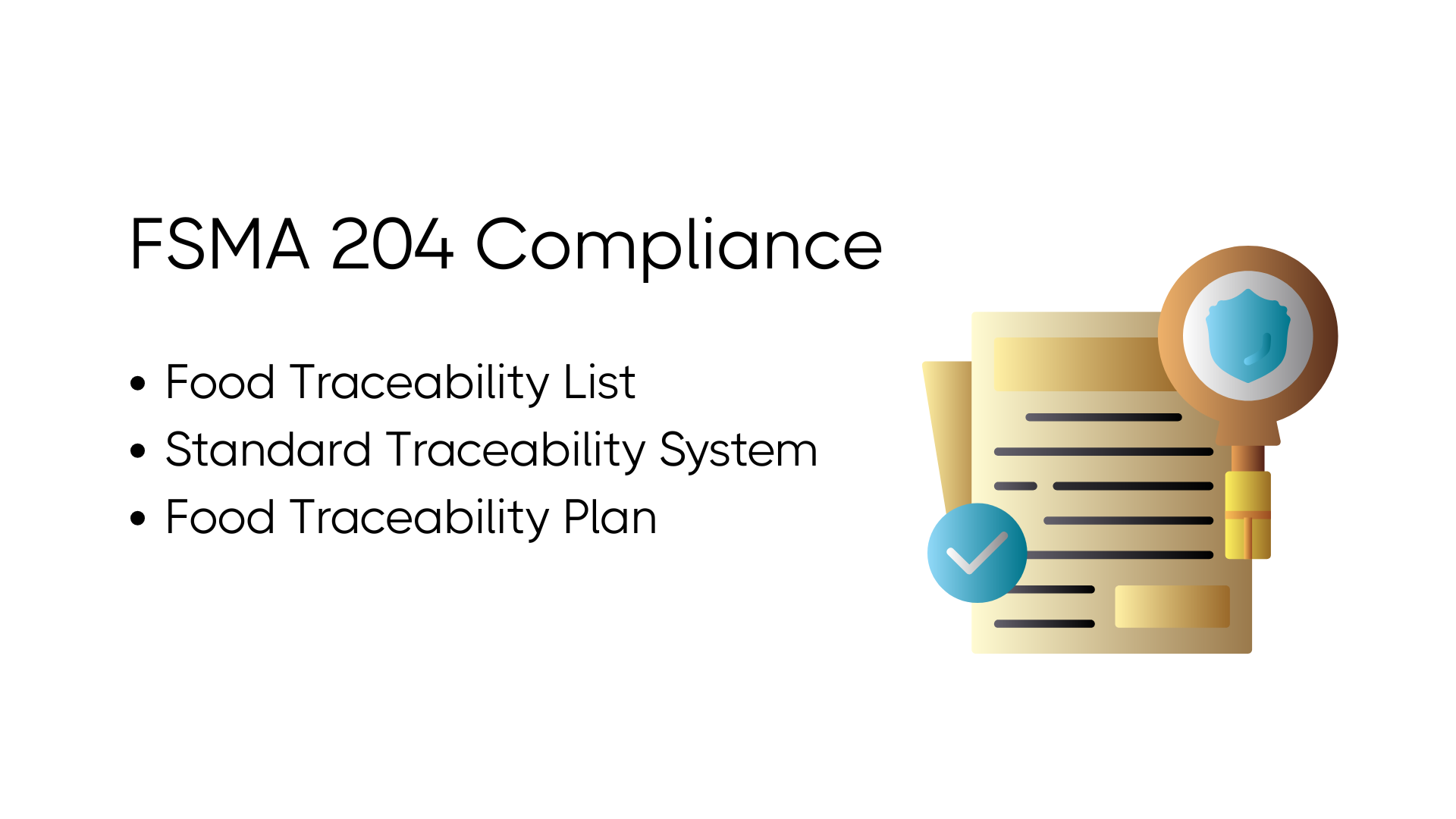
AI traceability not only helps comply with these rules but also minimizes the scope of recalls. By pinpointing exactly which shipments or ingredients are affected, companies can avoid the blanket recalls that create needless waste and panic.
e) HACCP and Food Safety Plan Management.
At the heart of every FSQA program is the HACCP plan or food safety plan. Maintaining these plans – keeping hazard analyses up to date, tweaking processes for new products or regs – is an ongoing challenge. AI is transforming this core activity.
For instance, AI can continuously validate that your records match your plan’s requirements. An AI-driven platform can check in real time that all Critical Control Points are being monitored at required frequencies and alert you if any are missed or out of spec.
Some software even provides a “compliance readiness score” each day based on how your records stack up to regulatory or GFSI standard criteria. This means no more pre-audit scrambles – you know where you stand at all times.
Additionally, AI can assist in automating HACCP updates. If a new hazard emerges (say a new allergen or a supplier change), AI tools can suggest updates to your hazard analysis and even auto-generate new procedures. One case study highlighted how AI helped generate a full HACCP plan in under 30 minutes by analyzing a company’s product and process data.
f) Regulatory Intelligence and Audit Preparedness.
The regulatory landscape for food companies is constantly shifting: new laws, evolving standards, endless documentation requirements. AI is becoming an invaluable ally in staying ahead.
Regulatory intelligence features can monitor global food safety regulations and automatically flag changes relevant to your operations. For example, if the EU adjusts allergen labeling rules or the USDA updates pathogen limits, an AI system can highlight those and even recommend actions to address any gaps.
There are AI tools that convert dense regulatory text into plain-language summaries or checklists for easier internal communication. A striking example comes from Dubai’s food safety department: they used AI to convert complex food legislation into simple audio podcasts in multiple languages, so that industry stakeholders could understand requirements quickly. This innovative use of AI turned what could be a multi-year policy rollout into something that everyone could grasp in weeks.
On the audit side, AI-driven food safety and quality management software makes preparing for inspections almost effortless. All your records, SOPs, training logs, etc., are organized and searchable. One FSQA director described this as getting an “instant readiness score” daily, providing peace of mind that there will be no surprises. By being continually audit-ready, companies avoid last-minute panic and can approach audits as a formality rather than a fire drill.
Overall, AI is infusing every aspect of FSQA with greater intelligence and efficiency. It’s enabling a shift from static compliance to dynamic improvement. Rather than viewing food safety as a cost center, companies using AI see it delivering ROI through waste reduction, better yield, fewer recalls, and stronger customer confidence.
As we’ll see, one platform that exemplifies this transformation is IONI, an AI-driven FSQA solution, but it’s one part of a broader movement sweeping the food industry.
IONI As a Food Safety Solution
Among the new generation of AI-powered FSQA platforms, IONI stands out as a comprehensive solution tailored for food safety and quality management. IONI is a proprietary, intelligent FSQA platform that encapsulates many of the AI capabilities discussed in this article, all within one user-friendly system.
Think of it as an “AI co-pilot” for your FSQA team, handling the heavy lifting of data processing and compliance checks, so your human experts can focus on strategic decisions and improvements.
So, what does IONI do exactly? At its core, IONI is an all-in-one FSQA management software that uses AI to automate and streamline the entire food safety compliance process. It tackles the biggest pain points that quality managers face daily.
1. AI-Document Processing.
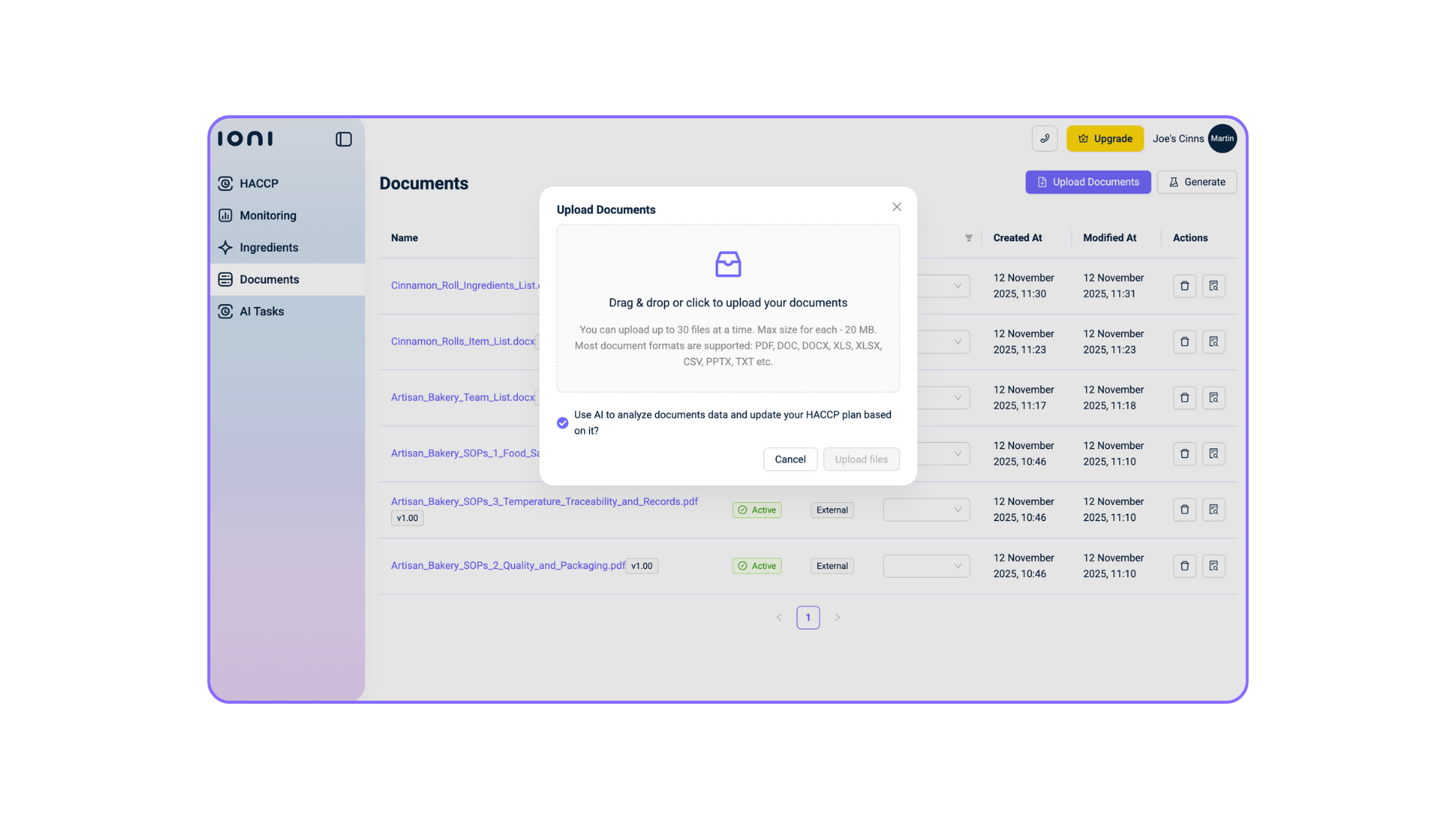
IONI accelerates the move from paper to digital. You can upload your existing SOPs, policies, ingredient lists, and even past audit PDFs into IONI; the platform’s AI will read and parse these documents automatically. This means it identifies your products, ingredients, hazards, CCPs, and monitoring points without you having to configure everything manually.
In practical terms, a process that might have taken weeks of data entry during a software implementation can happen in a day or two with IONI’s AI ingestion. One customer noted they went from piles of paper to a fully structured digital FSQA system in under a week – a process that traditionally might take months of onboarding.
2. Automated HACCP Plan Building.
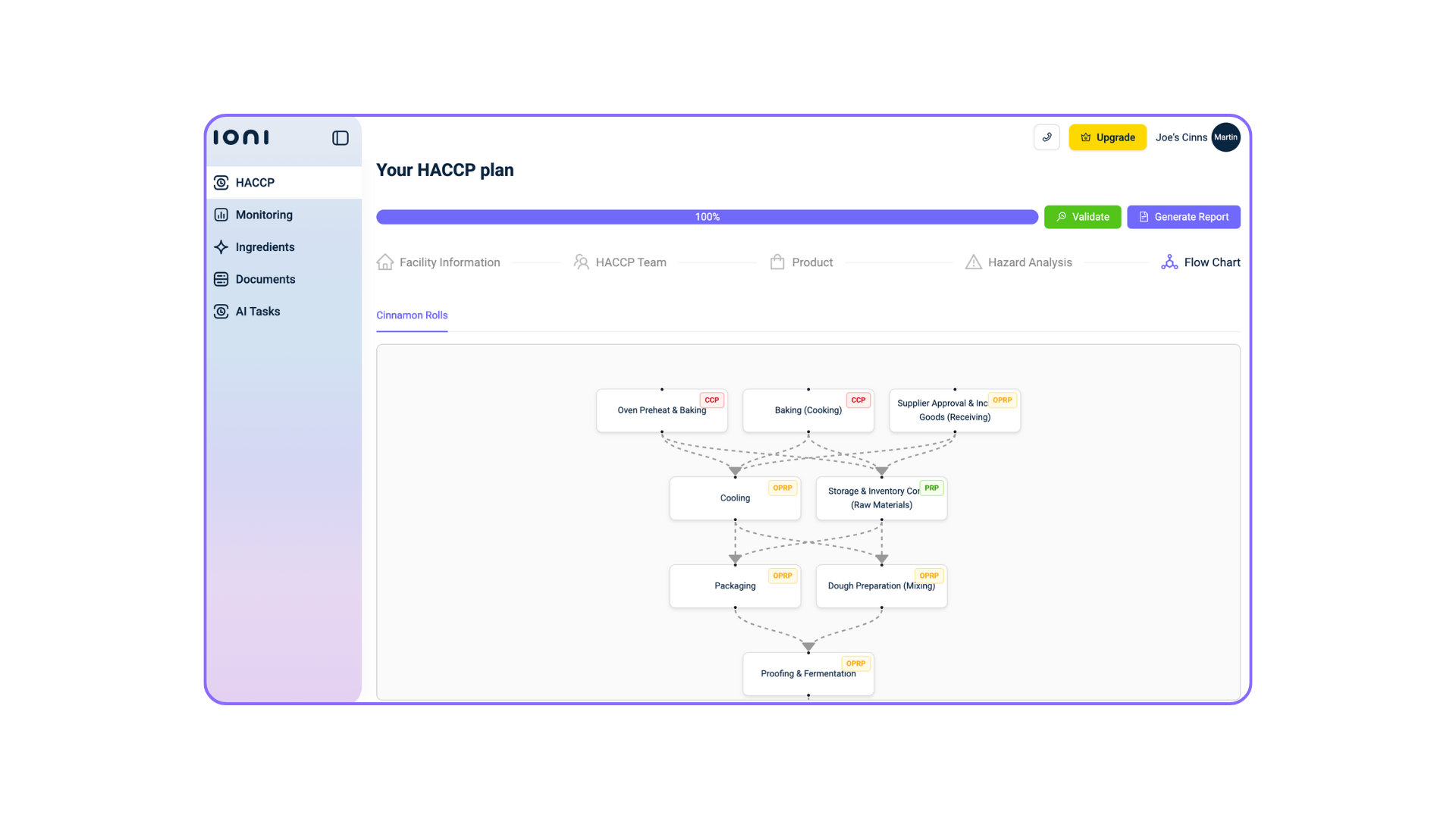
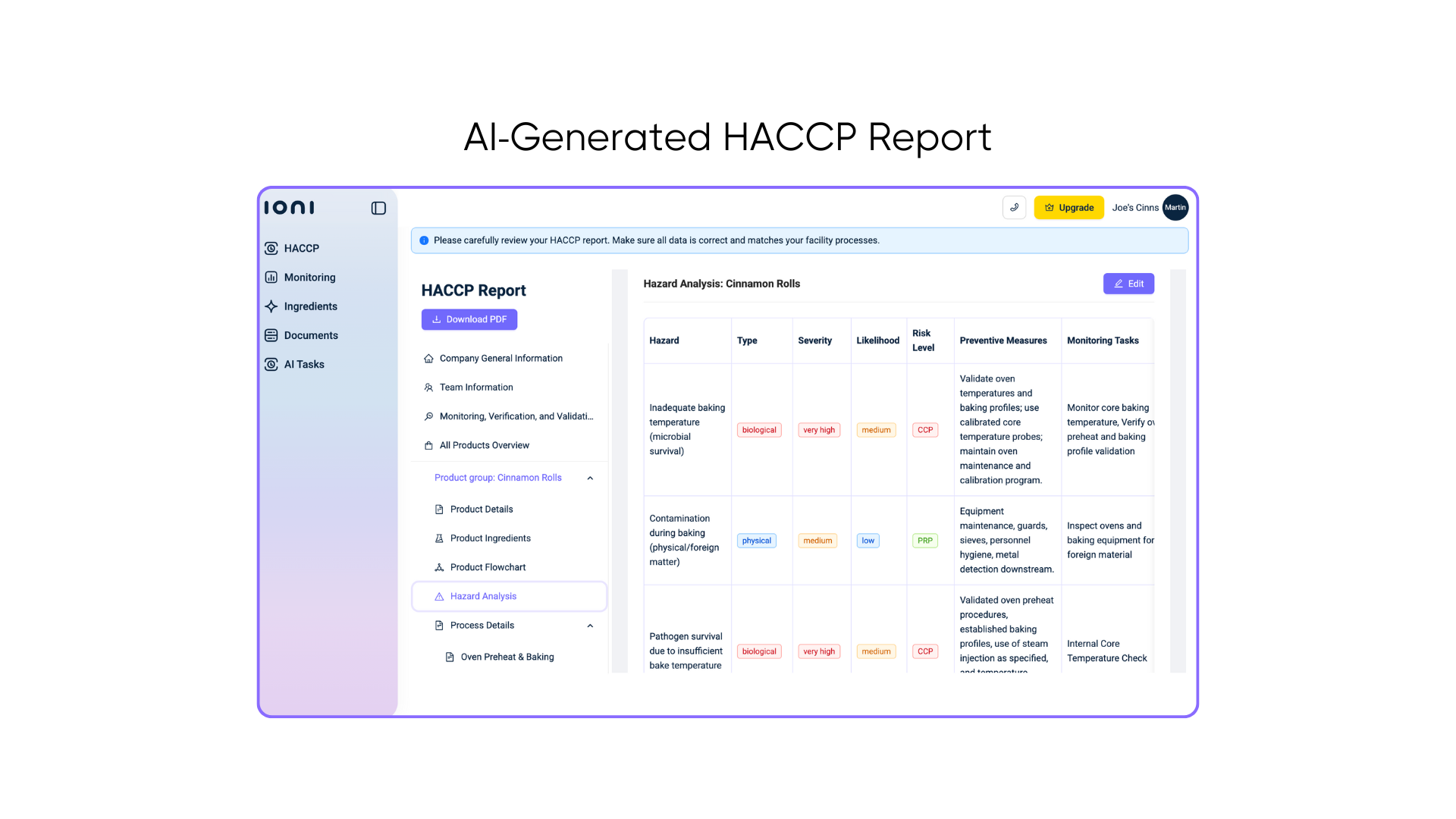
Perhaps IONI’s most impressive trick is its ability to auto-generate HACCP plans and food safety workflows. Once it ingests your process details, IONI creates a complete HACCP framework tailored to your operation. It assigns Critical Control Points, sets up monitoring schedules, and even generates digital checklists and forms for each control step.
The result is a living HACCP plan that is immediately implementable. No blank slate, no staring at templates – IONI gives you a draft that your team can then review and refine. Companies have found that this feature alone cuts down HACCP development time by orders of magnitude.
For example, a mid-sized manufacturer used IONI to expand into a new product line, and what normally would require a consultant and several weeks of work to craft a new HACCP plan was done in a few hours by IONI’s AI. It’s like having a seasoned food safety expert on call 24/7, writing your plan for you.
3. Continuous Compliance Monitoring.
IONI doesn’t just create plans and forget about them – it actively works to keep you continuously compliant.
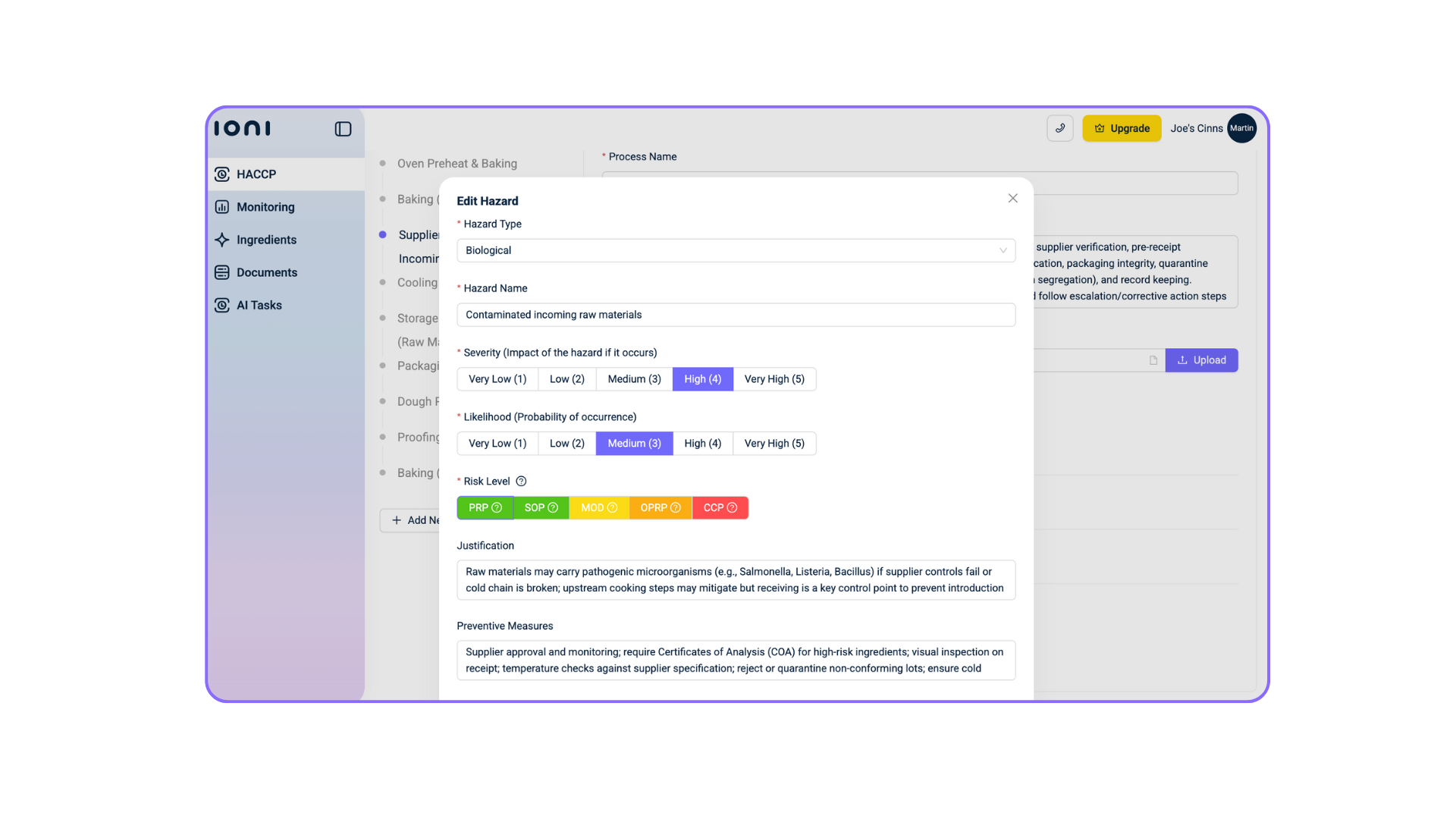
The platform cross-checks your daily records, logs, and test results against the requirements of regulations and standards (FDA rules, USDA, GFSI schemes like SQF/BRCGS, etc.) in real time. If something is missing or out of spec, IONI flags it immediately. For instance, if a CCP log entry is missed or a temperature excursion isn’t followed by the proper corrective action record, IONI will alert the team.
It even provides an instant compliance or “audit readiness” score so you know your status on any given day. This proactive approach means no more ugly surprises at audit time – you’re effectively auditing yourself every day with IONI’s help. One quality director described this as “sleeping easier at night,” knowing that an intelligent system is always double-checking compliance in the background.
4. AI-Driven CAPA and Improvements.
Handling Corrective and Preventive Actions (CAPAs) is another area where IONI shines. When an issue occurs, say a test result fails, or an audit finds a non-conformance, IONI’s AI can kick into gear by suggesting root causes and even drafting a CAPA for you.
Drawing on its knowledge base of common food safety issues and your facility’s history, it might recognize that a string of microbiological positives points to a specific equipment harbor point, for example. It then recommends steps to address the root cause and prevent recurrence. Rather than starting CAPA investigations from scratch, your team gets a head start with AI insights. The platform also tracks all CAPAs to ensure they are closed out and checks that similar future incidents truly decrease, effectively verifying that the fix was effective.
Users of IONI have reported closing out findings 3 times faster than before, thanks to these AI-driven workflows. Faster CAPAs mean safer products and less risk of repeat violations.
5. End-to-End Traceability and Logs Integration.
IONI is built to be the central hub for all your FSQA data. It can integrate with your existing systems (like ERPs, production databases, or lab information systems) via API or simple imports. This means your batch production data, shipping records, supplier info, etc., can all flow into IONI.
The platform’s AI links everything together: ingredients to specific products, processes to specific records, creating a digital thread of traceability from farm to for IONI. In the event of a quality issue or recall, this integrated data model allows IONI to very quickly retrieve the full history of the item in question.
Moreover, IONI generates automatic traceability reports that comply with standards like FSMA 204 at the push of a button (no all-night data crunching sessions required). By having all data in one place, IONI also gives tailored dashboards to different users (plant managers, corporate QA, etc.) so each role sees the KPIs and alerts relevant to them. It’s a one-stop-shop food safety and quality management software platform, but powered by intelligence that keeps everyone on the same page.
6. Global Regulatory Intelligence.
As a modern platform, IONI is aware of the global regulatory environment. It’s pre-loaded with knowledge of FDA, USDA, EU regulations, Codex standards, and major programs like GFSI. As a result, it can adjust its recommendations and checklists depending on which market or certification you operate under IONI.
If you expand to sell in a new country, IONI can help benchmark your current FSQA program against that country’s requirements and highlight gaps. This is immensely valuable for companies that operate internationally or plan to. Instead of scrambling to interpret new regulations, your FSQA software guides you on compliance. IONI’s makers boast that the system is like having a dedicated compliance analyst on the team, constantly scanning for changes in laws and ensuring your procedures stay updated.
In short, IONI encapsulates the promise of AI in FSQA: smarter, faster, and always-on. By using IONI or similar fsqa software, companies can achieve what the title of this article suggests – moving from mere compliance to true operational excellence.
They digitize processes in days, respond to issues in real time, and continuously improve through data-driven insights. Throughout the rest of this article, we will highlight how such AI capabilities translate into concrete benefits and use cases for food safety professionals.
Schedule a demo today and see how your team can manage food recalls faster, smarter, and more reliably.
Key Capabilities of AI FSQA Systems
Modern AI-driven FSQA platforms, like IONI and others, come with a suite of powerful capabilities. Understanding these key features will help an FSQA professional evaluate solutions and identify opportunities to improve their own operations.
Below are some of the core capabilities of AI-enabled food safety and quality management software, explained with their practical implications:
1. Automated Data Ingestion & Integration. AI FSQA systems can automatically ingest data from diverse sources: whether it’s scanning paper documents, parsing PDFs, or pulling digital records via API. They standardize and organize this information in a central database.
Why it matters: No more chasing down spreadsheets or hand-written logs; all your food safety data (from supplier COAs to production records) is aggregated and ready for analysis. This also means new facilities or acquisitions can be onboarded quickly by feeding their existing data to the AI system, rather than configuring everything manually.
2. Machine Learning Analytics & Pattern Recognition. Once data is in the system, machine learning algorithms sift through it to find patterns, trends, and anomalies. This includes statistical process control with AI smarts, detecting when a process is trending toward deviation before it hits a critical limit.
Why it matters: The software might alert you that “Cleaning effectiveness on Line 3 has been slowly declining over 6 months,” prompting a preventative intervention. ML can also identify correlations (e.g., a certain ingredient lot from a supplier coincides with higher defect rates) that would be hard to spot otherwise. Essentially, the AI is continuously auditing your data in the background, 24/7, something no human team could realistically do at scale.
3. Natural Language Processing (NLP) & Document Understanding. AI isn’t only about numbers and images; NLP capabilities allow FSQA software to understand text. This means the system can read regulations, guidelines, or your internal documents and interpret their meaning.
Why it matters: Consider tasks like comparing your allergen policy to new labeling laws: an AI can highlight any mismatches. Or if you receive inspection reports, the AI can parse the text and categorize issues. Some advanced systems turn regulatory updates into summarized checklists or even interactive Q&A. An example we saw was an AI tool converting complex legislation into easy-to-digest podcasts, and that’s NLP in action, making compliance knowledge more accessible.
In daily use, NLP also means you can query your FSQA system in natural language: “Show me all batches last week with high bacterial counts” and get a quick answer, rather than manually querying a database.
4. Intelligent Workflow Automation. AI-powered FSQA platforms often include workflow engines that automate processes based on if/then logic and machine learning. For instance, if a test result comes in above a threshold, the system can automatically create a non-conformance record, assign a CAPA task to a supervisor, and even draft a suggested investigation report.
Why it matters: This ensures no time is lost in reacting to issues. The protocol is triggered immediately and consistently. It’s like having a vigilant orchestrator making sure everyone follows the food safety playbook, and nudging the right people when action is needed. It also reduces reliance on individual memory or initiative; the system drives the process forward, which is especially helpful in multi-site operations where consistency is key.
5. Predictive Modeling & “What-If” Simulations: Beyond reacting to current data, AI FSQA tools can use predictive models to run scenarios. For example, they can simulate the impact of a processing parameter change on food safety (digital twins of your process), or predict the shelf life of a product under various conditions. Some systems allow you to adjust virtual dials and see potential outcomes, which aids in decision-making.
Why it matters: This capability supports proactive risk management. If you want to know “If we extend our production run time by 2 hours, will sanitation efficacy drop below acceptable levels?”, an AI model might be able to warn you of increased risk based on historical patterns.
Or in new product development, predictive models could estimate whether a new recipe formulation might be more susceptible to microbial growth. It’s like having a simulation lab for food safety scenarios, helping teams make data-backed decisions rather than educated guesses.
6. Continuous Learning & Improvement: A hallmark of AI systems is that they can learn and improve over time. FSQA software with machine learning will get better at predicting outcomes or recognizing issues as it processes more data. It can adapt to seasonal changes, new product lines, or shifting supplier performance.
Why it matters: The longer you use an AI FSQA system, the more “tuned” it becomes to your specific operations. This means fewer false alarms and more accurate predictions. It’s the opposite of static rules-based systems that often require constant manual updates – instead, the AI learns from every false positive/negative and feedback from users to refine its algorithms. In practice, this could mean your anomaly detection becomes more precise, or your demand forecasts for raw materials become more accurate, reducing both shortages and overstock-related spoilage.
In summary, AI-equipped FSQA platforms bring together a Swiss army knife of capabilities – from real-time fsqa software monitoring on the factory floor to high-level predictive analytics in the boardroom. They act as extra eyes, ears, and brains for your food safety team. Next, we’ll explore the concrete benefits these capabilities deliver, and then look at real-world scenarios to illustrate what’s now possible in FSQA with AI on your side.
Benefits of AI FSQA Platforms
Adopting an AI-driven food safety and quality management software platform yields a wide array of benefits. Below, we break down the key benefits FSQA professionals can expect, with real-world context for each:
a) Improved Efficiency and Time Savings.
One of the most immediate benefits is a drastic reduction in manual effort. Routine tasks like data entry, report compilation, and audit preparation that once consumed hours (or days) of staff time are largely automated.
For example, a QA manager at a dairy plant might have spent 30+ hours preparing binders for an annual audit. With an AI platform, those records can be compiled in seconds, and an audit readiness dashboard is available at any time. Overall, plants see productivity gains as QA technicians spend less time on paperwork and more on floor supervision and improvement projects. One industry interview noted that by removing paper bottlenecks and giving everyone real-time data, digital FSQA solutions deliver “one of the quickest returns a plant can generate”.
In practical terms, companies report being able to do more with the same staff. For instance, one manufacturer was able to increase the number of internal audits conducted per year without adding headcount, thanks to the efficiency of their FSQA management software.
b) Enhanced Compliance and Reduced Risk.
AI FSQA platforms act like a safety net that never sleeps, ensuring compliance requirements are consistently met. This dramatically lowers the risk of non-compliance, regulatory fines, or certification audit findings. By continuously monitoring critical points and records, the software catches issues early – before they escalate into violations or food safety incidents.
For instance, if a required test is missed, the system flags it immediately so it can be corrected the same day rather than discovered by an auditor weeks later. Companies have found that this leads to cleaner audits with fewer non-conformances. Moreover, the risk of a major recall or food safety crisis is reduced. AI’s ability to detect anomalies (like a contamination event in progress or a supplier sending sub-par ingredients) means interventions happen sooner. And if a recall is needed, AI traceability ensures it’s precise and limited in scope, reducing brand damage. In essence, firms adopting AI-driven food safety quality management software are far less likely to be caught off guard by compliance issues – a huge relief in an era of intense regulatory scrutiny.
c) Data-Driven Decision Making and Continuous Improvement.
With all FSQA data aggregated and analyzed by AI, organizations gain unprecedented visibility into their operations. Trends that were previously buried in spreadsheets become crystal clear. This empowers better decision-making at all levels.
For example, plant managers can see which production lines have the highest deviation rates and investigate why. Executives can correlate quality metrics with financial performance, e.g., seeing how a reduction in defect rate improved yield and profitability.
A SafetyChain representative observed that once companies “trace how compliance actions influence production outcomes, the link to financial performance becomes obvious”. In other words, these platforms help translate food safety metrics into business KPIs. Continuous improvement is fostered because teams have hard data to identify bottlenecks and measure the impact of changes.
One bakery chain using an AI FSQA system discovered via analytics that most of their customer complaints stemmed from one region’s distribution practices: they adjusted cold chain protocols there, leading to a measurable drop in complaints. Such insights drive operational excellence beyond just staying compliant.
d) Waste Reduction and Cost Savings.
Better quality control and predictive analytics directly translate to less waste and rework, which is a significant cost saver. By catching defects early (or preventing them), AI helps ensure more products make it to saleable inventory. The earlier noted example of a beverage producer seeing a 30% defect reduction with AI visual inspection meant tens of thousands of units that didn’t need to be scrapped or reworked. This is a huge cost reduction.
Similarly, AI-based demand forecasting in food retail has cut spoilage by aligning production with actual demand, as seen with quick-service chains improving inventory turnover and even reporting a 15% same-store sales increase in part due to waste reduction strategies.. In manufacturing, preventing one major recall or contamination incident can save millions in direct costs (product loss, recall execution, legal fees) and even more in intangible brand damage.
In short, AI FSQA platforms tend to pay for themselves quickly through the waste they eliminate and the efficiencies they unlock. As yield improves and recalls diminish, the ROI is both immediate and long-term.
e) Standardization and Consistency Across Operations.
For companies with multiple plants or global operations, maintaining consistent FSQA practices is a constant struggle. An AI-driven platform enforces standard procedures and provides a “single source of truth” for all locations. Nestlé’s case is a prime example. By digitizing and standardizing 3,000 HACCP plans, they eliminated variability and created a single global FSQA standard, which allows best practices to propagate everywhere.
This consistency means every site upholds the same high level of safety and quality, which is especially important when meeting uniform global standards (e.g., GFSI benchmarks). For smaller companies, even across different teams, having a centralized food quality management software ensures everyone follows the same playbook, and new employees can be onboarded into the system easily. Standardization driven by software also simplifies management reviews and comparisons – you can benchmark performance across facilities or shifts with confidence that data definitions are the same.
f) Faster Response and Crisis Management.
If something does go wrong, say a pathogen is detected, or a customer illness complaint comes in, AI-empowered FSQA systems enable a much faster response. Traceability algorithms can pinpoint affected lots in seconds, and the platform can generate a recall notice and documentation with minimal delay.
The ability to rapidly query “where else did ingredient X from supplier Y go in our system?” can shrink what might be a multi-day trace-back investigation into an instantaneous report. This speed can literally save lives by getting information out faster, and it certainly saves a company’s reputation by demonstrating control. Additionally, AI can assist in the root cause analysis of incidents with more speed and depth than manual analysis.
By crunching data from production, cleaning records, staff schedules, etc., it might identify, for example, that all contamination incidents correlate with a specific shift or a specific machine, pointing investigators in the right direction. Faster crisis resolution limits damage and downtime.
g) Empowered FSQA Teams and Culture.
An often overlooked but significant benefit is how these tools improve the work life of FSQA professionals and the food safety culture of an organization. When tedious tasks are automated, your team can focus on what they’re really passionate about – making great, safe food.
Morale and engagement often improve because staff aren’t stuck doing mindless data logging; instead, they’re analyzing results and taking proactive action. AI tools also serve as a knowledge repository and training aid; new technicians can quickly get up to speed by querying the system or following its guided workflows.
Some companies have reported that the introduction of modern FSQA software sparked a culture change: production and quality teams started collaborating more, using data as the common language. As Mike Clark of SafetyChain noted, when FSQA data becomes transparent and obviously tied to performance, it “naturally becomes a board-level discussion” and a company-wide priority.
In other words, the business stops seeing food safety as just the FSQA department’s job: it’s recognized as everyone’s responsibility and opportunity. This cultural elevation of food safety and quality is perhaps one of the most profound, if intangible, benefits of leveraging AI and digital tools.
By harnessing these benefits, food companies move closer to true operational excellence, where compliance is ingrained, not an afterthought, and where high quality is maintained with minimal waste and maximal efficiency.
We next look at some concrete example scenarios that illustrate how AI makes previously out-of-reach improvements possible in FSQA operations.
Example Scenarios: What AI Makes Possible in FSQA
To truly understand the impact of AI on food safety and quality, it helps to envision it in action. Below are a few realistic scenarios (inspired by actual implementations and case studies) that demonstrate what AI-enabled FSQA management can do.
These examples highlight how fsqa software powered by AI can elevate everyday operations from farm to fork:
1. Proactive Allergen Control and Label Verification.
A mid-sized bakery produces snacks on shared equipment, so allergen cross-contact is a major concern. They use an AI-powered food quality management software with an integrated label verification feature. One day, the AI system cross-references the recipe of a new product with the label design file and flags a mismatch – the product contains almond flour, but the draft label doesn’t list tree nuts in the allergen declaration. This alert comes before the labels are printed and weeks before the product ships.
The FSQA manager realizes that the R&D team updated the formula, but the label approval workflow missed the allergen update. Thanks to AI catching the error, they corrected the label in time, avoiding what could have been a serious allergen hazard and a costly recall. Furthermore, as production begins, the AI system monitors cleaning records between allergen and non-allergen products.
It notices that the documented cleaning time between two products was shorter than usual and instantly notifies QA to double-check allergen swab results before releasing the next product. In this way, AI acts as a guardian, ensuring allergen protocols are meticulously followed and validated – protecting allergic consumers and saving the company from liability.
2. AI-Assisted HACCP Plan Creation and Updates.
A small sauce manufacturing startup needs to create a HACCP plan to get their products into retail, but they have limited in-house expertise. They turn to an intelligent FSQA platform (like IONI).
The QA lead inputs their basic process flow and ingredients, and within minutes the system produces a draft HACCP plan: listing potential hazards (like botulinum risk for their bottled garlic sauce, metal fragment risk from equipment, etc.), identifying Critical Control Points (e.g., the pasteurization cook step and the metal detector), and suggesting monitoring and verification steps for each. It even generates a flow diagram and assigns critical limits based on regulatory guidelines for acidified foods.
The QA lead is amazed: what would have taken her weeks of research and consulting was delivered in a coherent plan almost instantly. She reviews and tweaks a few details with her team’s knowledge, but the heavy lifting was done by AI. Six months later, a new regulation comes out, tightening the pH requirements for acidic foods. The AI platform’s regulatory intelligence module already incorporated this change; it prompts the team to adjust the critical limits in their HACCP plan and even suggests an updated acidification procedure to comply with the new rule. This scenario shows how AI can democratize food safety expertise, making advanced knowledge accessible and keeping the company always compliant with the latest standards.
3. Predictive Shelf-Life and Inventory Management.
A national prepared meal delivery company struggles with the variable shelf-life of their meals: sometimes customers report spoilage before the use-by date. They implement an AI system that analyzes data from temperature sensors in their storage and transport, along with microbiological test results and even customer feedback patterns.
Over time, the AI model learns the relationships between these factors. It starts to predict shelf-life on a per-batch basis. For instance, it might flag that “Batch #845 of chicken Alfredo experienced mild temperature abuse during distribution, expected shelf-life 2 days shorter than label.” The system alerts the distribution team, who then prioritizes those batches for delivery or applies a discount for quick sale.
Concurrently, the AI informs production to slightly shorten the labeled shelf-life on similar future batches unless process improvements are made. By acting on these predictions, the company manages to cut spoilage-related losses by 30%. They also use these insights to improve their operations, adjusting packaging and routing to better maintain cold chain integrity. This predictive capability is a form of operational excellence that goes beyond compliance; it optimizes product quality and customer satisfaction through AI-driven foresight.
4. Continuous Supplier Performance Monitoring.
A global spice importer sources ingredients from dozens of suppliers around the world. Ensuring each supplier meets food safety standards (FDA, EU, etc.) and maintaining up-to-date certifications is a huge task. They leverage their AI-driven FSQA management software to create a dynamic supplier scorecard. The system pulls in data automatically: audit reports, COA results for each shipment, any FDA import alerts, even public data like recalls or food fraud incidents involving that supplier’s region or commodity.
The AI evaluates risk levels and compliance status in real time. One day, the AI flags Supplier X as high risk – not due to any single test failure, but because it noticed a pattern of increasing minor defects (slightly elevated pesticide residues nearing limits, and one shipment delayed without proper documentation). It also picked up news of a recall by another company for a similar spice from the same region.
The spice importer’s quality team is alerted and decides to hold upcoming shipments from Supplier X for additional testing. Indeed, they discover an issue in one batch (foreign spice adulteration). They work with the supplier to resolve it before any affected product goes to customers. In this scenario, AI acted like an early warning radar for supplier issues, allowing the company to intervene proactively. Over time, this leads them to favor suppliers with consistently strong data, improving overall ingredient quality and reducing variability. It’s a stark contrast to old-school supplier management that might only react after a supplier has a major failure.
5. Audit Day Without the Stress.
Finally, consider an FDA or GFSI certification audit scenario. In the past, this day (or week) caused anxiety and all-hands-on-deck preparation – printing documents, double-checking logs, scrambling to fix any last-minute gaps.
With an AI-based food safety and quality management software like IONI in place, a company finds its audit process transformed. Leading up to the audit, the system has already been validating compliance daily. It generated an “audit readiness report” showing that 99.7% of required records were completed properly in the period, and it specifically lists the few deviations and how they were addressed.
On the audit day, instead of hauling out binders, the QA manager offers the auditor a tablet or a screen share, where they can query any record instantly. The auditor asks for CCP monitoring records for a certain product – within seconds, the QA manager pulls up a complete, time-stamped log with trend graphs. When the auditor asks about handling of a minor Listeria finding from 3 months ago, the QA manager opens the CAPA section where the AI has neatly stored the investigation report, corrective action verification, and even trend analysis showing no recurrence.
The auditor, impressed by the organization and transparency, breezes through what normally would be a painstaking document review. The company sails through the audit with zero findings, and the auditor comments that “this is one of the best digital food safety systems I’ve seen.” The stress that used to come with audits is gone – replaced with confidence. By embedding compliance into daily practice and leveraging AI to keep everything on track, audit readiness has become a continuous state rather than a frantic event. This scenario underscores the ultimate goal of FSQA excellence: seamless compliance that drives business trust and opens doors (such as easier certifications, or new retailer approvals who are impressed with the robust system).
These scenarios illustrate just a few of the many ways AI can make a tangible difference in food safety and quality operations. The common theme is proactivity: AI allows FSQA teams to anticipate and prevent problems rather than merely react. It’s the linchpin in turning compliance activities into strategic advantages.
Conclusion
AI is no longer a buzzword or a distant prospect in the food industry. It is a practical toolkit that is reshaping how we ensure safe, high-quality food.
As we’ve explored, the integration of AI into food safety and quality management software is enabling companies to evolve from a compliance mindset (“Did we meet the minimum requirements?”) to an operational excellence mindset (“How can we run the safest, most efficient operation possible, every day?”). This transformation is characterized by data-driven decisions, predictive insight, and a culture that values continuous improvement as much as meeting the rules.
For FSQA professionals, AI is like gaining a new superpower. It augments human expertise with relentless data crunching, unblinking monitoring, and instant analysis. But it’s important to note that AI doesn’t replace the need for knowledgeable food safety experts – rather, it amplifies their impact.
Your HACCP plans are still built on science and experience, but now an AI can help maintain and execute them flawlessly. Your team still drives the food safety culture, but AI provides the gauges and autopilot that keep routine things on course. In short, the partnership between skilled professionals and intelligent FSQA software yields the best outcomes. Companies that have embraced this blend are seeing fewer recalls, stronger compliance records, lower costs, and, most importantly, safer food reaching consumers.
Another critical aspect is that AI helps align food safety outcomes with business goals. When your AI platform shows that better compliance led to higher yield and less waste, it validates investment in FSQA and gets buy-in from the C-suite. No longer is food safety seen as a cost center: it becomes a competitive differentiator. A company that can assure impeccable safety and quality, trace products instantly, and adapt swiftly to new regulations has a strong edge in the market. We see this as a growing trend in Europe and North America, where retailers and regulators alike are favoring companies that deploy modern FSQA techniques to ensure transparency and trust.
Looking ahead, AI in FSQA will only grow more powerful. We can anticipate even more sophisticated predictive models, perhaps AI that can sniff out emerging risks from social media or global data before they hit supply chains. The FAO’s 2025 report on AI in food safety emphasized the importance of open collaboration and data sharing to unlock AI’s full potential globally. Responsible use of AI, with proper validation and oversight, will ensure that these tools remain trustworthy partners in our mission to protect consumers.
In conclusion, AI is transforming FSQA by making it smarter, faster, and more proactive. It’s helping businesses not just comply with regulations but truly excel, achieving safer food, stronger brands, and more resilient operations.
Whether you run a small food startup or a multinational enterprise, the message is clear: embracing AI in your FSQA processes is key to staying ahead in the modern food landscape. Those who do will find that compliance becomes second nature, and operational excellence becomes an everyday reality.
Schedule a demo today and see how your team can manage food recalls faster, smarter, and more reliably.
FAQ
1. What is FSQA management software, and why is it important?
FSQA management software centralizes food safety and quality tasks like HACCP plans, monitoring records, and audits. It replaces paper logs, reduces errors, and helps teams stay compliant. Modern fsqa software also uses AI to automate checks and make food safety and quality management software easier to maintain every day.
2. How is fsqa software different from standard food quality management software?
Food quality management software focuses on product specs and quality checks, while fsqa software includes food safety workflows such as HACCP, CCPs, sanitation, and traceability. FSQA management software unifies both safety and quality, giving teams one platform instead of multiple disconnected tools.
3. How does food safety and quality management software help with audits?
Food safety and quality management software keeps all records digital, organized, and time-stamped. This makes audits faster and reduces findings. AI-enabled systems can flag missing checks or risks early, helping companies stay audit-ready at all times.
4. Is food safety quality management software suitable for small manufacturers?
Yes. Food safety quality management software is increasingly built for small and mid-size plants. It cuts manual work, simplifies documentation, and helps smaller teams manage HACCP and compliance without extra staff. Cloud fsqa software also requires no IT setup.
5. What should I look for in FSQA management software?
Choose FSQA management software that supports HACCP, CCP monitoring, traceability, and supplier control. Strong fsqa software should also act as food quality management software with nonconformance tracking and reports. Look for AI, mobile data capture, and easy daily use to support long-term compliance.