.png)
Food traceability has become one of the most critical operational capabilities in modern food manufacturing. What was once treated as a documentation requirement is now a real time test of how well a company understands its own processes, suppliers, and product flows. When incidents occur, traceability determines whether a business responds with precision or panic.
As regulatory expectations rise and recall pressure increases, manufacturers are discovering that traditional traceability systems were never designed to operate under real world stress. Fragmented records, manual reconciliation, and delayed visibility turn small issues into large events. This gap is driving the shift toward AI powered traceability systems that can connect data, validate it continuously, and deliver answers immediately.
Introduction: Why Food Traceability Systems Needs a Smarter Approach
Food safety teams are being asked to do something that sounds simple and is operationally brutal: prove, fast, what happened to every lot.
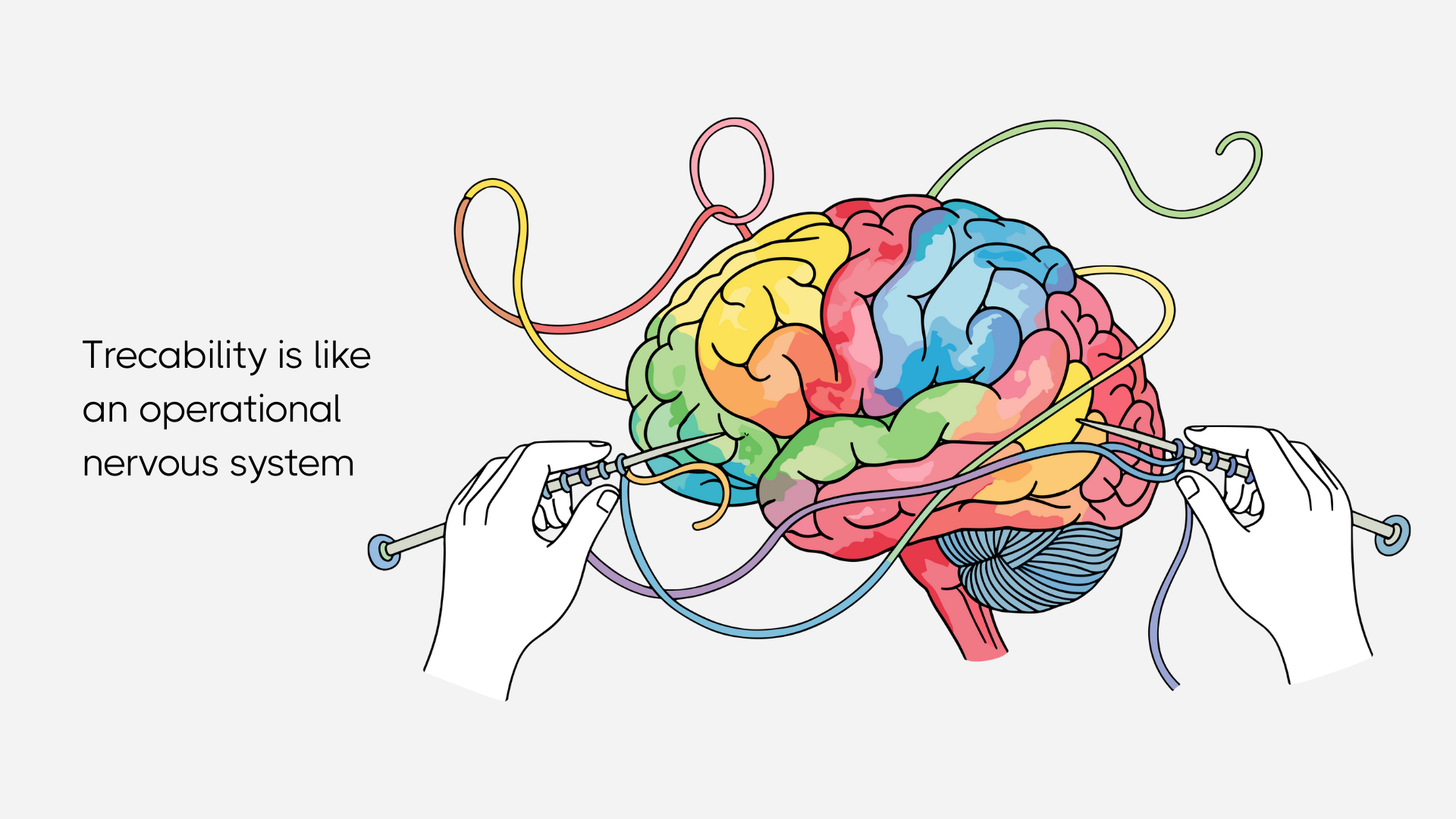
That is the essence of Food Traceability. It is not just a compliance checkbox. It is the operational nervous system that determines whether you contain an incident in hours or spend days calling suppliers, searching spreadsheets, and guessing which finished goods are exposed.
The industry has reached an inflection point. The push for better traceability is being driven by three forces at once.
First, recall and incident pressure is not easing. In late 2025, independent recall analysis reported that FDA recall events reached 145 in Q3 2025, with affected units jumping sharply quarter over quarter. Surely, many companies use food safety management software to prevent recalls but they should be 100% confident with them.
Second, regulators are formalizing expectations for fast, electronic traceability outputs. A widely cited benchmark is the expectation to produce structured traceability records within 24 hours under modern traceability rules, with emphasis on electronic, sortable records and interoperability.
Third, the economics of overly broad recalls have become impossible to ignore. A 2025 peer reviewed study estimated that the median per firm cost of an overly broad recall can range from hundreds of thousands to millions depending on the entity type, directly tying recall scope to traceability precision.
This is why many teams are moving from “we have a food traceability system” to “we have a system that actually works during the worst day of the year.”
The difference is software that can operate as an AI Traceability System rather than a static database.
The Current State of Food Traceability
Most organizations believe they have Food Traceability because they can eventually reconstruct a chain of custody. The operational question is different: can you do it quickly, accurately, and repeatedly, with the same output every time.
The reality inside many plants looks like this:
Records exist, but they are fragmented. Receiving logs might live in one tool, production records in another, lab results in email, supplier documents in shared drives, and corrective actions in a separate tracker.
Lot genealogy exists, but it is incomplete. You can trace finished goods back to a production run, but the mapping from ingredient lot to intermediate batch to rework to final lot is full of manual steps.
Traceability is often performed “after the fact.” Teams do not continuously validate whether required records are being created, linked, and stored in a usable format. They discover gaps only when something goes wrong.
Another point is that investing in traceability should bring some ROI for our business. We have recently talked about why ROI matters a lot in the food safety industry and the key idea is that if you invest in smth - you should get some benefits from it.

This is why the market for traceability is expanding. Multiple market research firms estimate strong growth in food traceability, with 2025 market sizing in the tens of billions and continued expansion expected through the next decade.
But market growth does not automatically equal operational readiness. The core gap is that traditional food traceability software was designed to store traceability data, not to continuously interpret it, validate it, and connect it to food safety workflows.
That is where food safety traceability AI changes the game.
Key Challenges in Traditional Food Traceability Systems
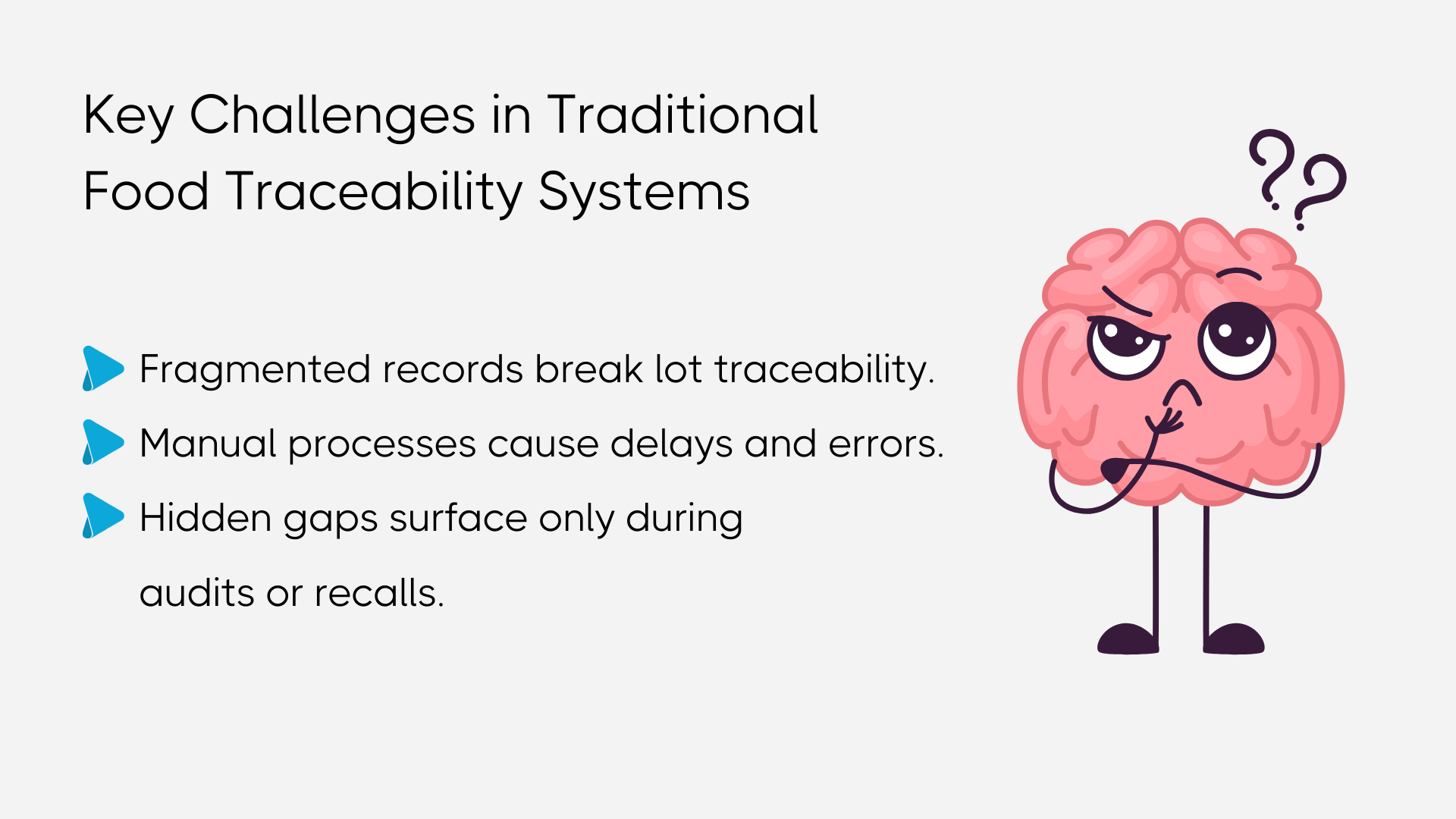
Traditional traceability systems were built to store information, not to actively manage it. They assume linear production flows, perfect data entry, and static processes, none of which reflect how food manufacturing actually works.
When deviations, substitutions, or rework occur, traceability logic often breaks. The result is slow tracebacks, overly broad recalls, and last minute audit preparation. These challenges are not caused by lack of effort, but by systems that were never designed to handle operational reality.
It is worth noting that AI automation in food safety would not grow so fast now if regular or traditional food traceability systems were perfect. So, let’s take a closer look at the challenges they meet.
Traceability data is not created in one place
A traceability system in the food industry has to reconcile data from receiving, warehouse moves, production steps, packaging, rework, holds, and shipping. If each step is captured differently, the final trace becomes a manual assembly job.
This is the root cause of slow tracebacks. The data is not missing. It is simply not connected.
Lot genealogy breaks on real plant behavior
Real plants do substitutions, partial pallet use, line changeovers, and rework. Traditional food traceability system designs often assume clean, linear flows.
When the first deviation happens, the system does not know how to connect the record. People do.
That is why “we have a food traceability system” often translates to “we have a person who knows where the bodies are buried.”
Documents are treated as attachments, not evidence
Supplier COAs, specs, allergen statements, SOPs, sanitation records, calibration logs, and training proofs are all traceability relevant.
Traditional food traceability solutions frequently store these as files. During an audit or investigation, teams still have to open, read, interpret, and decide which document proves what.
AI changes documents from storage objects into structured evidence.
Traceability and CAPA are disconnected
In many companies, traceability ends when you identify affected lots. Corrective actions and preventive actions live in a separate workflow.
That separation causes repeat incidents. If your food traceability software cannot close the loop into CAPA and SOP change control, you are not learning. You are reacting.
IONI’s broader risk and recall workflow content goes deep on why “compliance only” systems underperform when incidents occur.
The system is not built for “24 hour output” stress
Modern traceability expectations emphasize speed and structured outputs, including sortable electronic records and rapid response to regulator requests.
A system that works only when your best QA analyst is available is not a system. It is a dependency.
An AI Traceability System reduces that dependency by automating the stitching, validation, and reporting.
How AI Transforms Food Traceability Software
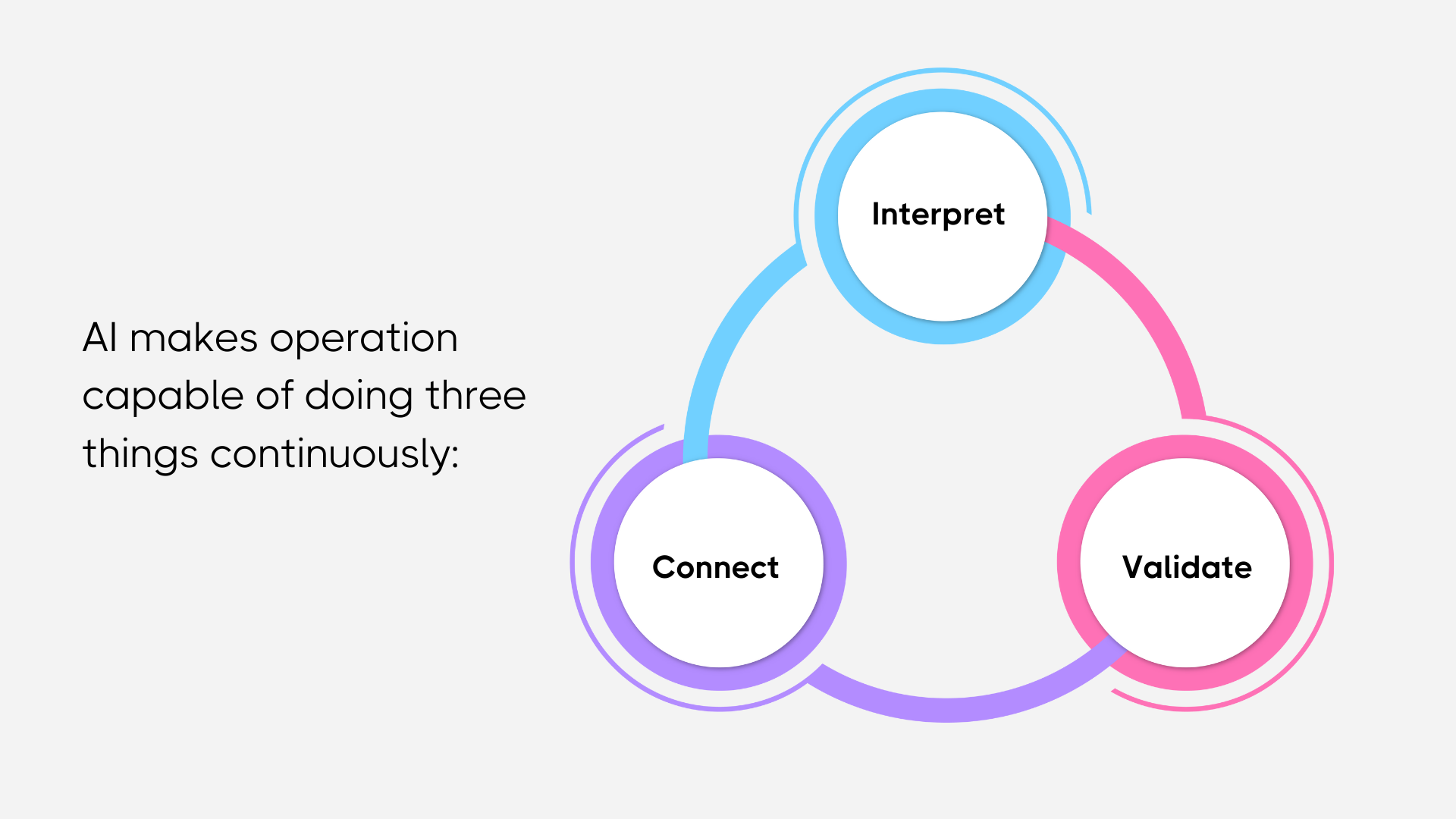
AI does not magically create missing data. It makes your operation capable of doing three things continuously:
- Interpret
A large portion of traceability relevant information is unstructured: PDFs, supplier emails, SOPs, scanned records, narrative deviation descriptions, audit notes.
An AI Traceability System can read these documents, extract relevant entities, and classify them in a way that traceability workflows can use.
IONI’s approach to AI driven onboarding is built around this principle: ingest existing SOPs and documentation and convert them into structured operational artifacts instead of forcing weeks of manual re-entry.
- Validate
The weak point of many food traceability solutions is silent failure. A critical record is not captured. A lot of code is mistyped. A transformation step is not linked to upstream inputs.
AI enables automated validation. Instead of discovering errors at audit time, you detect them as they occur.
This is also why “audit readiness” and traceability are inseparable. We have recently discussed how IONI frames traceability as an always-on verification problem, not a periodic reporting task.
- Connect
When a deviation occurs, the value of traceability is speed plus scope control.
AI accelerates the process of identifying which lots are impacted by analyzing linkages across production events, ingredient usage, and distribution movements.
This is exactly how you avoid overly broad recalls, which a 2025 academic analysis explicitly connects to significant avoidable cost.
What leaders are saying about AI traceability right now
A major industry press release about an AI traceability platform quoted its leadership framing traceability as a daily workflow problem, not an “audit panic button,” and described it as something that should be built into receiving to shipping processes.
In the same release, a QA manager at a ready to eat facility described recall preparation shifting from hours to minutes once lot tracking became effortless inside daily operations.
This aligns with the operational truth: traceability only works when it is embedded into normal work, not bolted on afterward.
A second leadership signal comes from former top level food policy leadership emphasizing that better traceability cannot wait and that the industry should break the work into manageable steps rather than postponing progress.
That is the mindset shift behind modern food safety and traceability programs: build capability incrementally, but build it into the workflow.
Introducing IONI: An AI Food Traceability Solution
Most food software platforms describe traceability as a module. In real operations, traceability is not a module. It is an outcome that only exists when documentation, production data, quality events, and corrective actions are continuously connected and validated.
IONI was designed from the ground up around that reality. It is not a passive food traceability system that stores a lot of numbers and waits for a crisis.
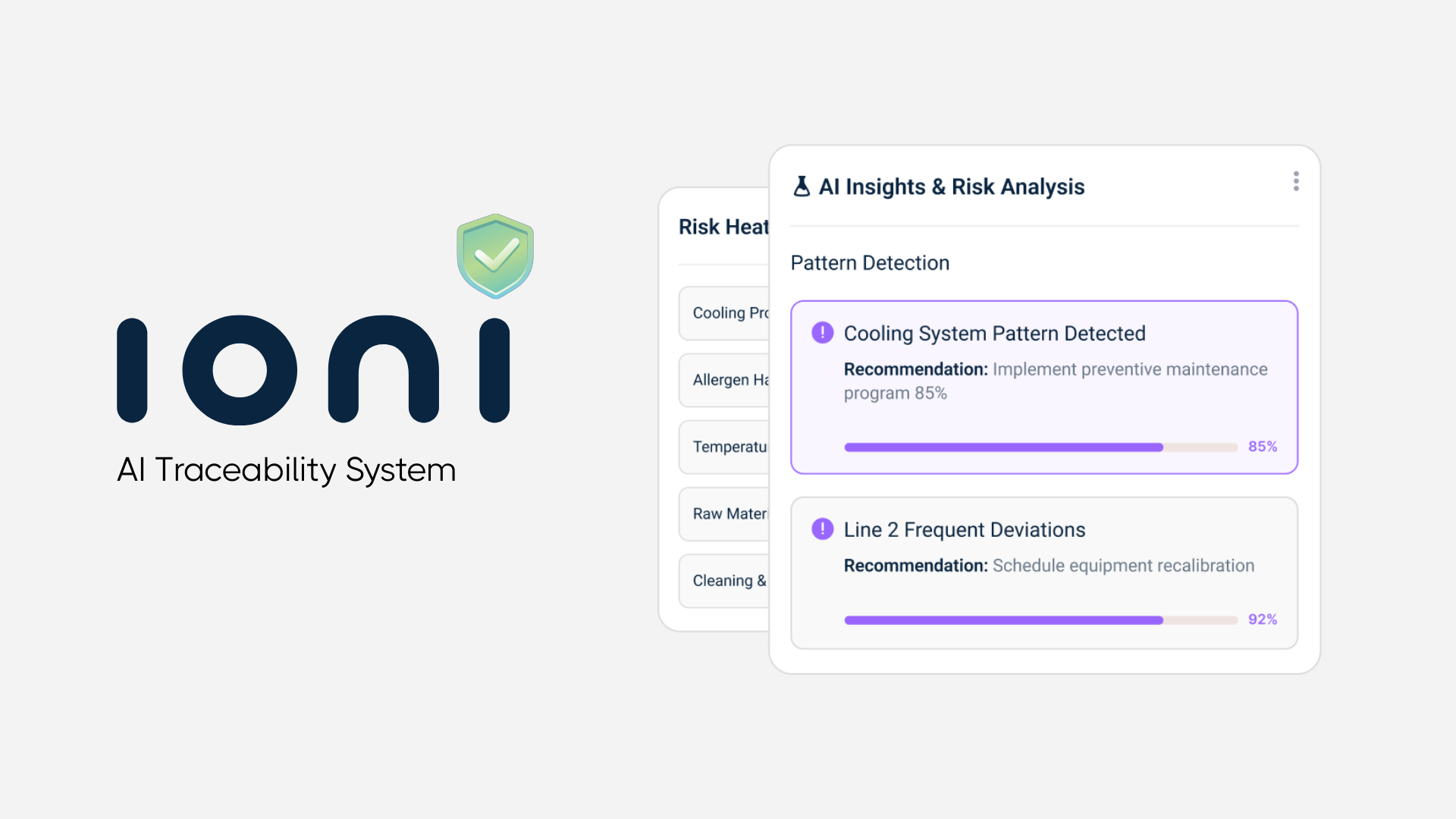
It is an AI Traceability System that continuously builds, verifies, and defends traceability evidence across the full lifecycle of food production. Its architecture reflects how traceability actually breaks in real plants and how it must function under regulatory and recall pressure.
To understand why IONI behaves differently from traditional food traceability software, it is necessary to look at traceability not as tracking alone, but as a living chain of evidence.
Traceability Starts With Structured Knowledge, Not Data Entry
In most organizations, traceability problems begin before production even starts. SOPs, HACCP plans, supplier specifications, allergen matrices, sanitation procedures, and monitoring programs exist, but they are disconnected documents. They describe what should happen, but they are not structurally linked to what actually happens.
IONI addresses this at the foundation level.
During onboarding, IONI uses AI to read and interpret existing SOPs, HACCP plans, and operational documents. Recently we talked about how AI is changing AI HACCP compliance and here is one more proof for you. The system extracts hazards, process steps, monitoring requirements, product definitions, and control logic, then converts them into structured, executable traceability logic.
This is a critical distinction.
Traditional systems require teams to manually recreate process flows, product trees, and ingredient mappings inside the software. That process is slow, error-prone, and often incomplete. As a result, traceability logic is only partially implemented, and gaps appear under stress.
IONI reverses that model. Instead of forcing humans to translate documents into software logic, the AI translates operational intent into traceability structure. This means that traceability rules are aligned with how the facility is actually designed to operate, not how someone interpreted a setup wizard months ago.
In traceability terms, this ensures that every defined product, intermediate, and process step already has a structural identity before production data is ever logged.
Product and Ingredient Genealogy Built as a Digital Thread
At the core of any traceability system in food industry environments is genealogy. The ability to answer, with precision, how raw materials became finished goods.
IONI builds and maintains genealogy automatically.
Each ingredient lot, intermediate batch, rework stream, and finished product lot is treated as a node in a continuously updated digital graph. AI links these nodes based on real production events, not static assumptions.
This matters because real plants do not behave cleanly. Ingredients are split across batches. Rework is introduced. Lines change. Substitutions occur.
IONI captures these realities as they happen and maintains lineage without requiring manual reconciliation. The result is a true end-to-end genealogy that remains intact even when operations deviate from the ideal.
This is the difference between theoretical traceability and defensible traceability.
When a query is made, IONI does not “search records.” It traverses an already-validated chain of evidence linking supplier lots to production events to shipments.
That capability defines a modern food safety traceability AI platform.
Continuous Capture of Traceability-Relevant Events
Traceability fails when records are incomplete or delayed. IONI addresses this by embedding traceability into daily workflows instead of treating it as a separate reporting activity.
Production monitoring, quality checks, CCP verification, sanitation records, and deviation logging all occur within the same system. Each action is automatically timestamped, linked to the responsible role, and connected to the relevant product and lot.
This design eliminates the most common traceability gap: records that exist, but cannot be confidently linked to specific product flows.
For example, when a temperature deviation is logged, IONI immediately associates that deviation with the exact production window, equipment, and affected lots. There is no manual step required to “figure out later” which products may be impacted.
This is how traceability food safety moves from reactive investigation to immediate containment.
AI-Driven Validation of Traceability Completeness
One of the most underestimated problems in food traceability solutions is silent failure. Records appear complete until someone tries to run a trace and discovers missing links.
IONI continuously validates traceability integrity.
The AI checks whether required records exist for each defined process step. It verifies that transformations have corresponding inputs. It flags missing lot assignments, incomplete monitoring records, and mismatches between production volumes and material usage.
Instead of discovering traceability gaps during an audit or recall, teams are alerted in real time.
This capability alone fundamentally changes traceability reliability. It removes dependence on individual vigilance and replaces it with system-level assurance.
From a regulatory perspective, this is critical. Traceability expectations increasingly focus on structured, complete, and quickly retrievable records. A system that silently allows gaps is a liability.
Ready to try? Feel free to book a demo with us and see how IONI may help you.
Integrated Deviation, CAPA, and Traceability Logic
In many organizations, traceability ends once affected lots are identified. Corrective actions are handled elsewhere.
This separation is a major reason why traceability failures repeat.
IONI integrates deviations, non-conformances, and CAPA directly into the traceability graph. When an issue occurs, the system already knows which products are affected and which controls failed.
Corrective actions are not generic. They are context-aware. The AI analyzes the event, links it to historical patterns, and suggests CAPA actions that address root causes rather than symptoms.
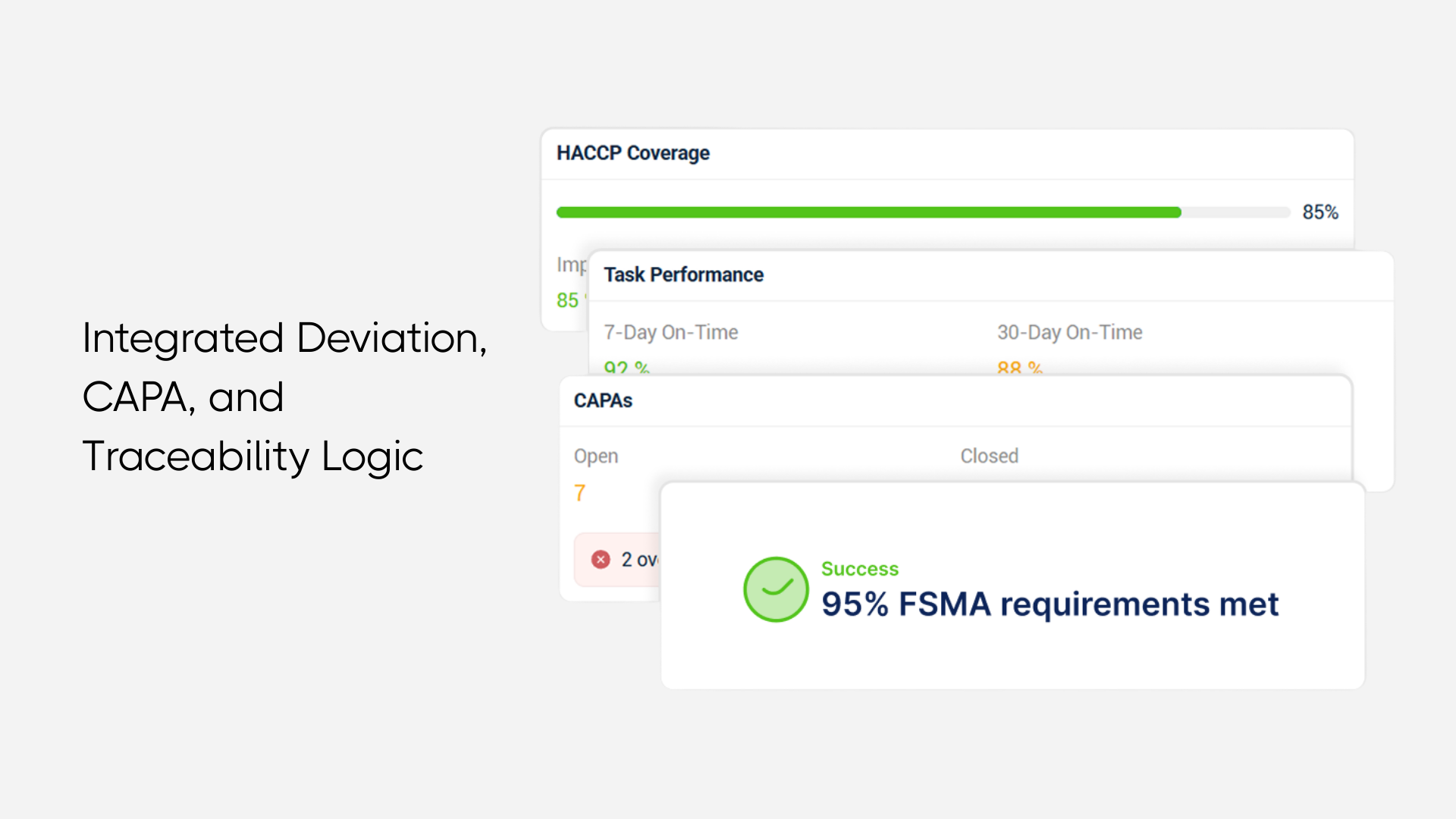
From a traceability perspective, this closes the loop. It ensures that traceability is not only about identifying exposure, but about preventing recurrence.
This is where food safety and traceability intersect as an operational discipline rather than two parallel processes.
Recall Readiness as a Continuous State
IONI treats recall readiness as an always-on condition, not an emergency drill.
Because genealogy is continuously maintained and validated, IONI can generate recall scope instantly. The system can identify affected products, quantities, customers, and distribution paths without manual assembly.
More importantly, IONI preserves the evidence trail required to justify recall decisions. Regulators and customers increasingly expect not just speed, but defensibility.
IONI provides both.
This capability directly addresses the financial and reputational risk of overly broad recalls. Precision recall scope is only possible when traceability is accurate at the lot level and linked to production reality.
To compare tools built for recalls, see our guide to product recall software.
That precision is what separates basic food traceability software from a true AI Traceability System.
Supplier Documentation and Incoming Material Traceability
Traceability does not begin at your receiving dock. It begins with supplier data.
IONI uses AI to process supplier documents such as COAs, specifications, allergen statements, and regulatory declarations. Instead of storing these as attachments, the system extracts structured attributes and links them to incoming ingredient lots.
This allows traceability queries to include supplier attributes, not just lot numbers.
For example, if a supplier issues a post-shipment notification related to an allergen or contaminant, IONI can immediately identify which products used affected material, even if the issue was not known at the time of receipt.
This capability is essential for managing modern supply chains where upstream risk is dynamic.
Role-Based Dashboards That Support Traceability Execution
Traceability systems often fail because the people responsible for data capture do not see traceability as their problem.
IONI addresses this by providing role-specific views. Operators see only what they need to execute their tasks correctly. QA managers see traceability completeness, open issues, and risk indicators. Executives see readiness status and exposure metrics.
By aligning traceability responsibility with daily work, IONI increases data quality without increasing administrative burden.
This human-system alignment is critical for a sustainable traceability system in food industry environments.
Why IONI Is Fundamentally Different
IONI does not treat traceability as a reporting requirement.
It treats traceability as a continuously evaluated system of evidence that supports food safety, regulatory compliance, and operational decision-making.
This is why IONI behaves differently under pressure. When a regulator asks for records, when a customer requests proof, or when a potential recall emerges, the system is already prepared.
That is the defining characteristic of modern food safety traceability AI.
How IONI Solves Core Traceability Challenges
IONI approaches traceability as a system of evidence, not a tracking feature. It is designed to continuously build, validate, and defend traceability across ingredients, production, quality events, and corrective actions.
By embedding traceability into daily workflows and using AI to interpret and connect data, IONI ensures that traceability is always ready. Not just during audits or recalls, but every day operations are running.
Challenge. Onboarding takes months and teams never fully finish it
IONI uses AI onboarding to read existing SOPs, policies, and program documents, then structure them into the system, reducing the dependence on manual configuration.
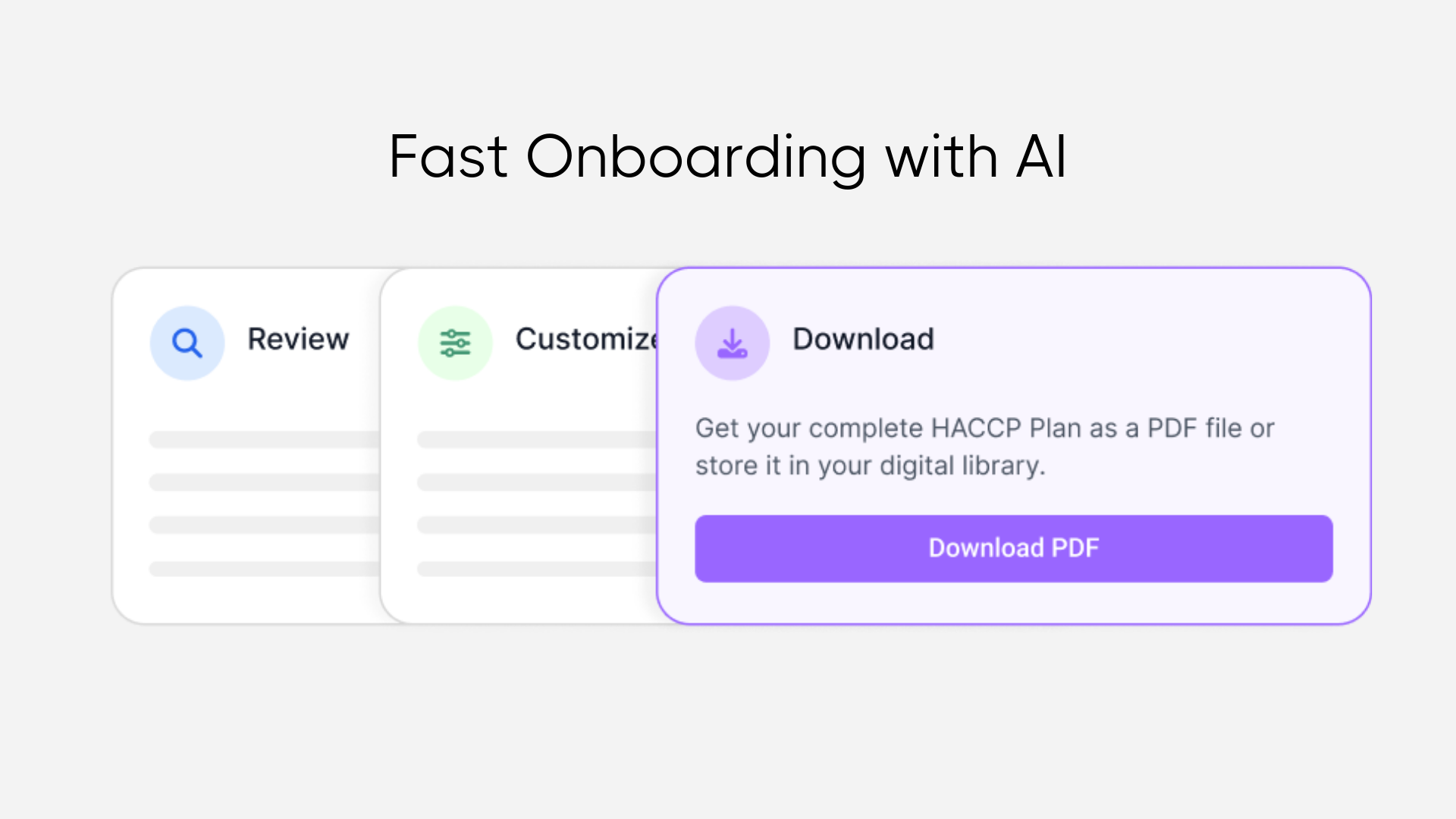
This matters for Food Traceability because traceability failures rarely come from missing technology. They come from missing adoption. If onboarding is painful, plants avoid it, and the traceability program becomes partial.
Challenge. Records exist but are not linked to the “why”
IONI ties records to workflows. When a deviation occurs, IONI logs it, assigns a risk level, and drives CAPA recommendations and task execution, all with a documented audit trail.
That closes the loop between food traceability system data and corrective action, which is exactly where traditional food traceability solutions break.
Challenge. Recall readiness depends on heroic effort
IONI’s recall workflow content emphasizes centralized documentation, deviation tracking, CAPA linkage, and dashboards that show active issues and completion status.
This is how an AI Traceability System protects you: by making readiness a continuous state rather than a scramble.
Challenge. Traceability is treated as a standalone module
IONI treats traceability as a capability that must exist across HACCP, monitoring, non conformance management, and regulatory readiness.
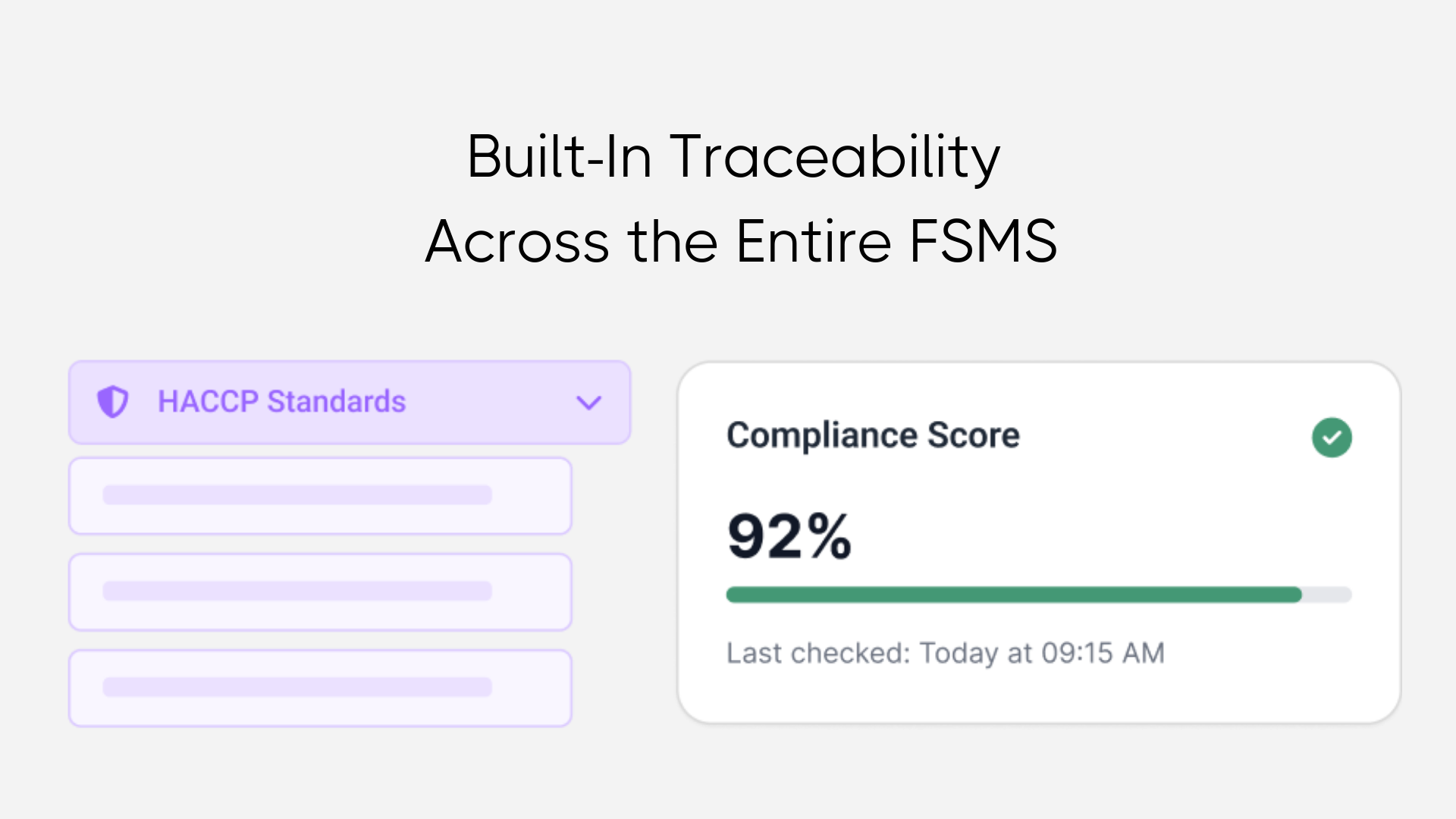
If you want the deeper foundation for this approach, IONI’s posts on AI driven HACCP and continuous audit readiness are relevant because HACCP control points and traceability data are structurally linked in real operations.
A practical note on regulatory expectations
Traceability rules increasingly emphasize electronic, sortable, and fast outputs, including 24 hour response expectations and required key data elements for critical tracking events.
An AI Traceability System is the natural response because it reduces the human assembly work needed to produce those outputs reliably.
Ready to try? Feel free to book a demo with us and see how IONI may help you.
Operational and Business Impact of AI Powered Traceability
The value of AI powered traceability extends beyond compliance. Faster tracebacks reduce recall scope, protect brand reputation, and minimize product loss. Continuous validation reduces audit risk and eliminates emergency preparation cycles.
At the operational level, teams spend less time assembling records and more time preventing issues. At the business level, companies gain confidence that they can respond decisively when incidents occur.
Faster tracebacks, smaller recall scope, less waste
The economics are straightforward.
When you cannot precisely identify affected lots, you recall broadly. When you recall broadly, you destroy good products, lose customer trust, and absorb avoidable logistics costs.
A 2025 study focused on overly broad recalls quantified this in real dollars and highlighted why traceability precision is not optional if you want to control recall cost.
This is the financial argument for food traceability solutions that behave like an AI Traceability System rather than a static ledger.
Better audit posture with less manual work
Audit preparation is usually the hidden tax of traceability. The time cost comes from finding records, proving linkage, and demonstrating that your process works end to end.
IONI’s broader content on modern food safety software onboarding and operational excellence frames the path: digitize, structure, validate, and then let AI reduce the manual overhead.
Higher confidence in supplier and co manufacturer programs
Traceability is a supply chain problem. Your trace is only as strong as your weakest partner record.
AI helps by normalizing documents and extracting required information from supplier materials, then flagging gaps. This is where food safety and traceability becomes a supplier risk discipline, not just a plant discipline.
Clearer accountability across operations and QA
Traceability programs often fail because responsibilities are unclear. An AI Traceability System enables task assignment, alerts, and dashboards that make ownership visible.
IONI’s recall management workflow demonstrates how deviations, CAPA, task management, and documentation are connected in one place.
Industry direction signal: adoption is accelerating
A recent industry example reported AI native traceability live across hundreds of manufacturing facilities and described adoption increases tied to regulatory pressure and audit demands.
That matters because it signals that AI traceability is shifting from experimentation to operational standard.
The Future of Food Traceability with IONI
Food traceability is moving toward real time verification, predictive risk detection, and fully digital evidence chains. Systems that cannot validate data continuously or respond instantly will become operational liabilities.
IONI is built for this future. By combining AI, structured data, and integrated workflows, it enables traceability that scales with complexity and stands up under pressure.
Three trends will define the next generation of Food Traceability programs.
Traceability becomes a live risk signal, not a record archive
The future traceability system in food industry will feed risk intelligence: repeat deviations by line, supplier defect trends, seasonal contamination patterns, and early warning indicators.
IONI’s direction is aligned with this shift, as reflected in its positioning around risk management and recall prevention, not just compliance documentation.
Traceability data becomes interoperable by design
Regulators and major buyers are pushing toward interoperable traceability data exchange and structured, sortable outputs.
An AI Traceability System supports this by standardizing how data is captured, validated, and produced, even when upstream inputs are messy.
Traceability will be measured by time to proof
The performance metric that will matter is not “do you have a food traceability system.”
It will be: how fast can you produce proof, with complete linkage, that stands up to regulatory scrutiny.
This is exactly where food safety traceability AI creates advantage. It compresses the time from question to defensible answer.
IONI is built for that outcome: traceability that functions under pressure.
Ready to try? Feel free to book a demo with us and see how IONI may help you.
Conclusion
The industry no longer needs another database that stores lot codes.
It needs Food Traceability that operates as a daily workflow, supported by food safety traceability AI, so that traceability is always ready, not occasionally reconstructed.
For a general framework on what to prioritize before choosing a platform, see IONI's food traceability software buyer's guide.
If you are evaluating food traceability software, the key question is whether it behaves like an AI Traceability System:
- Can it interpret unstructured documents and records
- Can it validate linkage continuously
- Can it connect traceability to deviations, CAPA, and recall workflows
- Can it produce fast, structured outputs when requested
- Can it reduce recall scope and cost by improving precision
That is what modern food traceability solutions must deliver.
IONI was built to be that system: a living, operational food traceability system that strengthens traceability food safety, improves food safety and traceability execution, and upgrades your traceability system in food industry from reactive recordkeeping to proactive readiness.