.png)
Introduction to GFSI Schemes
If you work in food manufacturing, you have likely heard someone ask for your “GFSI certificate.” It is one of the most common points of confusion in the industry - because GFSI itself does not issue certificates, conduct audits, or certify anyone.
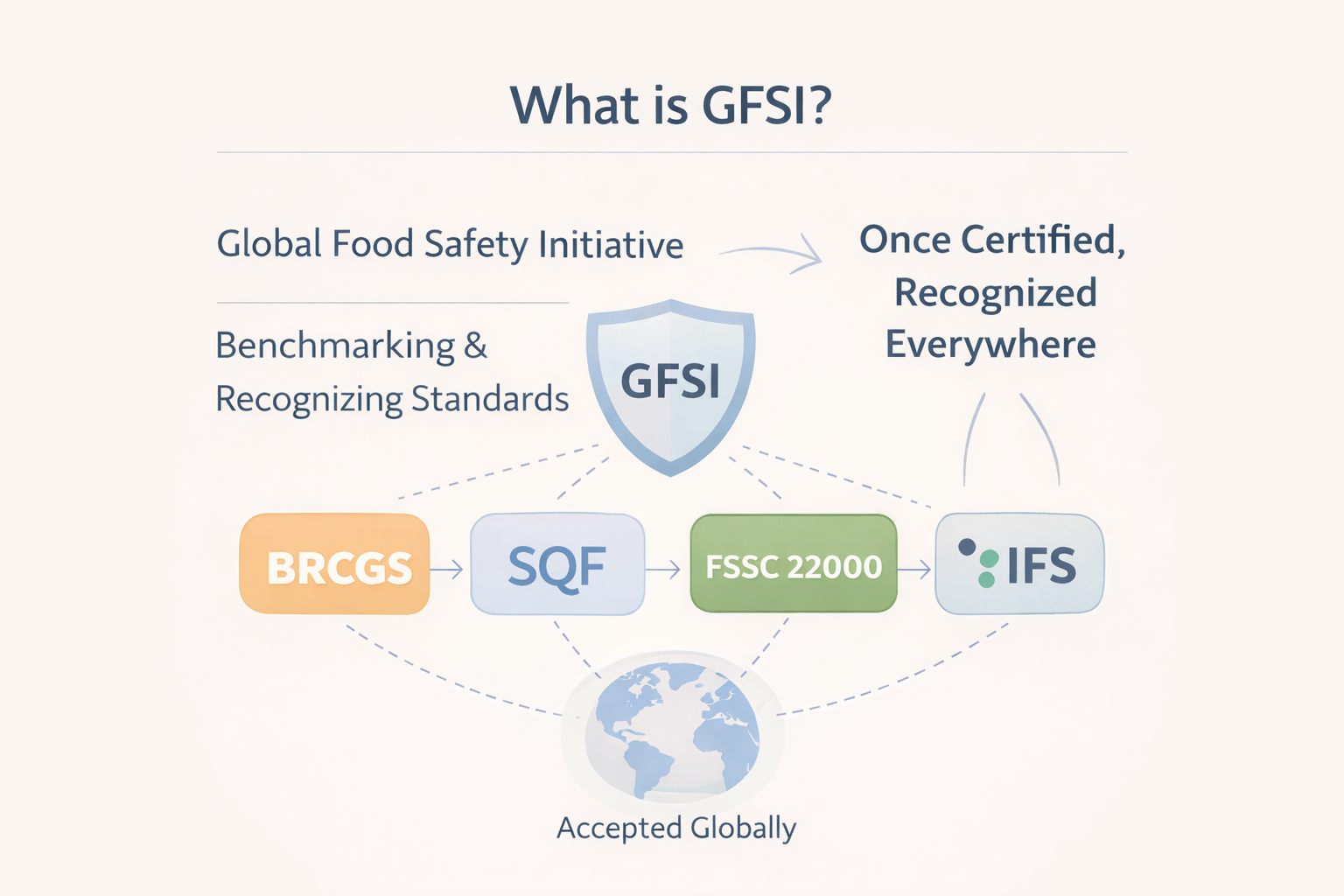
What GFSI does is set the benchmark. It evaluates food safety certification programs and recognizes those that meet its requirements. When a company says it is “GFSI certified,” what it really means is that it holds certification under one of the GFSI certification schemes - such as SQF, BRCGS, FSSC 22000, or IFS.
Choosing the right GFSI scheme is not a formality for food manufacturers. It determines how you will be audited, what your documentation requirements look like, and which markets and retailers will accept your certification. It also shapes how your QA team spends their time - whether that means managing document control, preparing HACCP plans, or building a food safety culture assessment program.
This guide breaks down the major GFSI recognized schemes, compares their key differences, and walks you through how to select and implement the right one for your business in 2026.
What Is the Global Food Safety Initiative (GFSI)?
The Global Food Safety Initiative is a private-sector coalition managed by the Consumer Goods Forum. It was created in 2000 in response to a wave of high-profile food safety recalls that eroded consumer confidence and caused audit fatigue across the supply chain.
At the time, retailers and manufacturers were each running their own inspections or hiring third parties against inconsistent standards. The result was duplication, incompatibility, and rising costs without proportional improvements in safety outcomes.
GFSI was designed to solve this by creating a benchmarking model - a set of requirements that food safety certification programs must meet to earn GFSI recognition. The principle behind it is straightforward: “once certified, recognized everywhere.” A company certified under any GFSI-recognized scheme should be accepted by retailers and buyers globally, reducing the need for multiple audits against different standards.
GFSI does not write its own food safety standard. Instead, it publishes Benchmarking Requirements - a reference document that defines what a credible food safety certification program must include. Certification Programme Owners (CPOs) such as SQFI, BRCGS, FSSC, and IFS submit their GFSI certification schemes for evaluation against these requirements. If a scheme meets the benchmarks, it earns recognition.
This model has created a competitive marketplace. Multiple certification programs exist, each with different structures, scoring models, geographic strengths, and industry focus areas. For food manufacturers, this means a choice - and making the right one matters.
What Are GFSI Schemes?
GFSI schemes are food safety certification programs that have been evaluated and recognized by GFSI through its benchmarking process. They are not GFSI’s own standards - they are independently managed certification programs that meet GFSI’s minimum requirements for food safety management. These GFSI approved schemes cover a wide range of industry scopes, from primary production to food manufacturing and distribution.
Each scheme defines its own set of requirements, audit protocols, scoring systems, and certification rules. What they share is a foundation: all GFSI-recognized schemes require HACCP-based hazard management, prerequisite programs, document control, traceability, internal audits, corrective actions, and management commitment.
The distinction matters because retailers and supply chain partners often require a “GFSI certification” without specifying which scheme. This gives manufacturers flexibility - but also creates a decision point. Different schemes have different emphases, different regional strengths, and different implications for how your QA team operates day to day.
Why GFSI Certification Matters for Food Manufacturers
GFSI certification has moved from a competitive advantage to a market access requirement. Major retailers including Walmart, Costco, Kroger, Tesco, and Amazon require their suppliers to hold certification under a GFSI-recognized scheme. Without it, many supply chain relationships are simply not available.
Beyond market access, GFSI certification delivers several practical benefits:
Reduced audit fatigue. Before GFSI harmonization, a single manufacturer might face dozens of different audits from different buyers, each against a slightly different standard. GFSI recognition means one certification is accepted across multiple customers.
Structured risk management. GFSI schemes enforce a systematic approach to food safety - hazard analysis, preventive controls, monitoring, verification, and corrective actions. This is the same foundation that regulations like FSMA require, making regulatory compliance easier to maintain in parallel.
Continuous improvement. GFSI schemes are updated regularly to reflect evolving science, regulatory changes, and industry best practices. Maintaining certification means your systems do not become static.
Supply chain confidence. For buyers, a GFSI certificate signals that a supplier has been independently verified against a globally recognized standard. This reduces due diligence burden and strengthens partnerships.
The stakes are real. According to industry data, recalled units in the US surged to nearly 259 million in Q3 2025 alone - the highest quarterly total in three years. A single food safety incident can cost millions in direct recall expenses, not counting reputational damage and lost retail partnerships. GFSI certification does not eliminate these risks entirely, but it builds the systematic controls that make incidents less likely and response faster. For manufacturers looking to move from reactive compliance to proactive risk prevention, the shift starts with the right foundation - and a GFSI-recognized food safety system provides exactly that.
Platforms like IONI take this further by continuously monitoring your compliance posture and flagging gaps before they become audit findings or, worse, safety incidents.
Key Benefits of Implementing GFSI Schemes
Implementing a GFSI-recognized food safety system produces benefits that extend beyond passing an audit. Companies that hold certification under GFSI recognized schemes report fewer repeat nonconformities, faster supplier onboarding, and stronger audit outcomes over time:
Operational consistency. The documentation, training, and process control requirements of GFSI schemes create systems that work the same way across shifts, across sites, and across personnel changes. This is especially valuable for multi-facility manufacturers and co-packers managing production for multiple brands.
Faster incident response. GFSI schemes require traceability systems and recall readiness protocols. When a food safety incident occurs, certified facilities can respond faster because their systems are already designed for evidence retrieval and lot-level tracking. Consider a scenario where a co-packer receives a supplier notification about potential allergen cross-contact in an ingredient lot.
With IONI, the QA team can trace that lot through every production run and finished product within minutes - compared to the hours or days it might take with spreadsheet-based records.
Lower cost of compliance over time. While initial certification requires investment, maintaining a well-designed GFSI system reduces the cost of managing multiple customer audits, regulatory inspections, and internal quality programs separately.
Improved food safety culture. The 2024 GFSI Benchmarking Requirements update - and scheme-level changes like SQF Edition 10 - place increasing emphasis on food safety culture as a measurable and auditable element. This drives genuine behavioral change, not just documentation compliance.
List of GFSI-Recognized Certification Schemes
As of 2026, GFSI recognizes certification programmes across multiple industry scopes. These GFSI approved schemes are managed by independent Certification Programme Owners (CPOs), each with their own audit protocols and requirements. The most widely adopted GFSI certification schemes for food manufacturing include:
1. BRCGS (Brand Reputation Compliance Global Standards) - Global Standard for Food Safety, Issue 9
2. SQF (Safe Quality Food) - Food Safety Code, Edition 9 (Edition 10 released March 2026, audits expected from January 2027)
3. FSSC 22000 (Food Safety System Certification) - based on ISO 22000 + sector-specific PRPs
4. IFS Food (International Featured Standards)
5. GLOBALG.A.P. - Integrated Farm Assurance and related standards
6. PrimusGFS - focused on the produce supply chain in the Western Hemisphere
7. CanadaGAP - Canadian fresh produce food safety program
Other recognized programmes cover specific scopes such as animal feed, transport and storage, and packaging materials. The full list of currently recognized CPOs is maintained on the GFSI website.
For most food manufacturers - particularly those producing multi-ingredient, processed, or packaged food products - the practical choice comes down to BRCGS, SQF, FSSC 22000, or IFS.
Overview of the Most Popular GFSI Schemes
BRCGS Global Food Safety Standard
BRCGS is the most widely adopted GFSI scheme globally and the dominant standard in European retail supply chains. Originally developed by the British Retail Consortium, it has expanded to cover food safety, packaging, storage, distribution, and more.
Current version: Issue 9 (effective since February 2023)
Structure: BRCGS is organized into seven sections covering senior management commitment and continual improvement, the food safety plan (HACCP), food safety and quality management system, site standards, product control, process control, and personnel. It is prescriptive - the standard tells you what to do in specific terms.
Audit model: BRCGS offers both announced and unannounced audit options. Unannounced audits are increasingly common and are viewed favorably by retailers. Sites receive a grade (AA, A, B, C, D) based on the number and severity of nonconformities.
Best for: Manufacturers selling into UK and European retail, companies wanting a prescriptive framework with clear expectations, and facilities that value the grading system for differentiation.
SQF (Safe Quality Food)
SQF is the most popular GFSI scheme in North America and the only scheme that integrates a quality management component alongside food safety. It covers the entire food supply chain from primary production to retail.
Current version: Edition 9 (Edition 10 finalized in March 2026; audits to Edition 10 anticipated to begin January 2, 2027)
Structure: SQF is organized around modules based on industry scope. It requires a designated SQF Practitioner with HACCP training, a documented food safety management system, and compliance with both food safety fundamentals and HACCP principles. The SQF Quality Code is an optional addition for sites that want to certify their quality management systems.
What is changing with Edition 10: SQF Edition 10 introduces significant updates including food safety culture as a measurable, auditable requirement through a documented Culture Assessment Plan. It also introduces clearer risk-based scoring, stronger emphasis on change management, enhanced environmental monitoring requirements, and a new digitized code format. Core clause deductions increase under the updated scoring model.
Best for: US and Canadian food manufacturers, companies supplying major North American retailers (Walmart, Costco), and facilities seeking a flexible, HACCP-driven certification with optional quality integration.
FSSC 22000
FSSC 22000 is the preferred scheme for large multinational brand owners. It is based on ISO 22000 (food safety management system standard) combined with sector-specific prerequisite programs (ISO/TS 22002-series) and additional FSSC requirements.
Current version: Version 6 (Version 7 development announced in late 2025)
Structure: FSSC 22000 is a management system certification, meaning it evaluates how well your system is designed and implemented - not just whether specific rules are followed. It follows the ISO high-level structure, making it easy to integrate with ISO 9001 (quality), ISO 14001 (environmental), and ISO 45001 (occupational health and safety).
Audit model: FSSC 22000 audits follow ISO/IEC 17021 requirements, which use a process-based approach. This is fundamentally different from the product-focused approach of BRCGS or the practitioner-based approach of SQF.
Best for: Brand owners with existing ISO management systems, multinational manufacturers seeking integration across quality, environmental, and safety certifications, and companies operating in markets where ISO-based certifications are valued.
IFS Food
IFS Food is widely used in Continental Europe, particularly in Germany, France, and Italy. It focuses on auditing food manufacturers regarding safety and quality of processing and handling.
Current version: IFS Food Version 8
Structure: Requirements are organized into six categories: corporate governance and commitment, quality and food safety management system, resource management, operational processes, measurements and analyses, and food defense. IFS uses a detailed scoring system and distinguishes between major, KO (knock-out), and N/A requirements.
Best for: Manufacturers selling into European retail chains (especially German, French, and Italian), companies producing private-label food products for European retailers, and facilities that value the detailed scoring and improvement-oriented approach.
GLOBALG.A.P.
GLOBALG.A.P. is not a food manufacturing standard - it focuses on agricultural production. It promotes safe, sustainable agriculture with certification available for crops, livestock, aquaculture, and related activities.
Best for: Primary producers, farmers, and companies in the agricultural supply chain. Not applicable to food manufacturing or processing operations.
Key Differences Between Major GFSI Schemes
While all GFSI recognized schemes share common foundations (HACCP, prerequisite programs, traceability, document control), they differ in important ways:
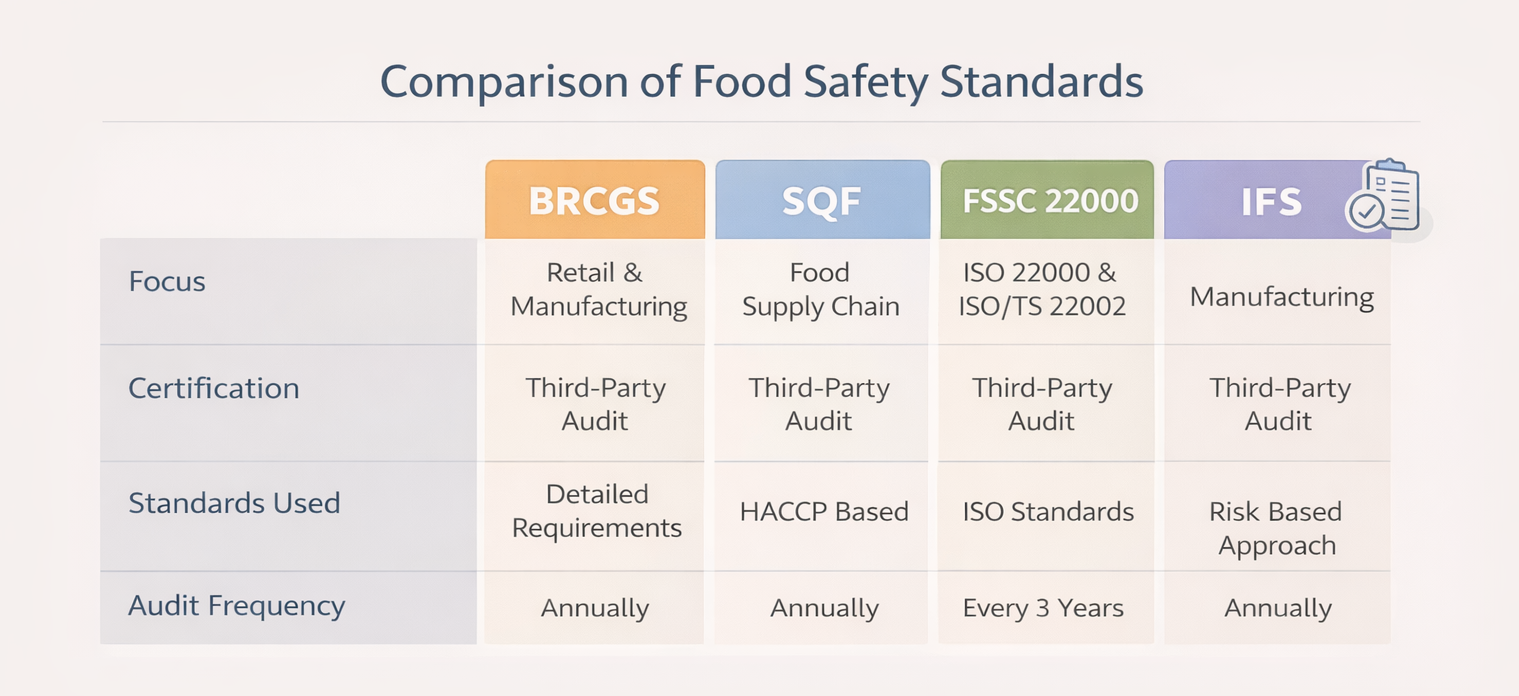
Approach. BRCGS and IFS are prescriptive - they specify what you must do. FSSC 22000 is system-based - it evaluates whether your management system effectively controls hazards. SQF sits between the two - it is HACCP-driven with a practitioner model.
Geographic strength. SQF dominates North America. BRCGS leads in the UK and is strong globally. IFS is the primary choice for Continental European retail. FSSC 22000 is preferred by multinational brand owners regardless of region.
Scoring and grading. BRCGS uses letter grades (AA through D). SQF uses a numerical scoring system with core clause deductions. IFS uses percentage scoring with KO criteria. FSSC 22000 issues pass/fail certification without grading.
Quality integration. SQF is unique in offering an optional Quality Code alongside its Food Safety Code. FSSC 22000 integrates naturally with ISO 9001. BRCGS and IFS include quality elements within their food safety requirements.
Audit frequency. All schemes require annual recertification audits at minimum. BRCGS and SQF offer unannounced audit options that can improve grades or demonstrate higher commitment.
ISO compatibility. FSSC 22000 is built on ISO standards and follows ISO audit methodology. This makes it the easiest to integrate into a company that already holds ISO certifications. BRCGS, SQF, and IFS use their own audit protocols.
How to Choose the Right GFSI Scheme for Your Business
Choosing a GFSI scheme is not about picking the “best” standard - it is about finding the right fit for your operations, your customers, and your markets. Among the various GFSI approved schemes available, each offers a different balance of prescriptiveness, flexibility, and geographic acceptance.
Factors to Consider When Selecting a GFSI Scheme
Customer requirements. Start here. If your primary customers specify a scheme (many UK retailers require BRCGS, many US retailers require SQF), the decision is made for you. If customers simply ask for “GFSI certification” without specifying, you have flexibility.
Geographic markets. North American markets lean toward SQF. UK and global retail lean toward BRCGS. Continental Europe favors IFS. Multinational brands often prefer FSSC 22000. If you sell across multiple regions, choose the scheme that covers the broadest set of your customer requirements.
Existing management systems. If you already hold ISO 9001 or other ISO certifications, FSSC 22000 may integrate most naturally. If you are building a food safety system from scratch, SQF or BRCGS provide more prescriptive guidance.
Company size and complexity. Smaller operations may find SQF’s structured practitioner model easier to implement. Larger, multi-site operations may benefit from the management system approach of FSSC 22000.
Resource availability. Each scheme requires different types of expertise. SQF requires a designated SQF Practitioner with specific HACCP training. BRCGS requires familiarity with its prescriptive requirements. FSSC 22000 requires understanding of ISO management system methodology.
Certification body availability. Ensure there are accredited certification bodies in your region for your chosen scheme. Some schemes have broader auditor networks than others in certain geographies.
Steps to Implement a GFSI-Recognized Food Safety System
Implementing a food safety system aligned with GFSI recognized schemes is a structured process that typically takes 6 to 12 months depending on your starting point.
1. Assess your current state. Evaluate your existing food safety programs, documentation, HACCP plans, prerequisite programs, and training records. Identify gaps between your current system and the requirements of your chosen scheme.
2. Select your scheme and certification body. Choose the GFSI certification scheme that fits your business based on the factors above. Then select an accredited certification body that has experience with your industry scope and scheme.
3. Build or upgrade your food safety management system. Develop your HACCP plans, prerequisite programs, document control procedures, training programs, internal audit procedures, and corrective action systems to meet the scheme’s requirements.
For manufacturers working with complex formulations or multiple ingredient suppliers, this step also includes building a reliable system for managing ingredient specifications, allergen data, and regulatory status across your portfolio. Gaps in ingredient documentation are a common source of audit nonconformities - and they become harder to manage as your product range grows.
Tools like IONI’s Ingredients Intelligence can centralize this data and flag compliance risks before they surface during an audit.
4. Train your team. Ensure your food safety team - and all relevant personnel - understand the scheme’s requirements and their roles. For SQF, this includes formal SQF Practitioner and HACCP training.
5. Conduct internal audits and gap assessments. Before your certification audit, perform thorough internal audits against the scheme’s requirements. Identify and close any remaining gaps. IONI’s AI-powered gap analysis can run your documentation against your chosen scheme’s full requirement set and highlight exactly where your system falls short - saving weeks of manual review.
6. Perform a pre-assessment (optional but recommended). Many certification bodies offer pre-assessment audits to identify issues before the formal certification audit. This reduces the risk of nonconformities during the actual audit.
7. Complete the certification audit. The certification body conducts an on-site audit - typically 1 to 3 days depending on the scheme and facility size. The auditor evaluates documentation, observes processes, interviews personnel, and reviews records.
8. Address corrective actions. If the auditor identifies nonconformities, you will have a defined window (typically 28-30 days) to submit corrective actions. Once accepted, your certificate is issued.
9. Maintain and improve continuously. GFSI certification is not a one-time event. Annual recertification audits are required. Between audits, maintain your system through internal audits, management reviews, corrective actions, and continuous improvement activities.
Ready to simplify your path to GFSI certification? Book a demo with us and see how IONI can help.
Common Challenges When Implementing GFSI Schemes
Documentation overload. GFSI schemes require extensive documentation - HACCP plans, SOPs, training records, monitoring logs, corrective action reports, and more. Without a system to manage this, teams spend more time on paperwork than on actual food safety activities. One mid-size bakery we spoke to estimated their QA manager was spending 15 hours per week just maintaining document versions across three product lines.
After implementing IONI’s automated document control, that dropped to under 3 hours - freeing up time for the work that actually improves food safety.
Maintaining consistency across shifts and sites. One of the most common audit findings is inconsistency - different shifts following different procedures, or different sites interpreting the same requirement differently. This is a system design problem, not a training problem.
A centralized digital FSMS like IONI ensures that every site and every shift works from the same controlled version of every SOP, checklist, and monitoring form.
Keeping up with scheme updates. GFSI Benchmarking Requirements were updated in December 2024. SQF Edition 10 was released in March 2026. FSSC 22000 Version 7 is in development. Keeping your system current with evolving requirements requires ongoing attention.
Food safety culture. The 2024 GFSI benchmarking update and SQF Edition 10 both emphasize food safety culture as a measurable element. This moves beyond documentation into behavioral assessment - how people actually think and act when it comes to food safety. Many facilities are still working out what this means in practice.

Resource constraints. Smaller manufacturers often lack dedicated QA staff. When the same person manages HACCP, supplier programs, document control, training, and audit prep, the system becomes fragile.
This is where AI-powered food safety software adds the most value - by automating document control, flagging overdue tasks, drafting corrective actions, and maintaining audit-ready evidence without requiring additional headcount.
GFSI Schemes vs ISO Food Safety Standards
A common question is how GFSI schemes relate to ISO standards - specifically ISO 22000.
ISO 22000 is an international standard for food safety management systems published by the International Organization for Standardization. It provides a framework for managing food safety risks across the supply chain. However, ISO 22000 alone is not GFSI-recognized.
FSSC 22000 was created specifically to address this gap. It combines ISO 22000 with sector-specific prerequisite programs (ISO/TS 22002 series) and additional FSSC requirements to meet GFSI benchmarking criteria.
The relationship:
1. ISO 22000 = management system standard (not GFSI-recognized on its own)
2. FSSC 22000 = ISO 22000 + PRPs + FSSC additions = GFSI-recognized scheme
3. BRCGS, SQF, IFS = independent standards with their own frameworks, each GFSI-recognized
If your company already operates ISO management systems, FSSC 22000 allows you to build on that foundation while achieving GFSI recognition. If you do not have ISO systems in place, BRCGS, SQF, or IFS may be more straightforward starting points.
Cost of GFSI Certification
The cost of GFSI certification varies widely based on your facility’s size, complexity, current system maturity, and chosen scheme.
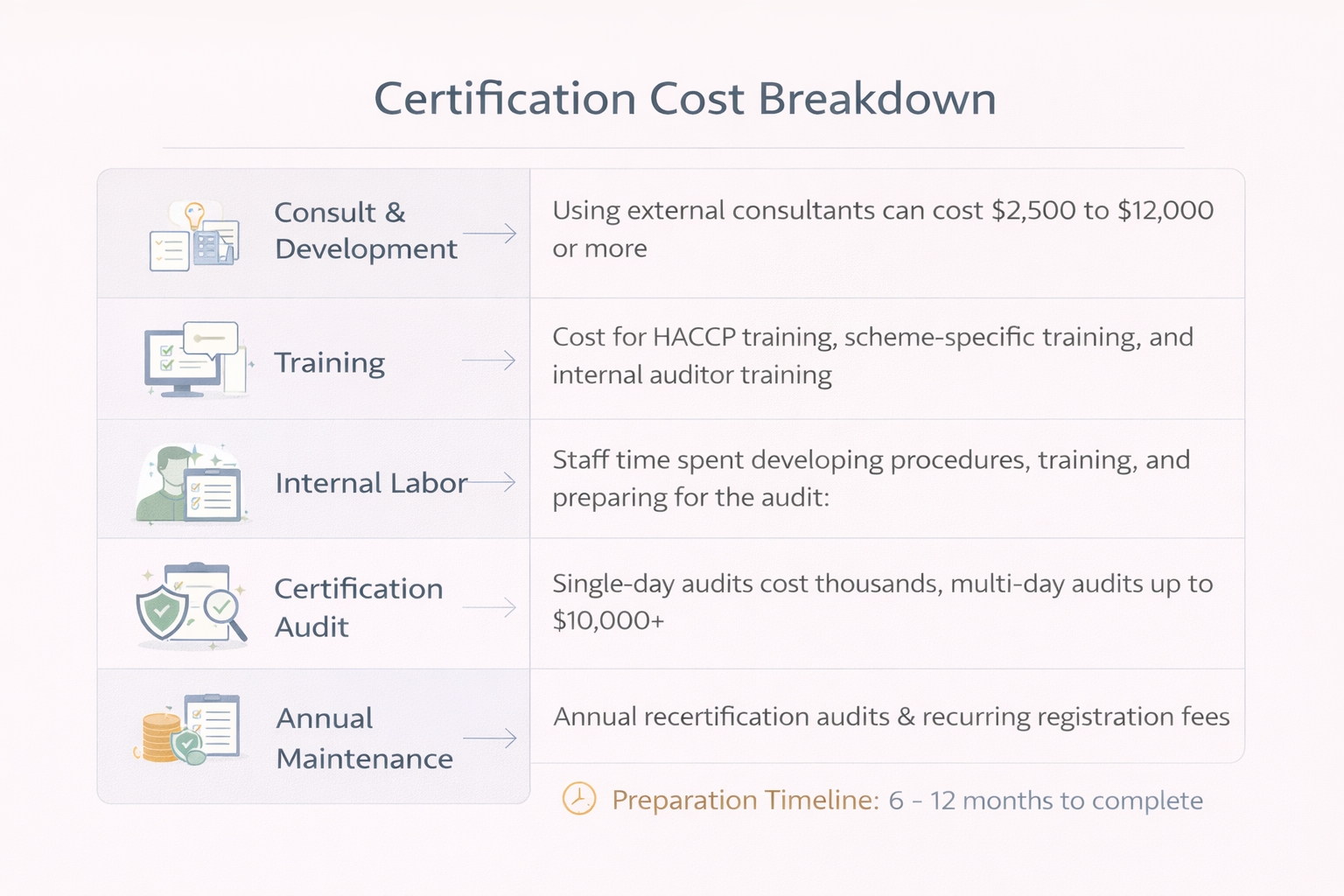
Consulting and system development. If you use external consultants to help build or upgrade your food safety management system, expect to pay between $2,500 and $12,000 or more, depending on the complexity of your operations and the scope of work.
Training. HACCP training, scheme-specific training (e.g., SQF Practitioner training), and internal auditor training all have associated costs.
Internal labor. The biggest cost for many companies is the staff time spent developing documentation, implementing procedures, training employees, and preparing for the audit. This is often underestimated - particularly for smaller facilities where one person wears multiple hats.
Certification audit. Audit costs depend on the scheme, facility size, number of product categories, and audit duration (1-3 days is typical). A simple single-day audit may cost a few thousand dollars; a complex multi-day audit can reach $10,000 or more including auditor travel and expenses.
Annual maintenance. Recertification audits are required annually. Registration and scheme fees also apply on a recurring basis.
Preparation timeline: Most companies need 6 to 12 months to prepare for their first certification audit.
The return on investment comes through market access, reduced audit fatigue, and lower risk of costly recalls and incidents.
Preparing for a GFSI Certification Audit
Audit preparation is not a last-minute activity. The best-performing facilities treat audit readiness as a continuous state, not a project. Key preparation steps:
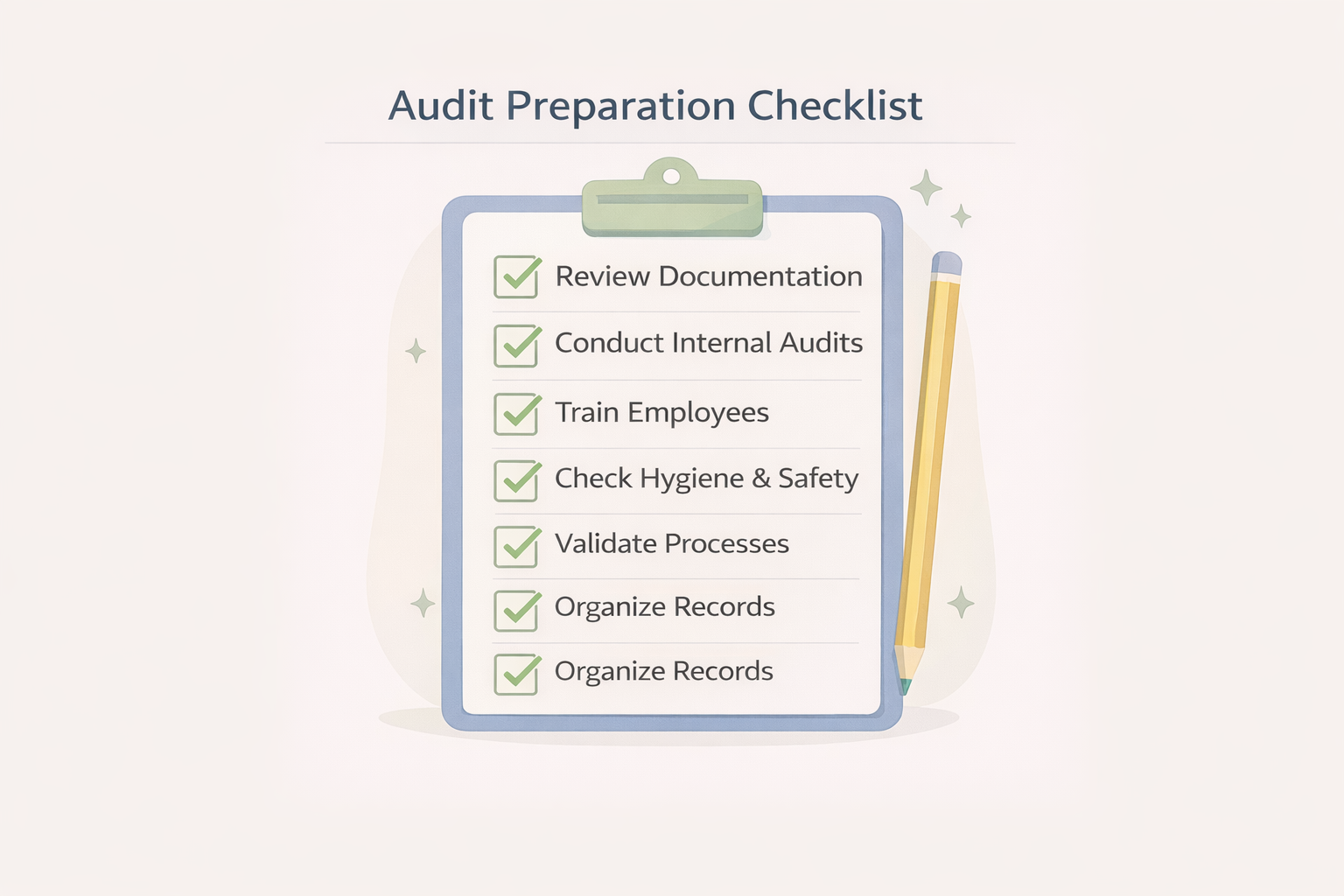
1. Run a full internal audit against your chosen scheme’s requirements at least 2-3 months before your certification audit.
2. Close all open corrective actions and verify their effectiveness. Auditors will check whether your CAPA process actually resolves root causes.
3. Verify document control. Ensure all SOPs, HACCP plans, and forms are current, approved, and accessible.
4. Test your traceability system. Conduct a mock recall.
5. Review training records. Confirm that all personnel have completed required training.
6. Prepare your evidence. Have monitoring records, verification activities, management review minutes, and corrective action documentation organized.
7. Brief your team. Everyone who may interact with the auditor should understand their responsibilities.
Tools like IONI’s AI-powered food safety platform can help automate much of this preparation - from HACCP plan management to audit-pack assembly and corrective action tracking. IONI’s system can compile a complete audit evidence pack in minutes, pulling together monitoring records, CAPA logs, training documentation, and document version histories that would normally take your team days to assemble manually.
If you want a structured starting point, a detailed HACCP audit checklist can help your team verify that every documentation requirement, procedural step, and evidence record is in place before the auditor arrives. A good checklist turns audit preparation from a stressful scramble into a repeatable, manageable process - especially for smaller teams managing multiple compliance responsibilities at once.
Future Trends in GFSI Schemes (2026 and Beyond)
Food safety culture becomes auditable. The December 2024 GFSI Benchmarking Requirements update and SQF Edition 10 both make food safety culture a structured, measurable, and auditable requirement. Facilities must demonstrate culture assessment plans, behavioral evidence, and leadership engagement.
Staying ahead of these evolving requirements demands more than periodic manual checks. As GFSI benchmarking criteria tighten and CPOs cascade updates into their GFSI certification schemes, manufacturers need continuous visibility into regulatory changes that affect their certification scope. AI-powered regulatory intelligence tools can monitor updates across schemes and jurisdictions in real time - alerting your team to new requirements before they become audit surprises. IONI’s regulatory intelligence module, for example, tracks changes across FSMA, CFIA, EU regulations, and all major GFSI approved schemes, so your compliance team always knows what is coming next.
Digital-first approaches. SQF Edition 10 introduces a fully digitized code format with interactive navigation, multilingual PDFs, and downloadable checklists. This signals a broader industry shift toward digital food safety management.
Increased focus on environmental monitoring and change management. SQF Edition 10 strengthens requirements around environmental monitoring programs and formal change management processes.
GFSI Benchmarking Requirements v2024 cascade. The 2024 benchmarking update introduces strengthened requirements around food safety culture, hygienic design, data management, and multi-site consistency. CPOs are updating their schemes through 2025-2026 to align.
Technology adoption accelerates. As scheme requirements become more complex and documentation loads increase, more facilities are adopting AI-driven food safety software to manage compliance at scale.
Traceability requirements expand. The FDA’s Food Traceability Rule (compliance deadline extended to July 2028) and GFSI’s emphasis on recall readiness are pushing manufacturers to invest in end-to-end traceability systems.
Conclusion
GFSI certification is no longer optional for food manufacturers who want to compete in modern supply chains. The question is not whether to get certified - it is which scheme to choose and how to implement it effectively.
The right choice depends on your customers, your markets, your existing systems, and your operational reality. BRCGS, SQF, FSSC 22000, and IFS each offer a credible path to GFSI recognition, but they differ in structure, audit methodology, geographic strength, and practical implications for your QA team.
Whatever scheme you choose, the underlying challenge is the same: maintaining a food safety system that is not just documented, but genuinely operational - one that works across shifts, across sites, and under the pressure of audits and real-world incidents. This is where technology plays a critical role, reducing the administrative burden so your team can focus on what actually matters: producing safe food.
Ready to try? Feel free to book a demo with us and see how IONI may help you.
FAQ
What is the difference between GFSI and GFSI schemes?
GFSI is the benchmarking organization that sets the requirements. GFSI schemes (like BRCGS, SQF, FSSC 22000, and IFS) are the actual certification programs that have been evaluated and recognized by GFSI. You cannot be “certified by GFSI” - you become certified under a GFSI-recognized scheme.
Which GFSI scheme is best for North American food manufacturers?
SQF is the most widely adopted GFSI scheme in North America and is required by many major US and Canadian retailers. However, BRCGS is also widely accepted, and FSSC 22000 is popular among multinational brand owners.
How much does GFSI certification cost?
Total costs vary widely, but typical components include consulting ($2,500-$12,000+), training, internal staff time, and the certification audit itself (a few thousand to over $10,000). The largest cost is often the internal labor for system development and documentation.
How long does it take to get GFSI certified?
Most companies need 6 to 12 months to prepare for their first certification audit. Companies with mature food safety systems may move faster; those building from scratch may need longer.
Do I need GFSI certification if I already comply with FSMA?
FSMA compliance is a legal requirement in the US. GFSI certification is voluntary but often required by customers. The evidence overlaps significantly - a well-designed GFSI system supports FSMA compliance, and vice versa - but they are not substitutes for each other.
What is changing with SQF Edition 10?
SQF Edition 10 introduces food safety culture as a measurable, auditable requirement, increases core clause deductions in the scoring model, strengthens change management and environmental monitoring requirements, and offers a new digitized code format. Audits to Edition 10 are expected to begin January 2, 2027.
Can I switch from one GFSI certification scheme to another?
Yes, but switching requires building your system to the new scheme’s requirements and completing a certification audit against the new standard. This is a significant undertaking and should be driven by clear business reasons.
How does AI help with GFSI compliance?
AI-powered food safety platforms like IONI help by automating document control, generating audit-ready evidence, assisting with HACCP plan development, flagging compliance gaps, and reducing the manual workload that typically dominates audit preparation.